
🌸 How To Deal With Toxic Mother In Law
🍼 The Newborn Survival Kit
The first six months of parenthood are a blur of exhaustion. Stop trying to tough it out—these are the 5 absolute life-saving baby essentials that experienced moms literally refuse to live without. They will instantly solve your biggest sleeping, feeding, and soothing struggles.
🌙 Hatch Rest Baby Sound Machine
The ultimate sleep hack. You can entirely control this white noise machine and dimmable nightlight from your smartphone, meaning you never have to accidentally wake the baby while sneaking back out of the nursery after a 3 AM feeding.
🤧 FridaBaby NoseFrida Snotsucker
It sounds incredibly gross until your baby has their first cold and literally cannot breathe to sleep. Throw away those useless hospital bulb syringes—this doctor-invented tool safely clears congestion in seconds, and yes, the filter absolutely prevents any germs from reaching you.
💧 Haakaa Silicone Manual Breast Pump
Every breastfeeding mom's best kept secret. Simply suction this cheap, cord-free silicone cup to the opposite breast while you nurse to effortlessly catch every drop of liquid gold letdown that would otherwise leak onto your shirt and be totally wasted.
🧴 Aquaphor Baby Healing Ointment
Forget buying ten different expensive, highly-fragranced creams. This is the only ointment you need. It miraculously cures severe diaper rash overnight, heals cracked nursing nipples, soothes baby eczema, and aggressively protects delicate skin from harsh winter wind.
☁️ Burt's Bees 100% Organic Burp Cloths
You will go through dozens of these a day, so do not cheap out on thin fabric. These thick, ultra-absorbent organic cotton cloths actually catch massive spit-ups before they ruin your only clean outfit, while remaining incredibly soft against your newborn's face.
Feeling that familiar knot in your stomach before a family gathering? You are definitely not alone in navigating the tricky waters of a challenging mother-in-law. I’ve walked this path myself, learning through trial and error what truly brings peace to the family home. This guide shares those hard-won lessons, focusing on practical steps and joyful family moments.

Quick Overview
This guide will equip you with strategies to protect your peace and nurture your family, even when faced with a toxic mother-in-law. You’ll learn to set boundaries, strengthen your family unit, and find joy in your parenting journey.
- Time needed: Ongoing effort, but you’ll feel immediate relief from implementing the first steps.
- Difficulty: Intermediate – it requires emotional intelligence and consistent effort.
- What you’ll need: Patience, a supportive partner, clear communication skills, and a strong sense of self-worth.
Step-by-Step Instructions
Step 1: Acknowledge the Reality & Your Feelings
The first step to managing any difficult relationship is to honestly recognize the problem. It’s okay to admit that your mother-in-law’s behavior is toxic and that it affects you deeply. Validating your own feelings is crucial for moving forward.
You might feel frustrated, angry, or even guilty, and all those emotions are valid. Give yourself permission to feel them without judgment.
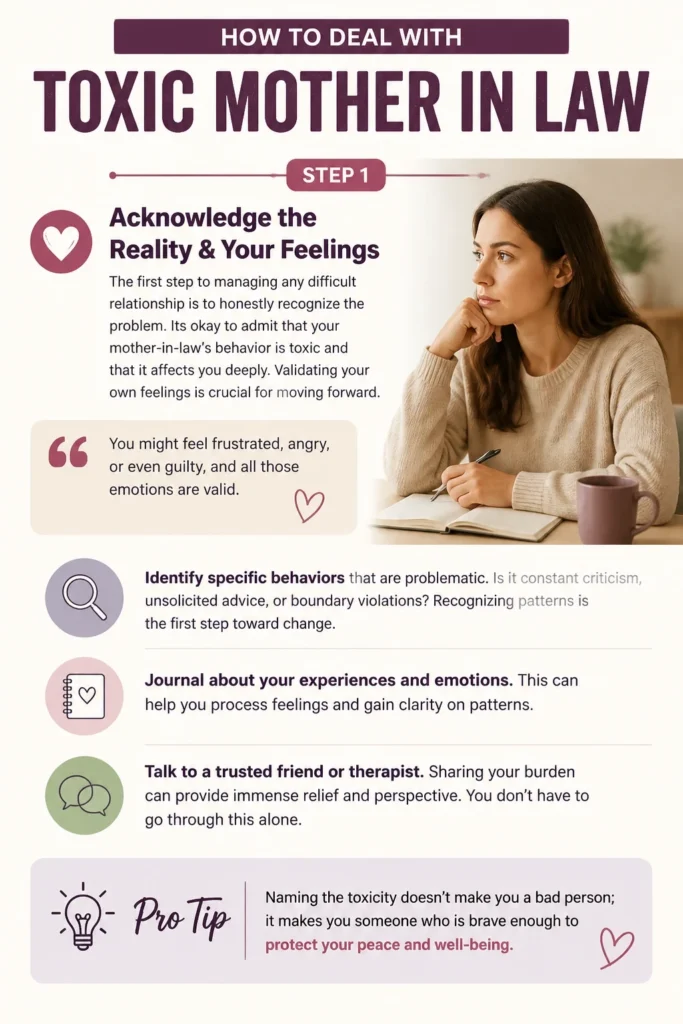
- Identify specific behaviors that are problematic. Is it constant criticism, unsolicited advice, or boundary violations?
- Journal about your experiences and emotions. This can help you process feelings and gain clarity on patterns.
- Talk to a trusted friend or therapist. Sharing your burden can provide immense relief and perspective.
Pro Tip: Naming the toxicity doesn’t make you a bad person; it makes you someone who cares about their emotional well-being and the peace of their family.
Step 2: Form a United Front with Your Partner
This step is absolutely non-negotiable for success. Your partner needs to be your strongest ally and a unified boundary-setter. Without their support, navigating a toxic mother-in-law becomes exponentially harder.
Have open, honest conversations with your partner about your concerns and what kind of support you need. Explain how their mother’s actions impact you and your children.
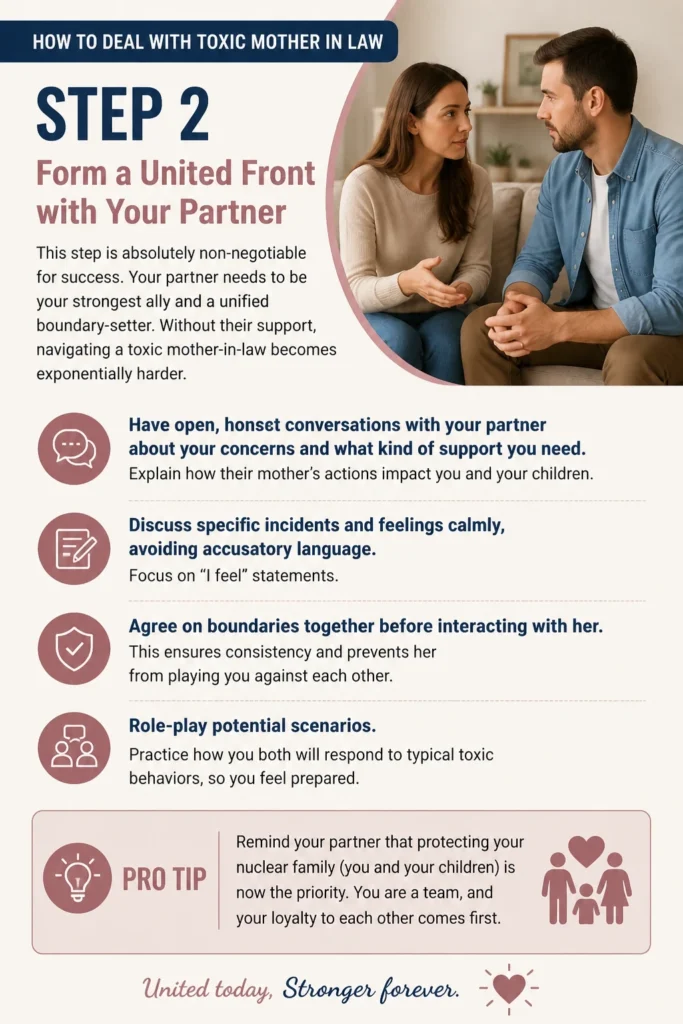
- Discuss specific incidents and feelings calmly, avoiding accusatory language. Focus on “I feel” statements.
- Agree on boundaries together before interacting with her. This ensures consistency and prevents her from playing you against each other.
- Role-play potential scenarios. Practice how you both will respond to typical toxic behaviors, so you feel prepared.
Pro Tip: Remind your partner that protecting your nuclear family’s peace strengthens their own marriage and family unit. It’s not about choosing sides, but about prioritizing your shared life.
Step 3: Set Clear, Consistent Boundaries
Boundaries are your invisible shield, protecting your energy and your family’s peace. They communicate what is and isn’t acceptable in your interactions. These need to be clear, firm, and consistently enforced by both you and your partner.
Think about the areas where you feel most encroached upon. This could be unsolicited parenting advice, criticism of your home, or constant demands on your time.

- Define boundaries around visits. This might mean shorter visits, meeting in neutral locations, or specific times for calls.
- Communicate expectations regarding parenting decisions. Politely state that you and your partner are making decisions for your children.
- Protect your children from negative comments. Gently interrupt or redirect conversations if they become critical or hurtful when kids are present.
Pro Tip: Boundaries aren’t about punishing your mother-in-law; they are about self-preservation and creating a respectful environment for your family. Don’t feel guilty for protecting your peace.
Step 4: Manage Contact & Interactions Strategically
Once boundaries are set, you need a strategy for managing actual interactions. Sometimes, “less is more” when dealing with toxicity. You control the frequency, duration, and even the location of your encounters.
Don’t feel obligated to spend excessive time with someone who consistently drains your energy. Plan interactions carefully to minimize stress.
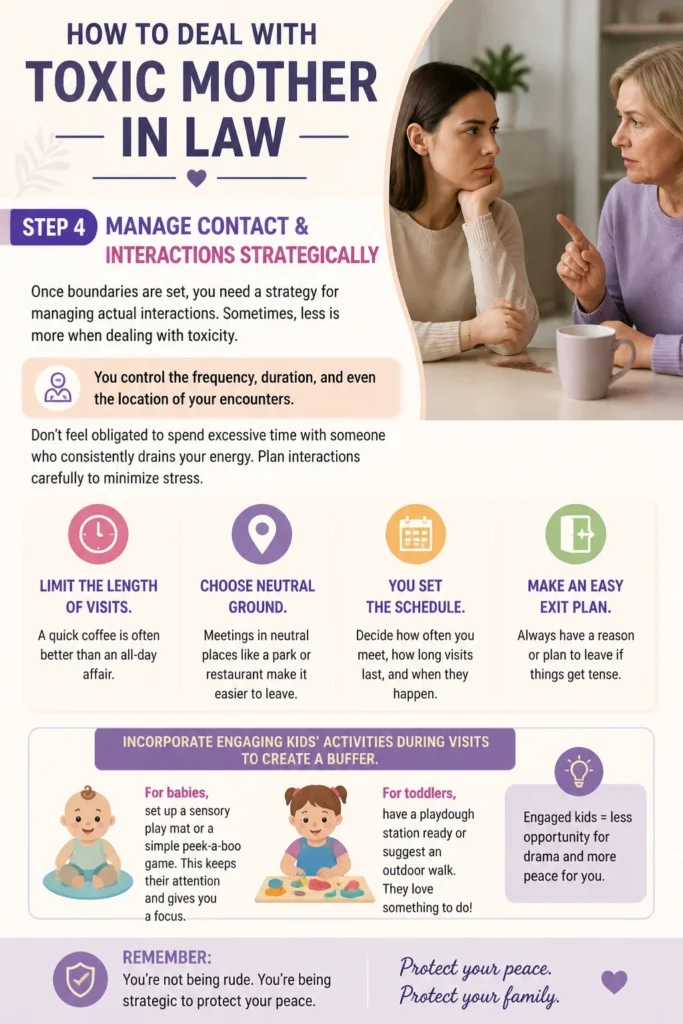
- Limit the length of visits. A quick coffee is often better than an all-day affair.
- Choose neutral ground for meetings, like a park or restaurant, where you can easily leave.
- Incorporate engaging kids’ activities during visits to create a buffer.
For babies, set up a sensory play mat or a simple peek-a-boo game. This keeps their attention and gives you a focus.
For toddlers, have a playdough station ready or suggest an outdoor walk. They love exploring, and it can redirect attention.
For school-age kids, suggest a board game everyone can play or a simple craft project. A “decorate your own cookie” station is always a hit and Pinterest-worthy.
Pro Tip: Distraction is a powerful tool. Engaging your children in a fun activity can shift the focus and create positive memories, even during challenging visits.
Step 5: Prioritize Your Nuclear Family’s Peace
Your home should be a sanctuary, a place where you and your children feel safe, loved, and happy. Actively work to create a positive family environment that isn’t overshadowed by external drama. This means investing in your immediate family bonds.
Focus on building strong, joyful memories with your partner and children. These moments are the foundation of your family’s well-being.

- Establish fun family rituals. Think “Pizza & Movie Night” every Friday or a Sunday morning pancake breakfast.
- Plan special family bonding activities. Go for nature walks, visit a local farm, or have a themed craft day.
Party Idea: Host a “Backyard Olympics” with silly games for school-age kids, complete with DIY medals.
Craft Idea: Create a “Family Gratitude Jar” where everyone writes down things they’re thankful for.
- Create a “safe zone” at home. Make sure your children’s rooms are cozy and inviting, perhaps a “Reading Nook” with soft pillows for toddlers and school-age kids.
- Involve kids in everyday choices, like picking out school outfits for the week. Make it a fun “fashion show” at home.
Pro Tip: Your children learn how to navigate relationships by watching you. Modeling strength, boundaries, and a focus on joy teaches them invaluable life lessons.
Step 6: Practice Self-Care & Emotional Detachment
Dealing with toxicity is draining. It’s vital to protect your own mental and emotional health. Emotional detachment doesn’t mean you don’t care; it means you choose not to let someone else’s behavior control your inner peace.
Make self-care a non-negotiable part of your routine. You can’t pour from an empty cup, especially when parenting.

- Engage in hobbies that bring you joy. Whether it’s reading, gardening, or a fitness class, make time for yourself.
- Practice mindfulness or meditation. Even five minutes a day can help you stay grounded and centered.
- Lean on your support system. Spend time with friends who uplift you and remind you of your worth.
Pro Tip: Remember the mantra: “Not my circus, not my monkeys.” You can’t control her actions, but you can control your reactions and how much space she occupies in your mind.
Step 7: Know When to Disengage or Seek External Help
Despite your best efforts, some toxic situations are simply unsustainable. If boundaries are consistently violated, your mental health is severely impacted, or your children are suffering, it might be time to consider further steps. This is a brave decision, not a failure.
Sometimes, protecting your family means creating distance, even if it’s difficult. Your well-being is paramount.

- Consider “low contact” or “no contact” if the situation becomes unbearable. This is a last resort but sometimes necessary.
- Seek professional help, such as family counseling or individual therapy. A neutral third party can provide tools and strategies.
- Focus on the positive impact this decision will have on your children. Protecting them from chronic stress is a loving act.
Pro Tip: Prioritizing your family’s peace is the ultimate act of love. You are teaching your children about healthy boundaries and self-respect.
Common Mistakes to Avoid
Trying to “Fix” Her
It’s natural to want to change someone’s behavior, especially when it’s causing distress. However, trying to “fix” a toxic person is often a futile and exhausting endeavor. You cannot control another person’s actions or personality.
Instead, shift your focus from changing her to changing your response to her. Concentrate on what you can control: your boundaries, your reactions, and your family’s environment. This empowers you and saves immense emotional energy.
Complaining Constantly to Your Partner Without Solutions
While venting to your partner is healthy, constantly complaining without offering solutions or working together can strain your relationship. It can make your partner feel helpless or resentful over time.
Instead, approach your partner as a teammate. Present problems, discuss your feelings, and then work collaboratively to brainstorm solutions and agree on a unified strategy. This strengthens your bond and tackles the issue together.
Allowing Guilt to Dictate Your Actions
Toxic individuals often use guilt as a tool to manipulate. You might feel guilty for setting boundaries, for not seeing her enough, or for prioritizing your own family. This guilt can lead you to compromise your peace.
Recognize that guilt is an emotion, not necessarily an accurate reflection of your actions. Remind yourself that you are a good person for protecting your family’s well-being. Prioritize your peace over manufactured guilt trips.
Troubleshooting
She Disregards Boundaries
If your mother-in-law consistently ignores or disrespects your boundaries, it’s frustrating and disheartening. This often means your boundaries aren’t firm enough, or the consequences for violating them aren’t clear.
Reiterate the boundary calmly and firmly. If she continues, gently end the interaction or leave the situation. Consistency is key; she needs to learn that boundary violations lead to a consequence, like a shortened visit.
Your Partner Isn’t Fully Onboard
It can be incredibly challenging if your partner struggles to support you fully, perhaps due to their own history or desire for peace. Their reluctance can undermine your efforts and leave you feeling isolated.
Continue to communicate openly and empathetically with your partner. Focus on how her behavior affects your shared family and your relationship, not just you. Suggest couples counseling to work through the issue together in a neutral space.
Kids Are Caught in the Middle
When children witness conflict or absorb negativity, it can be distressing for them. A toxic mother-in-law might try to confide in them, criticize you in front of them, or make them feel uncomfortable.
Shield your children as much as possible. Limit their unsupervised time with her if necessary, and always be present to redirect or intervene. After interactions, check in with your kids and reassure them that your home is a safe and happy place.
Key Takeaways
- Your feelings are valid, and acknowledging them is the first step towards managing a toxic relationship.
- A united front with your partner is crucial for setting and maintaining effective boundaries.
- Clear, consistent boundaries protect your peace and communicate acceptable behavior.
- Prioritizing your nuclear family’s well-being creates a joyful and secure home environment.
- Self-care and emotional detachment are essential tools for maintaining your own mental health.
Frequently Asked Questions
Can a toxic MIL ever change?
While people can change, it’s rare for deeply ingrained toxic behaviors to shift without significant self-awareness and effort on their part. Focus your energy on managing the relationship and protecting yourself, rather than hoping for a transformation. Your peace depends on it.
How do I explain this to my children?
Keep explanations age-appropriate and simple. For young children, you might say, “Grandma sometimes says things that aren’t very kind, and we don’t like that in our house.” For older children, you can explain that everyone has different ways of communicating, and your family chooses kindness. Focus on what your family values.
What if my partner’s family judges me?
It’s natural to worry about judgment, but remember that your primary responsibility is to your immediate family’s well-being. People who truly understand will support your efforts to create a healthy environment. Those who judge may not understand the full dynamic, and their opinions don’t define your worth.
Our Top Recommended Finds
- “The Book of Boundaries” by Melissa Urban: A fantastic resource for learning how to set and maintain healthy limits in all relationships.
- A Beautiful Family Planner: Keep track of your family’s fun activities and commitments, reinforcing your focus on your nuclear unit.
Embrace Your Peaceful Family Life
You have the power to create a peaceful, joyful home for yourself and your children. Dealing with a toxic mother-in-law is a marathon, not a sprint, but every step you take towards setting boundaries and prioritizing your family’s well-being is a victory. You are strong, capable, and deserving of peace.
Start today by having that important conversation with your partner, or by planning a special family activity that brings everyone closer. Your journey to a calmer, happier family life begins now.