
How To Convince Your Parents To Say Yes
🍼 The Newborn Survival Kit
The first six months of parenthood are a blur of exhaustion. Stop trying to tough it out—these are the 5 absolute life-saving baby essentials that experienced moms literally refuse to live without. They will instantly solve your biggest sleeping, feeding, and soothing struggles.
🌙 Hatch Rest Baby Sound Machine
The ultimate sleep hack. You can entirely control this white noise machine and dimmable nightlight from your smartphone, meaning you never have to accidentally wake the baby while sneaking back out of the nursery after a 3 AM feeding.
🤧 FridaBaby NoseFrida Snotsucker
It sounds incredibly gross until your baby has their first cold and literally cannot breathe to sleep. Throw away those useless hospital bulb syringes—this doctor-invented tool safely clears congestion in seconds, and yes, the filter absolutely prevents any germs from reaching you.
💧 Haakaa Silicone Manual Breast Pump
Every breastfeeding mom's best kept secret. Simply suction this cheap, cord-free silicone cup to the opposite breast while you nurse to effortlessly catch every drop of liquid gold letdown that would otherwise leak onto your shirt and be totally wasted.
🧴 Aquaphor Baby Healing Ointment
Forget buying ten different expensive, highly-fragranced creams. This is the only ointment you need. It miraculously cures severe diaper rash overnight, heals cracked nursing nipples, soothes baby eczema, and aggressively protects delicate skin from harsh winter wind.
☁️ Burt's Bees 100% Organic Burp Cloths
You will go through dozens of these a day, so do not cheap out on thin fabric. These thick, ultra-absorbent organic cotton cloths actually catch massive spit-ups before they ruin your only clean outfit, while remaining incredibly soft against your newborn's face.
Ever felt that familiar knot in your stomach when you really, really want something, but you just know the answer will be “no”?
I’ve been there, both as a hopeful child and now as a parent navigating countless requests.
This guide shares the practical, loving strategies I’ve learned from both sides of the “Can I?” conversation.

Quick Overview
Learning to communicate effectively with your parents is a skill for life.
This guide will equip you with the tools to present your requests thoughtfully and increase your chances of getting a “yes.”
- Time needed: 30 minutes for preparation, ongoing for best results.
- Difficulty: Beginner-Intermediate.
- What you’ll need: Pen and paper, a calendar, a positive attitude, and a little empathy.
Step-by-Step Instructions
Step 1: Understand Their Perspective
Before you even open your mouth, take a moment to think like your parents.
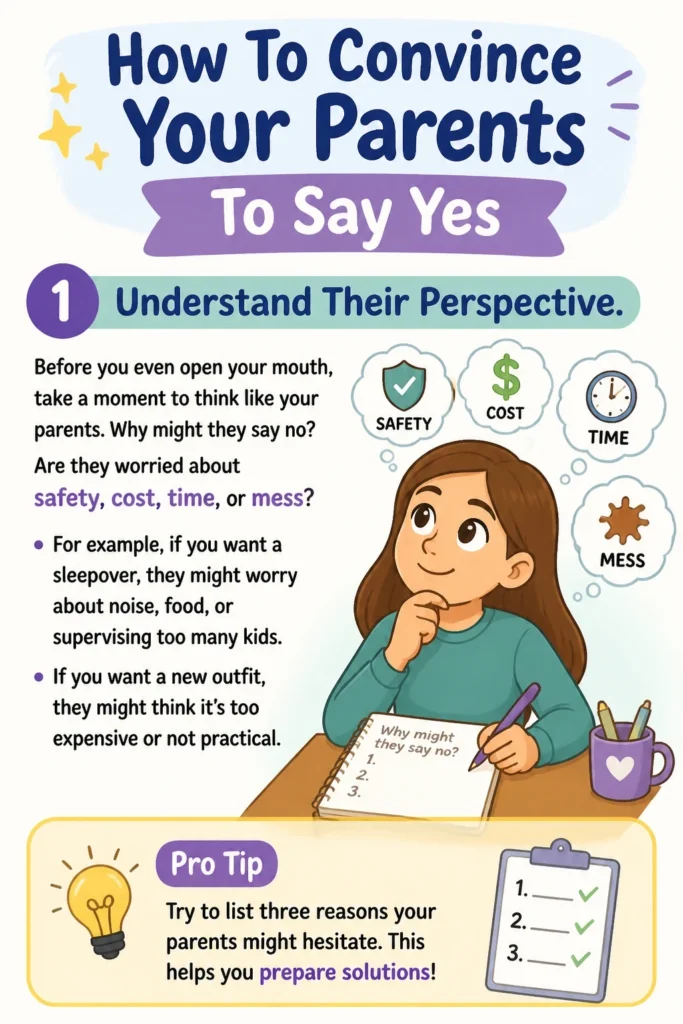
Why might they say no? Are they worried about safety, cost, time, or mess?
For example, if you want a sleepover, they might worry about noise, food, or supervising too many kids.
If you want a new outfit, they might think it’s too expensive or not practical.
Pro Tip: Try to list three reasons your parents might hesitate. This helps you prepare solutions!
Step 2: Choose Your Moment Wisely
Timing is absolutely everything when asking for something important.
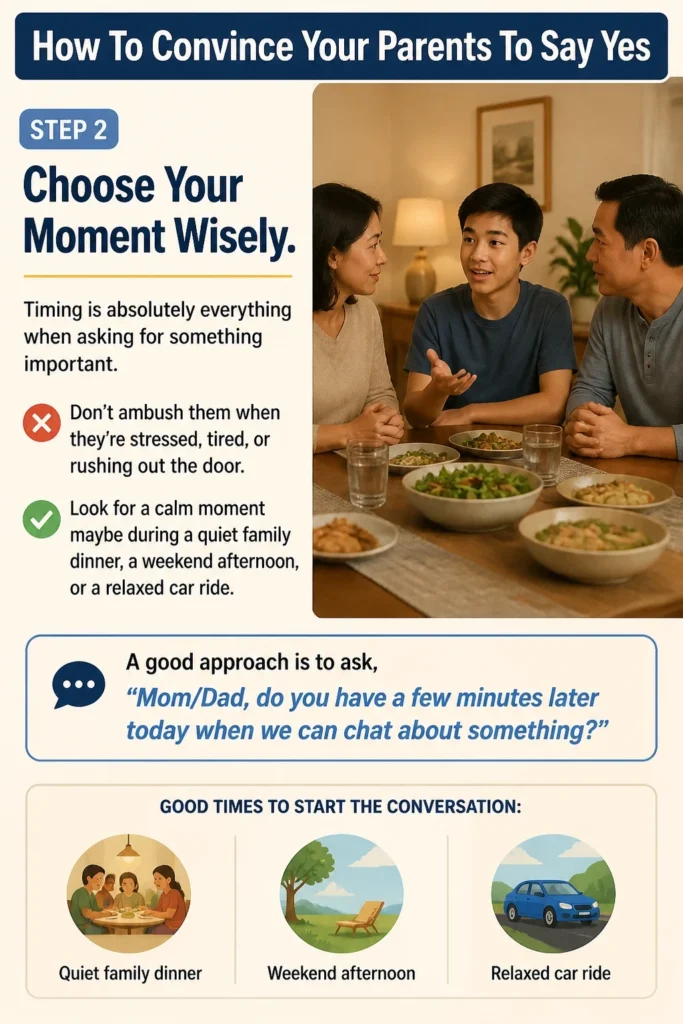
Don’t ambush them when they’re stressed, tired, or rushing out the door.
Look for a calm moment: maybe during a quiet family dinner, a weekend afternoon, or a relaxed car ride.
A good approach is to ask, “Mom/Dad, do you have a few minutes later today when we can chat about something?”
Step 3: Do Your Homework
This is where your request transforms from a simple wish to a well-thought-out proposal.
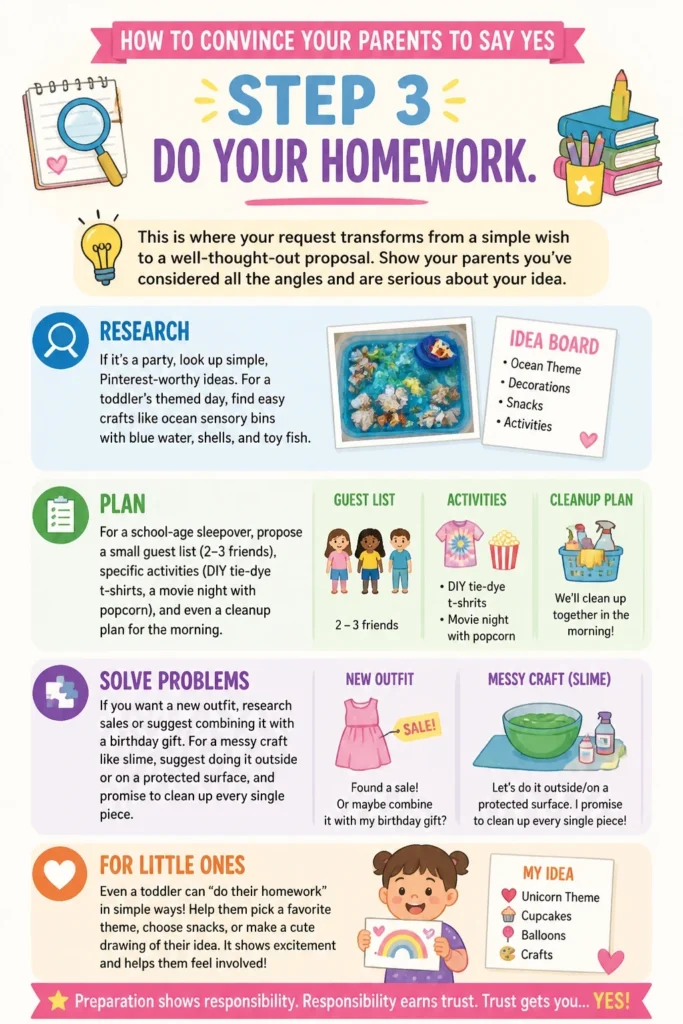
Show your parents you’ve considered all the angles and are serious about your idea.
Research: If it’s a party, look up simple, Pinterest-worthy ideas. For a toddler’s “themed day,” find easy crafts like “ocean sensory bins” with blue water, shells, and toy fish.
Plan: For a school-age sleepover, propose a small guest list (2-3 friends), specific activities (DIY tie-dye t-shirts, a movie night with popcorn), and even a cleanup plan for the morning.
Solve Problems: If you want a new outfit, research sales or suggest combining it with a birthday gift. For a messy craft like slime, suggest doing it outside or on a protected surface, and promise to clean up every single piece.
For little ones: Even a toddler wanting a specific toy can be taught to “earn” it by helping with simple tasks, showing them the concept of effort.
Pro Tip: Create a mini “presentation” on paper. List the idea, the benefits, and your solutions to potential problems. It shows incredible maturity!
Step 4: Present Your Case Calmly and Clearly
When you finally sit down to talk, speak in a calm, respectful tone.

Avoid whining, demanding, or interrupting.
Start by clearly stating what you want, then explain why it’s important to you.
For example, “I’d really love to have a small ‘Enchanted Forest’ sleepover for my birthday because it would be a special way to celebrate with my closest friends.”
Then, immediately follow up with your solutions and plans.
“I’ve thought about it, and I’d like to invite just two friends. We could make these cute leaf crowns and watch a nature documentary. I’ll make sure we clean up all the snacks and decorations the next morning.”
Step 5: Offer a Win-Win Situation
Parents love it when you show responsibility and a willingness to contribute.
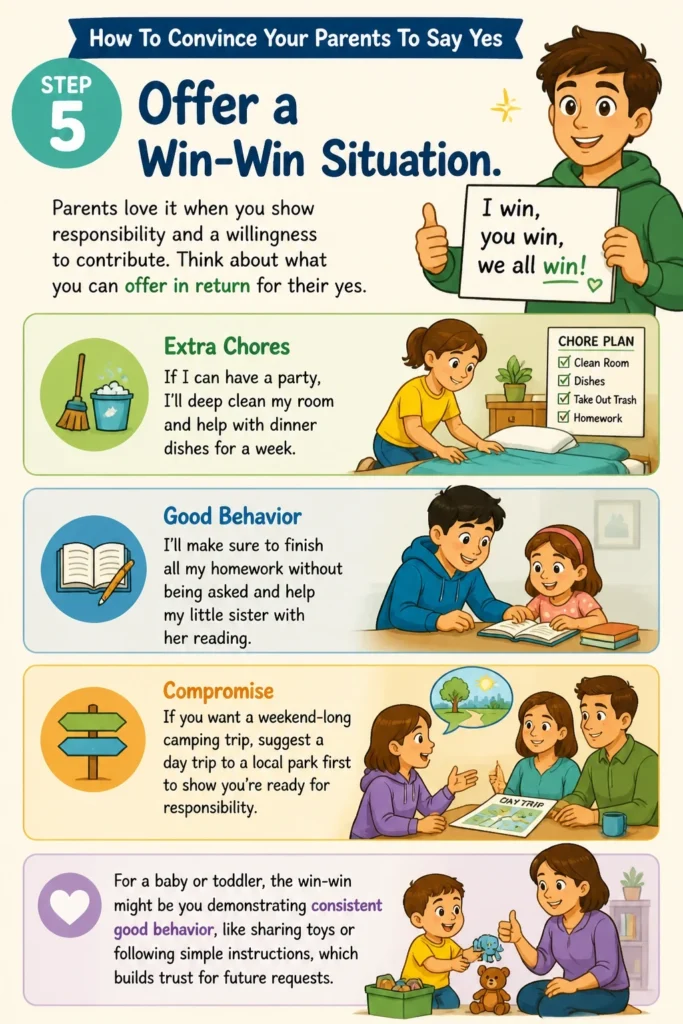
Think about what you can offer in return for their “yes.”
Extra Chores: “If I can have a party, I’ll deep clean my room and help with dinner dishes for a week.”
Good Behavior: “I’ll make sure to finish all my homework without being asked and help my little sister with her reading.”
Compromise: If you want a weekend-long camping trip, suggest a day trip to a local park first to show you’re ready for responsibility.
For a baby or toddler, the “win-win” might be you demonstrating consistent good behavior, like sharing toys or following simple instructions, which builds trust for future requests.
Step 6: Be Prepared for “No” (and a “Maybe”)
Sometimes, even with the best plan, the answer might still be no, or a “maybe” that feels like a no.
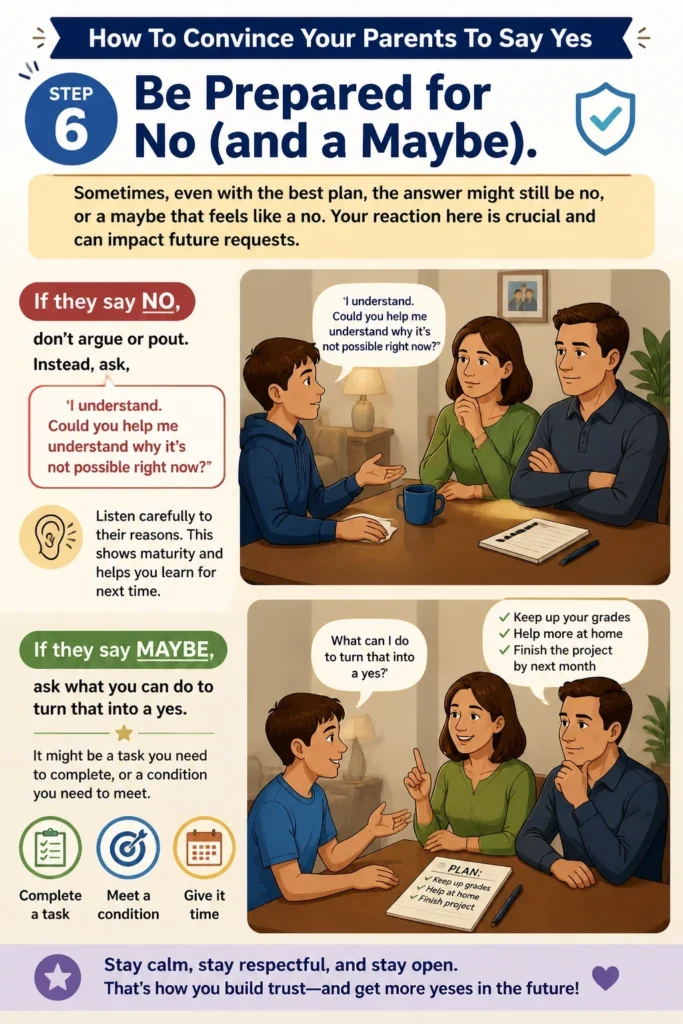
Your reaction here is crucial and can impact future requests.
If they say no, don’t argue or pout. Instead, ask, “I understand. Could you help me understand why it’s not possible right now?”
Listen carefully to their reasons. This shows maturity and helps you learn for next time.
If they say “maybe,” ask what you can do to turn that into a “yes.”
It might be a task you need to complete, or a condition you need to meet.
Step 7: Build a Track Record of Trust
Every time you follow through on a promise, you build trust with your parents.
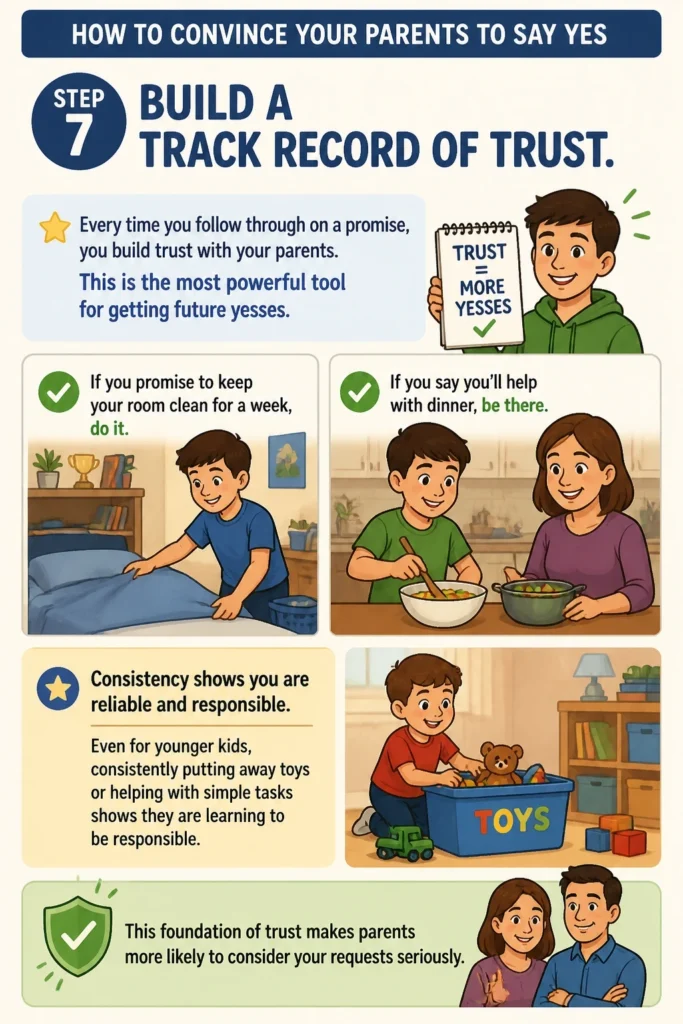
This is the most powerful tool for getting future “yesses.”
If you promise to keep your room clean for a week, do it. If you say you’ll help with dinner, be there.
Consistency shows you are reliable and responsible.
Even for younger kids, consistently putting away toys or helping with simple tasks shows they are learning to be responsible.
This foundation of trust makes parents more likely to consider your requests seriously.
Step 8: Follow Through on Your Promises
A “yes” isn’t the end; it’s the beginning of keeping your word.
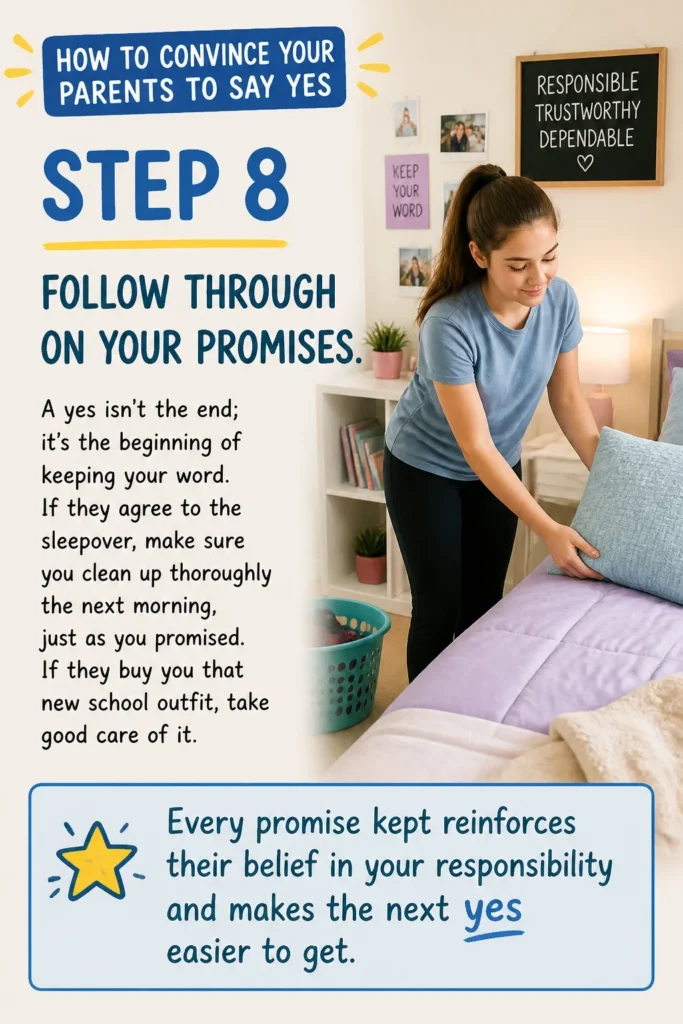
If they agree to the sleepover, make sure you clean up thoroughly the next morning, just as you promised.
If they buy you that new school outfit, take good care of it.
Every promise kept reinforces their belief in your responsibility and makes the next “yes” easier to get.
Common Mistakes to Avoid
Whining or Demanding
Coming at your parents with a whine or a demand immediately puts them on the defensive.
It signals immaturity and often results in an automatic “no,” regardless of the request’s merit.
Instead, approach them with respect and a calm, conversational tone, showing you value their opinion.
Bad Timing
Asking for a big favor when your parents are visibly stressed, busy, or tired is a recipe for disappointment.
They simply won’t have the mental space or patience to consider your request fairly.
Always seek out a moment of calm and ask if it’s a good time to chat, respecting their schedule and mood.
Lack of Preparation
A vague request like “Can I have a party?” without any details or solutions shows you haven’t thought it through.
This leaves parents with all the work of problem-solving, which they often don’t have time for.
Present a well-researched plan that addresses their potential concerns before they even voice them.
Giving Up Too Soon
Sometimes the initial answer is “no,” but that doesn’t mean it’s forever.
Giving up after one attempt, especially if you didn’t ask for clarification, means you miss a chance to learn and adapt.
Listen to their reasons, refine your plan, and consider trying again later with new information or a revised approach.
Troubleshooting
They Still Said No!
It can be disheartening when your carefully crafted plan still results in a “no.”
The key here is to not give up entirely, but to understand and adapt.
Ask, “I understand, but could you help me understand what specifically made you say no?”
Listen to their concerns without interruption. Maybe it was the cost, the timing, or a specific safety worry.
Use this feedback to refine your proposal. Perhaps you can suggest a less expensive alternative, a different date, or a plan to address their safety concerns directly for a future request.
They Said “Maybe” But Haven’t Followed Up
A “maybe” can sometimes feel like a slow “no” if it’s left hanging.
It’s important to respectfully follow up without nagging.
After a few days, find a calm moment and say, “Hi Mom/Dad, I was wondering if you’ve had a chance to think more about my request for [your request]. Is there anything else I can do to help you decide?”
This shows you’re still engaged and responsible, and it gently prompts them to revisit the conversation.
I Keep Forgetting My End of the Bargain
It’s easy to get excited about the “yes” and then forget the promises you made.
This quickly erodes trust and makes future “yesses” much harder to earn.
To avoid this, write down your promises! Use a calendar or a planner to mark down your extra chores or responsibilities.
Set reminders on your phone or ask a parent to gently remind you. Being proactive about keeping your word is essential.
Key Takeaways
- Empathy is powerful: Understand your parents’ worries before you ask.
- Preparation pays off: Do your research and plan out solutions.
- Timing matters: Choose a calm moment for your important conversations.
- Offer a win-win: Show you’re willing to contribute and compromise.
- Build trust consistently: Follow through on your promises every time.
- Learn from “no”: Use feedback to improve your approach next time.
Frequently Asked Questions
What if my parents are really strict?
If your parents are very strict, communication is even more vital. Focus on building trust by consistently following rules and being responsible in everyday life. When you do ask for something, present an even more detailed plan that addresses every possible concern, emphasizing safety and responsibility. Start with smaller, easier-to-agree-to requests to gradually build their confidence in your judgment.
How do I ask for something expensive?
Asking for something expensive requires extra preparation and patience. Research the item thoroughly, including its cost, durability, and where it can be purchased. Propose contributing your own money, offering to save up, or suggesting it as a combined birthday and holiday gift. Show them you understand the value and are willing to put in effort to get it.
Can this work for siblings too?
Absolutely! The principles of empathy, clear communication, and compromise work wonders in sibling relationships. If you want to borrow a sibling’s toy, ask politely, explain why you need it, and promise to return it in perfect condition. If you want to plan an activity together, suggest options that appeal to both of you and offer to help set up or clean up.
Is it okay to try again if they said no?
Yes, but with a new approach! If your parents said no, don’t just ask the same way again. Take their reasons to heart, revise your plan, and address their previous concerns. For example, if they said no to a party because of the mess, come back with a detailed cleaning schedule and volunteers. Show them you listened and learned, and you’re ready to try a different, improved solution.
Our Top Recommended Finds
- Family Wall Calendar: Perfect for planning your proposal, marking chores, and tracking family events together.
- “My Idea Journal”: A simple notebook for brainstorming plans, listing pros and cons, and outlining your win-win offers.
- Kid-Friendly Craft Kit: Great for showing initiative and planning fun, contained activities for younger siblings or future party ideas.
Your Path to Partnership
Learning to convince your parents isn’t about manipulation; it’s about learning essential life skills.
It’s about communication, planning, empathy, and building trust.
These skills will serve you well not just with your parents, but in all your relationships and future endeavors.
Start practicing these steps today, and watch how your conversations transform into true partnerships.