
🤝 How To Convince Your Parents To Say Yes To Anything
🍼 The Newborn Survival Kit
The first six months of parenthood are a blur of exhaustion. Stop trying to tough it out—these are the 5 absolute life-saving baby essentials that experienced moms literally refuse to live without. They will instantly solve your biggest sleeping, feeding, and soothing struggles.
🌙 Hatch Rest Baby Sound Machine
The ultimate sleep hack. You can entirely control this white noise machine and dimmable nightlight from your smartphone, meaning you never have to accidentally wake the baby while sneaking back out of the nursery after a 3 AM feeding.
🤧 FridaBaby NoseFrida Snotsucker
It sounds incredibly gross until your baby has their first cold and literally cannot breathe to sleep. Throw away those useless hospital bulb syringes—this doctor-invented tool safely clears congestion in seconds, and yes, the filter absolutely prevents any germs from reaching you.
💧 Haakaa Silicone Manual Breast Pump
Every breastfeeding mom's best kept secret. Simply suction this cheap, cord-free silicone cup to the opposite breast while you nurse to effortlessly catch every drop of liquid gold letdown that would otherwise leak onto your shirt and be totally wasted.
🧴 Aquaphor Baby Healing Ointment
Forget buying ten different expensive, highly-fragranced creams. This is the only ointment you need. It miraculously cures severe diaper rash overnight, heals cracked nursing nipples, soothes baby eczema, and aggressively protects delicate skin from harsh winter wind.
☁️ Burt's Bees 100% Organic Burp Cloths
You will go through dozens of these a day, so do not cheap out on thin fabric. These thick, ultra-absorbent organic cotton cloths actually catch massive spit-ups before they ruin your only clean outfit, while remaining incredibly soft against your newborn's face.
We’ve all been there, haven’t we? That burning desire for a new toy, a sleepover, or perhaps a later bedtime. You just know your parents will say no.
But what if there was a way to make them listen, truly understand, and even say yes? I’ve seen it work wonders in my own home, turning those dreaded “no” moments into genuine family conversations.
This guide is your secret playbook, designed to help you present your wishes in a way that makes saying “yes” a whole lot easier for your parents.

Quick Overview
This guide will empower you to approach your parents with confidence, clear communication, and a plan. You’ll learn how to express your desires effectively, understand their perspective, and build a foundation of trust that makes future requests smoother for everyone.
- Time needed: 30 minutes to read, a lifetime to master!
- Difficulty: Beginner
- What you’ll need: A listening ear, a clear mind, and a little bit of patience.
Step-by-Step Instructions
Step 1: Choose the Perfect Moment
Timing truly is everything when it comes to asking for something. You want to catch your parents when they’re relaxed and not stressed. Think about when they’re winding down after work, enjoying a quiet morning, or during a fun family activity.

Avoid asking when they’re rushing out the door, dealing with a chore, or feeling overwhelmed. A calm parent is a listening parent, and that’s your first big win.
Pro Tip: Notice their routine. Do they unwind with a cup of tea after dinner? Or are Saturday mornings usually peaceful? Those are prime opportunities.
Step 2: Understand Their World
Before you even open your mouth, take a moment to think about things from your parents’ side. Why might they say no to your request? Are they worried about safety, money, time, or your responsibilities?
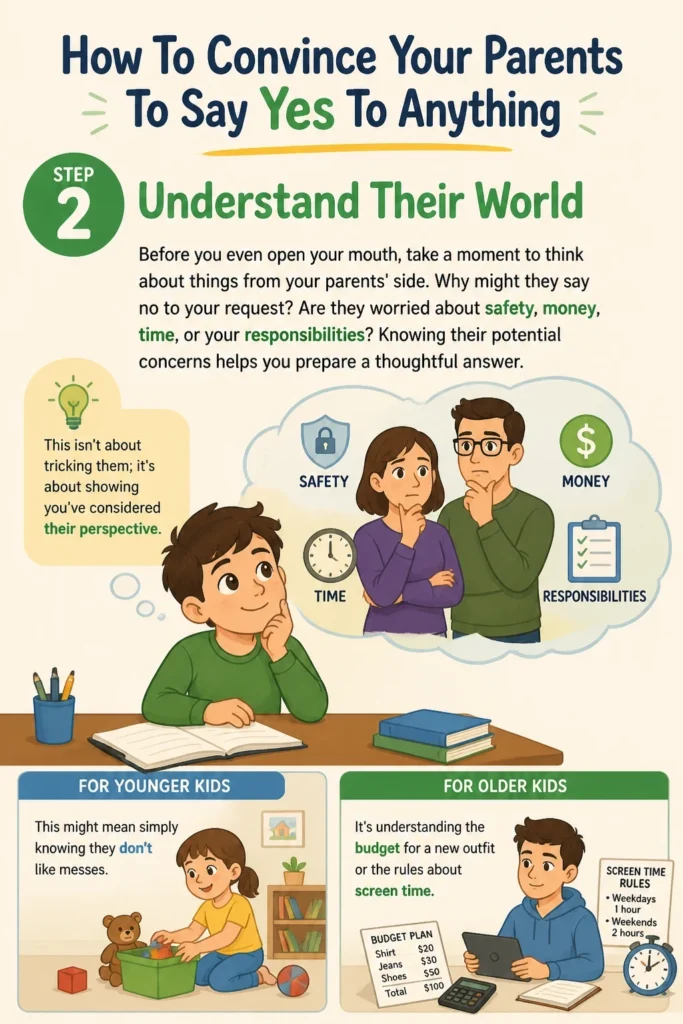
Knowing their potential concerns helps you prepare a thoughtful answer. This isn’t about tricking them; it’s about showing you’ve considered their perspective.
For younger kids, this might mean simply knowing they don’t like messes. For older kids, it’s understanding the budget for a new outfit or the rules about screen time.
Step 3: Prepare Your Case
This is where you build your argument, just like a lawyer in a courtroom! What is it you want, and why do you want it?
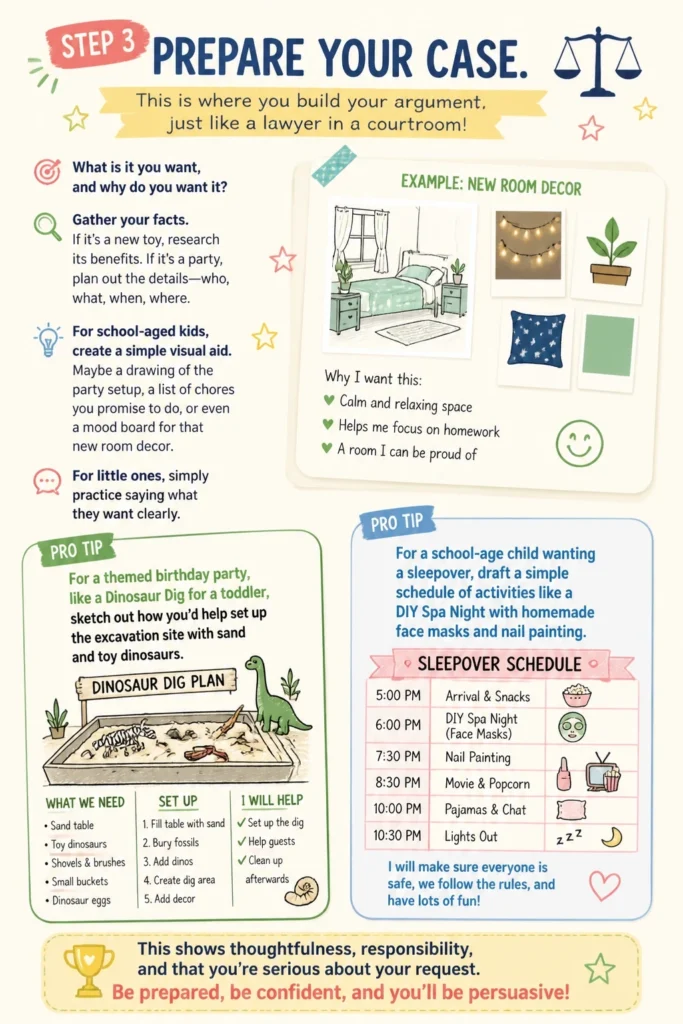
Gather your facts. If it’s a new toy, research its benefits. If it’s a party, plan out the details: who, what, when, where.
For school-aged kids, create a simple visual aid. Maybe a drawing of the party setup, a list of chores you promise to do, or even a mood board for that new room decor. For little ones, simply practice saying what they want clearly.
Pro Tip: For a themed birthday party, like a “Dinosaur Dig” for a toddler, sketch out how you’d help set up the “excavation site” with sand and toy dinosaurs. For a school-age child wanting a sleepover, draft a simple schedule of activities like a “DIY Spa Night” with homemade face masks and nail painting. This shows thoughtfulness and responsibility.
Step 4: Present Your Request Calmly and Clearly
Once you have their attention, state your request in a clear, respectful voice. Don’t whine, don’t demand, and don’t interrupt.
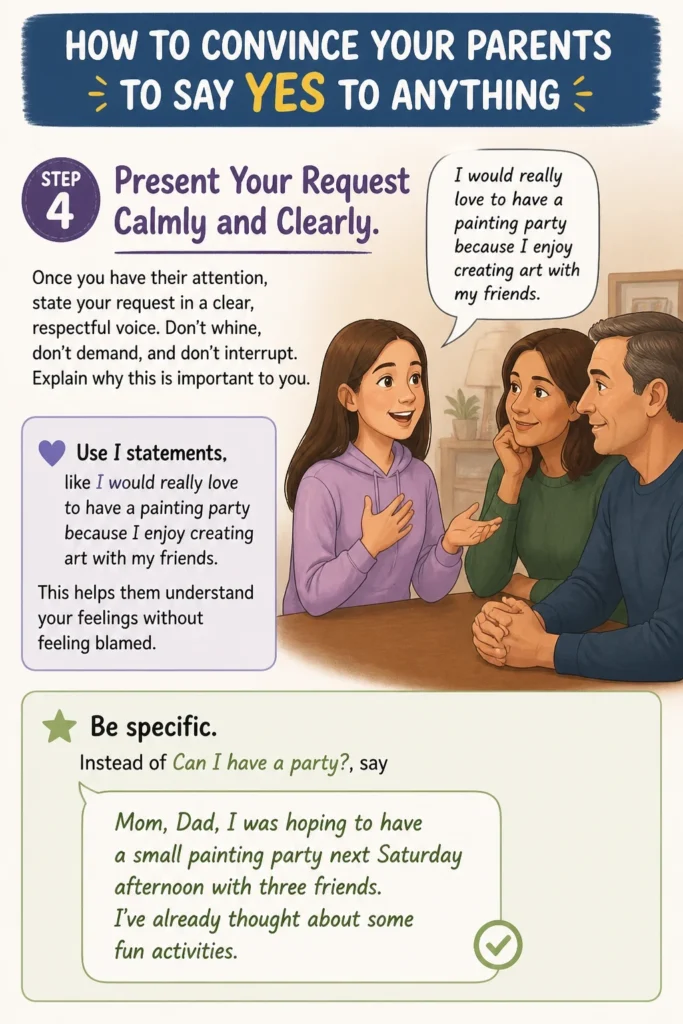
Explain why this is important to you. Use “I” statements, like “I would really love to have a painting party because I enjoy creating art with my friends.” This helps them understand your feelings without feeling blamed.
Be specific. Instead of “Can I have a party?”, say “Mom, Dad, I was hoping to have a small painting party next Saturday afternoon with three friends. I’ve already thought about some fun activities.”
Step 5: Offer Solutions and Compromises
This is a powerful step! Your parents might have concerns, so address them proactively. If they worry about money, suggest earning it through extra chores. If they worry about mess, promise to clean up immediately.
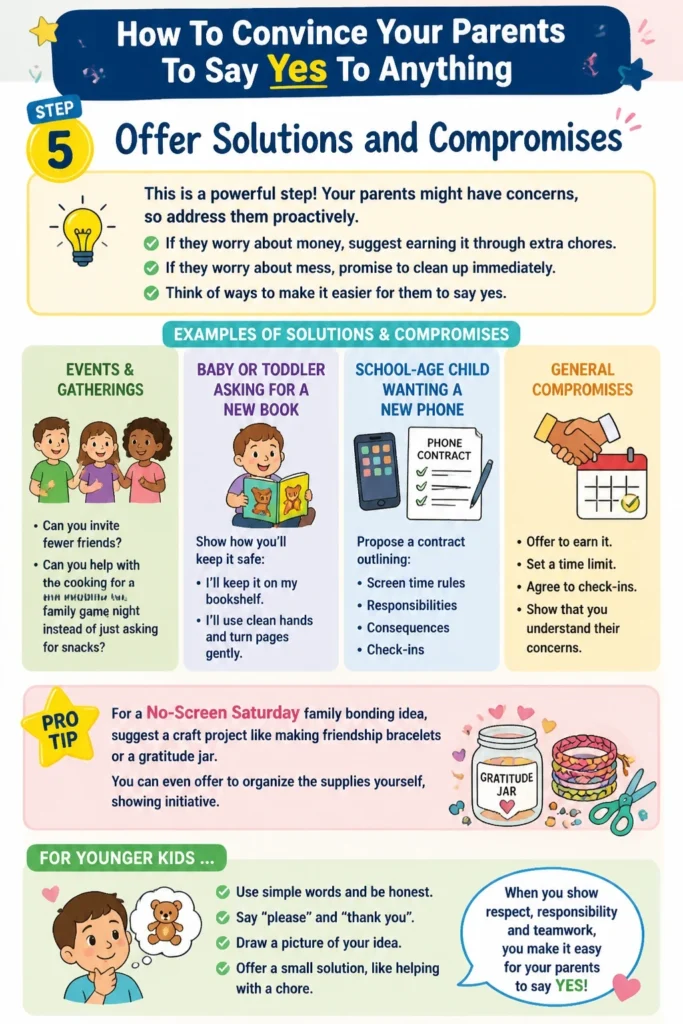
Think of ways to make it easier for them to say yes. Can you invite fewer friends? Can you help with the cooking for a family game night instead of just asking for snacks?
For a baby or toddler asking for a new book, show how you’ll keep it safe. For a school-age child wanting a new phone, propose a contract outlining screen time rules and responsibilities.
Pro Tip: For a “No-Screen Saturday” family bonding idea, suggest a craft project like making friendship bracelets or a gratitude jar. You can even offer to organize the supplies yourself, showing initiative. For younger kids wanting a treat, suggest making healthy homemade fruit popsicles together instead of store-bought candy.
Step 6: Show Responsibility and Follow Through
If your parents say yes, thank them genuinely. Then, and this is crucial, follow through on every single promise you made.
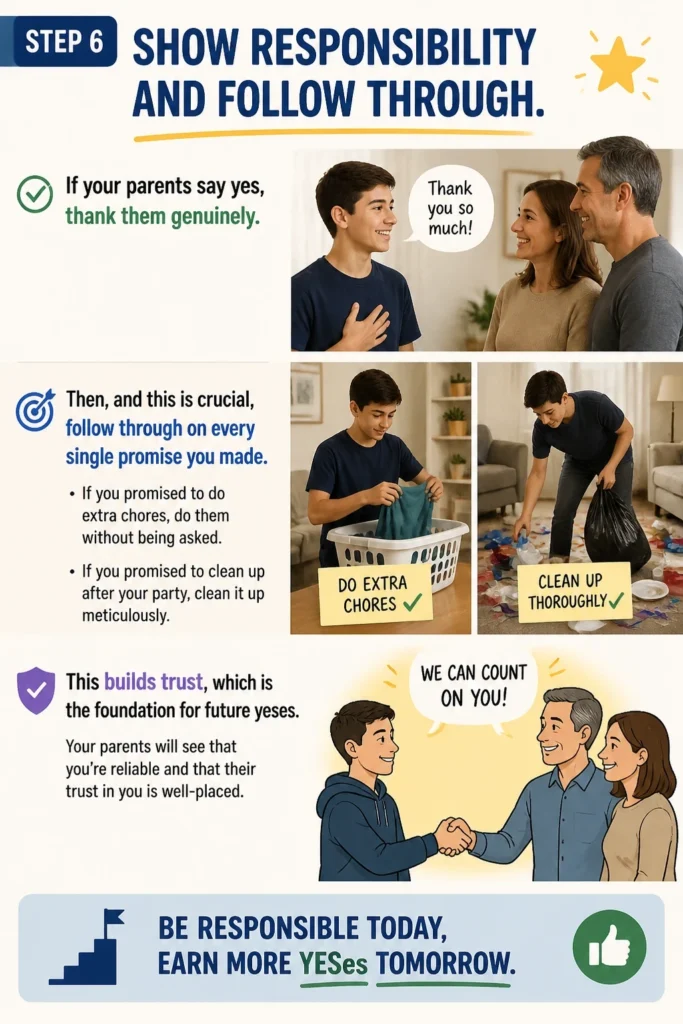
If you promised to do extra chores, do them without being asked. If you promised to clean up after your party, clean it up meticulously.
This builds trust, which is the foundation for future “yeses.” Your parents will see that you’re reliable and that their trust in you is well-placed.
Step 7: React Positively, Even to a “No”
Sometimes, despite your best efforts, the answer might still be no. It’s okay to feel disappointed, but avoid arguing, pouting, or throwing a tantrum.
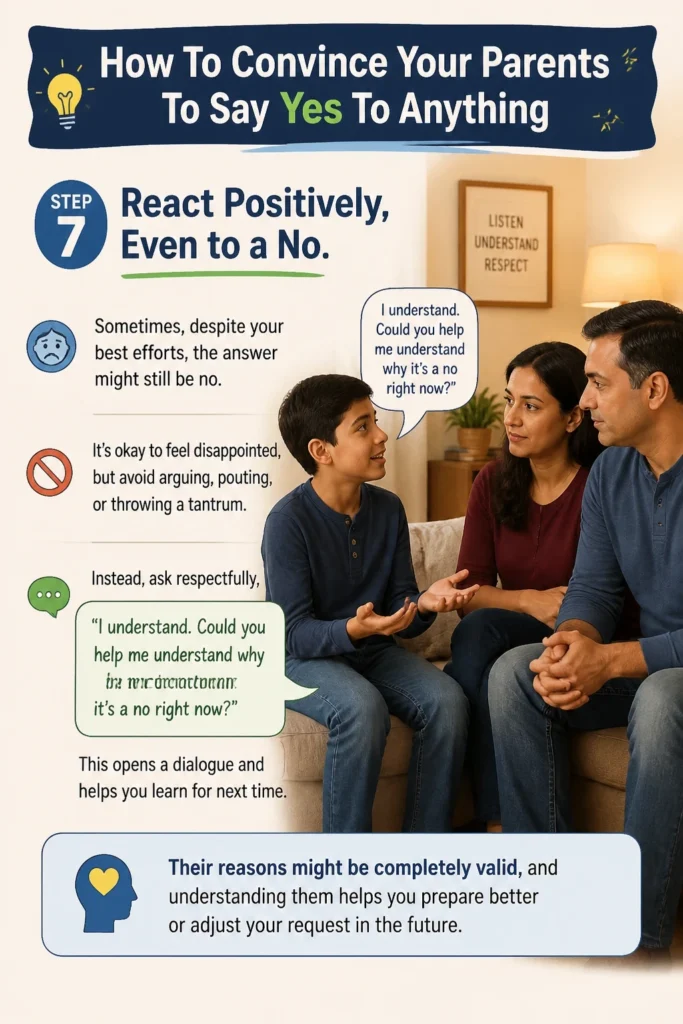
Instead, ask respectfully, “I understand. Could you help me understand why it’s a no right now?” This opens a dialogue and helps you learn for next time.
Their reasons might be completely valid, and understanding them helps you prepare better or adjust your request in the future.
Step 8: Build a Track Record of Trust
This isn’t a one-time trick; it’s a long-term strategy. Consistently demonstrate responsibility, helpfulness, and good behavior.
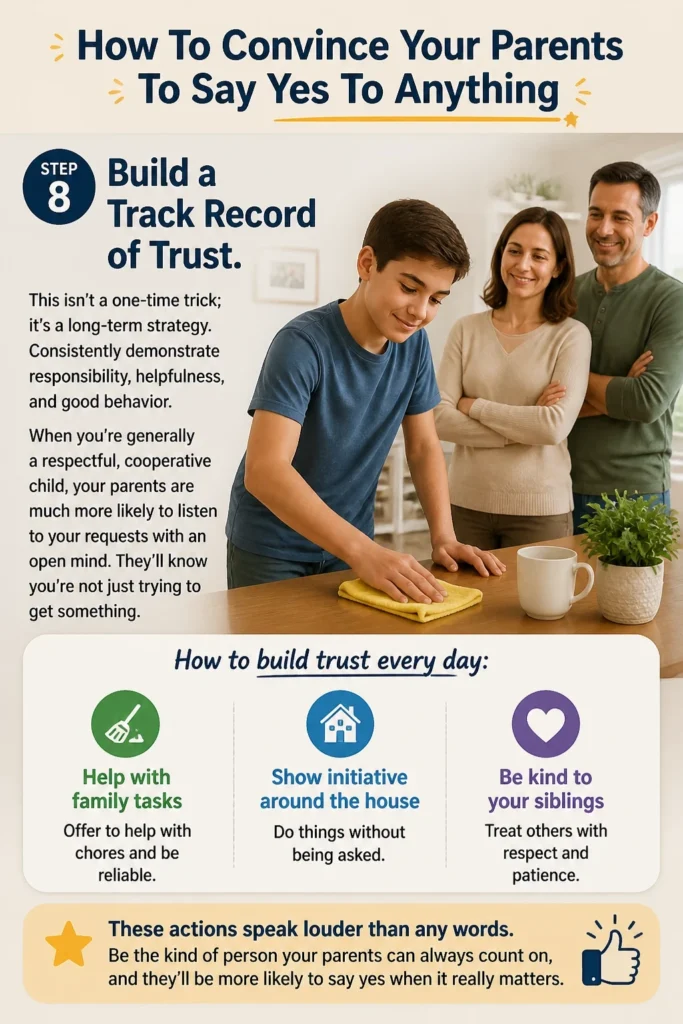
When you’re generally a respectful, cooperative child, your parents are much more likely to listen to your requests with an open mind. They’ll know you’re not just trying to get something.
Offer to help with family tasks, show initiative around the house, and be kind to your siblings. These actions speak louder than any words.
Common Mistakes to Avoid
Whining or Demanding
When you whine or demand, it immediately puts your parents on the defensive. They hear a complaint, not a request, and their natural reaction is often to shut down or say no. Instead, use a calm, respectful tone and explain your request clearly. A demanding attitude rarely gets a positive response.
Asking at the Wrong Time
Interrupting a busy parent or asking when they’re stressed is a surefire way to get a quick “no.” They’re not in a headspace to listen or consider your request properly. Always wait for a moment when they are relaxed and can give you their full attention, even if it means waiting a bit longer.
Not Having a Backup Plan or Compromise
Going into a negotiation without thinking about alternatives or compromises shows a lack of foresight. If your parents have a valid concern, and you haven’t thought about how to address it, they’ll likely just say no. Always have a few ideas ready to show you’ve considered solutions and are willing to meet them halfway.
Breaking Promises After a “Yes”
If your parents agree to something based on your promises (like cleaning up or finishing homework), and you don’t follow through, you erode their trust. This makes it incredibly difficult for them to say yes to anything in the future. Always make sure to honor your commitments, no matter how small.
Troubleshooting
My Parents Always Say No, No Matter What
If you feel like your parents always say no, try a different approach: ask them how you can earn a “yes.” Instead of asking for the thing directly, express your desire and then ask, “What would I need to do to make this happen?” This shifts the conversation from a flat refusal to a goal-oriented discussion. It shows initiative and a willingness to work for what you want.
They Don’t Seem to Listen to My Explanations
Sometimes, parents are busy or distracted. Instead of repeating yourself, ask if there’s a better time to talk or if you can write down your request. You could also say, “Mom, Dad, I have something important I’d like to discuss with you. Could we set aside 10 minutes tonight after dinner?” This signals that you have something significant to say and allows them to prepare to listen.
I Messed Up Last Time and Broke a Promise
It happens to everyone! The best way to fix this is to acknowledge your mistake directly and apologize sincerely. Say something like, “I know I didn’t follow through last time, and I’m really sorry. I learned my lesson, and I promise to do much better this time if you give me another chance.” Then, show them through consistent actions that you’ve changed. Rebuilding trust takes time and effort, but it’s worth it.
Key Takeaways
- Choose your timing wisely; a calm parent is more receptive.
- Always try to understand your parents’ perspective and concerns.
- Prepare your request with details, reasons, and potential solutions.
- Present your case calmly and clearly, using respectful language.
- Offer compromises and be proactive in addressing their worries.
- Always follow through on your promises to build and maintain trust.
Frequently Asked Questions
What if my parents get mad when I ask?
If your parents get mad, it might be a sign that the timing was off, or your approach wasn’t as calm as it could have been. Take a step back and apologize if you were disrespectful. Then, ask if you can discuss it later when everyone is calm. It’s about finding the right moment, not forcing the issue.
How often can I use these strategies?
These strategies are about building good communication habits, so you can use them whenever you have a request. However, don’t ask for something new every single day. Use them for things that genuinely matter to you. Over-asking can make your parents feel pressured, so choose your battles wisely.
Does this work for really big things, like a new pet or a trip?
Absolutely! These strategies are even more important for big requests. For something like a new pet, you’d need to research care, costs, and responsibilities extensively. For a trip, you might present a savings plan or ways to help plan the itinerary. The bigger the request, the more preparation and responsibility you need to show.
Our Top Recommended Finds
- Family Communication Journal: A shared notebook where everyone can write down requests, ideas, or things they’re grateful for. It encourages thoughtful communication.
- “My Responsibility Chart” Kit: A visual chart for younger kids to track chores and responsibilities, showing parents their commitment to helping out.
- DIY Craft Box: A box filled with supplies for various crafts (like paint, glitter, glue sticks) that encourages creative problem-solving and can be used to prepare visual requests.
Let’s Make Amazing Things Happen Together
Learning how to communicate effectively with your parents is a skill that will serve you well throughout your entire life. It’s about respect, understanding, and building strong family bonds. Every “yes” you earn, and even the “nos” you understand, are steps towards becoming a more thoughtful and responsible person.
So, take these steps, practice them with patience, and watch as your family conversations become more positive and productive. You’ve got this! Start today by thinking about one thing you’d like to ask for and how you’ll present your case.