✨ How To Convince Your Parents To Let You Get Instagram
🍼 The Newborn Survival Kit
The first six months of parenthood are a blur of exhaustion. Stop trying to tough it out—these are the 5 absolute life-saving baby essentials that experienced moms literally refuse to live without. They will instantly solve your biggest sleeping, feeding, and soothing struggles.
🌙 Hatch Rest Baby Sound Machine
The ultimate sleep hack. You can entirely control this white noise machine and dimmable nightlight from your smartphone, meaning you never have to accidentally wake the baby while sneaking back out of the nursery after a 3 AM feeding.
🤧 FridaBaby NoseFrida Snotsucker
It sounds incredibly gross until your baby has their first cold and literally cannot breathe to sleep. Throw away those useless hospital bulb syringes—this doctor-invented tool safely clears congestion in seconds, and yes, the filter absolutely prevents any germs from reaching you.
💧 Haakaa Silicone Manual Breast Pump
Every breastfeeding mom's best kept secret. Simply suction this cheap, cord-free silicone cup to the opposite breast while you nurse to effortlessly catch every drop of liquid gold letdown that would otherwise leak onto your shirt and be totally wasted.
🧴 Aquaphor Baby Healing Ointment
Forget buying ten different expensive, highly-fragranced creams. This is the only ointment you need. It miraculously cures severe diaper rash overnight, heals cracked nursing nipples, soothes baby eczema, and aggressively protects delicate skin from harsh winter wind.
☁️ Burt's Bees 100% Organic Burp Cloths
You will go through dozens of these a day, so do not cheap out on thin fabric. These thick, ultra-absorbent organic cotton cloths actually catch massive spit-ups before they ruin your only clean outfit, while remaining incredibly soft against your newborn's face.
Oh honey, I totally get it. You see all your friends connecting and sharing, and you just want to be part of the fun. It feels like everyone’s on Instagram, right?
As a mom who’s navigated this exact conversation (more than once!), I’ve learned a few things that really help bridge the gap. This guide is packed with practical, loving advice to help you show your parents you’re ready for this step.
We’ll work together to build a strong case, showing them your maturity and responsibility.
Quick Overview
This guide will walk you through a thoughtful, step-by-step approach to talking with your parents about getting an Instagram account. You’ll learn how to prepare, present your case, and demonstrate your readiness. It’s all about open communication and building trust.
- Time needed: 1-2 weeks (for preparation and conversations)
- Difficulty: Intermediate (requires patience and planning)
- What you’ll need: A clear plan, a listening ear, and a little bit of creativity
Step-by-Step Instructions
Step 1: Do Your Homework
Before you even utter the word “Instagram,” spend some time understanding it yourself. This isn’t just about knowing how to post a photo. It’s about understanding the app’s features, privacy settings, and potential pitfalls.
Research Instagram’s safety features, like private accounts, blocking, and reporting. Look into parental controls that are available, both within the app and on your device. Knowing these details will show your parents you’re taking this seriously and not just jumping in blindly.
Think about how other families manage screen time or social media. Are there family rules you can suggest or adapt? This preparation is a huge step in demonstrating your maturity.
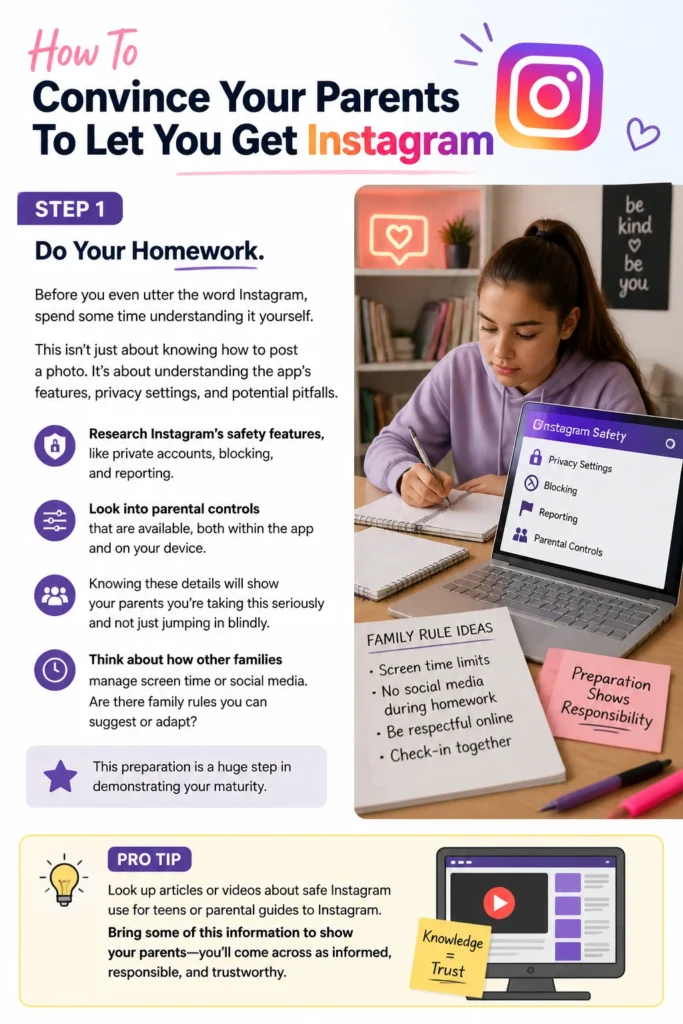
Pro Tip: Look up articles or videos about “safe Instagram use for teens” or “parental guides to Instagram.” Bring some of this information to your parents to show you’ve done your research.
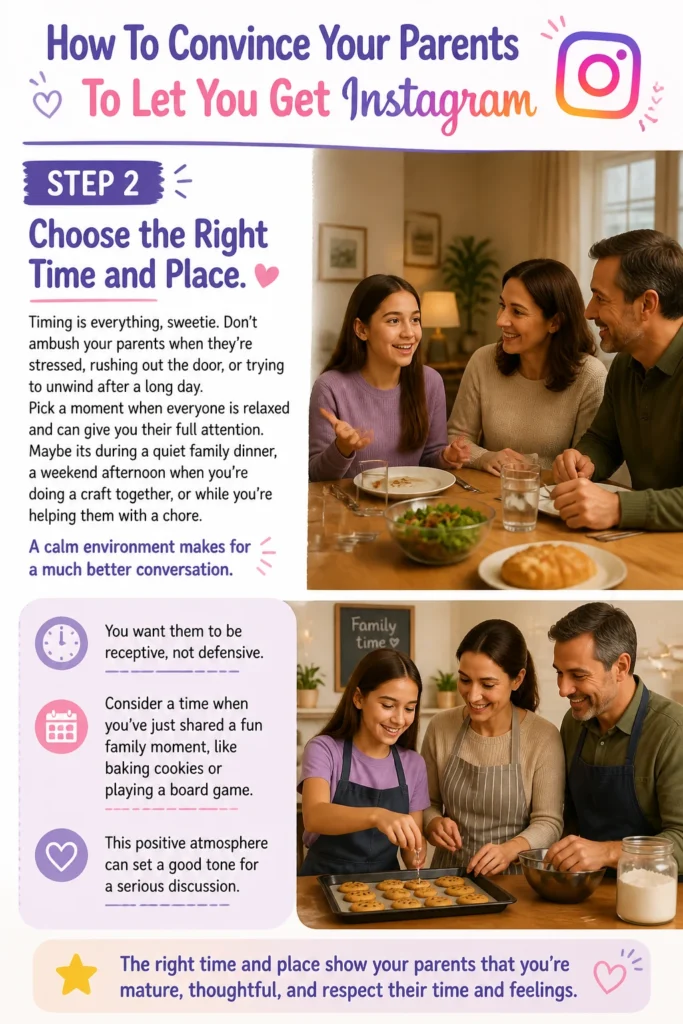
Step 2: Choose the Right Time and Place
Timing is everything, sweetie. Don’t ambush your parents when they’re stressed, rushing out the door, or trying to unwind after a long day. Pick a moment when everyone is relaxed and can give you their full attention.
Maybe it’s during a quiet family dinner, a weekend afternoon when you’re doing a craft together, or while you’re helping them with a chore. A calm environment makes for a much better conversation. You want them to be receptive, not defensive.
Consider a time when you’ve just shared a fun family moment, like baking cookies or playing a board game. This positive atmosphere can set a good tone for a serious discussion.
Step 3: Prepare Your Presentation (Yes, Really!)
Think of this as a mini-project. Sit down and write out your points. What are your main reasons for wanting Instagram? How will you use it responsibly? What boundaries are you willing to set?
You might want to create a simple list or even a little presentation on paper. Show them you’ve thought about this deeply. This isn’t just a casual request; it’s a well-considered proposal.
Include ideas for positive uses. Maybe you want to share your amazing craft projects, like those glitter slime creations or hand-painted rocks. Or perhaps you want to document your journey learning to bake those yummy cupcakes for a family party.
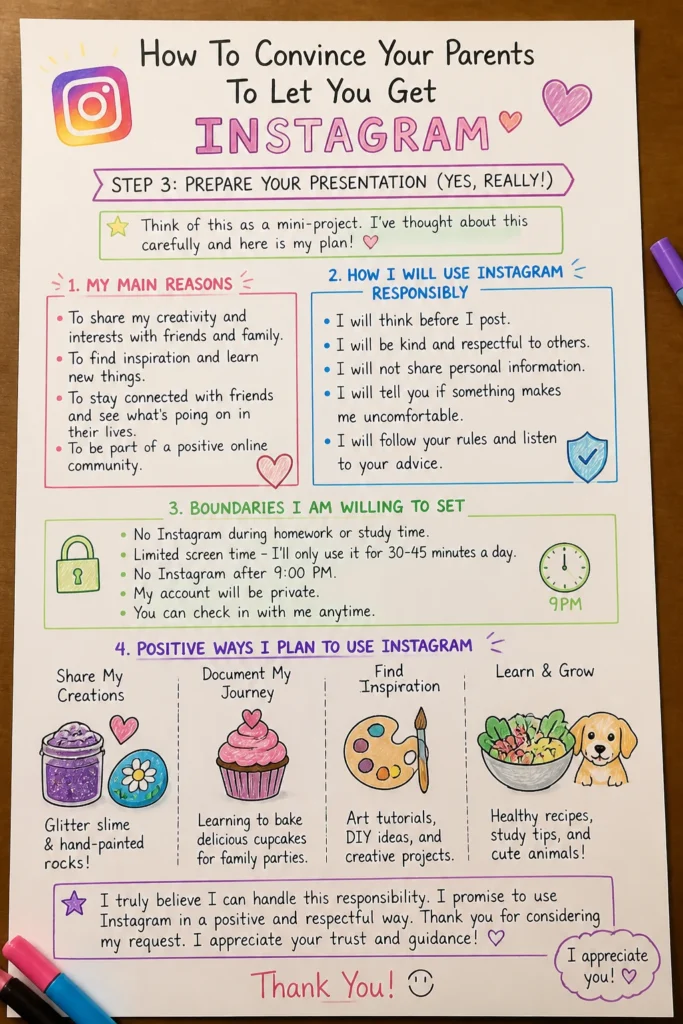
You could even suggest using it to follow accounts that inspire you, like art tutorials, healthy recipe ideas, or even accounts dedicated to cute baby animals! This shows a proactive, constructive approach.
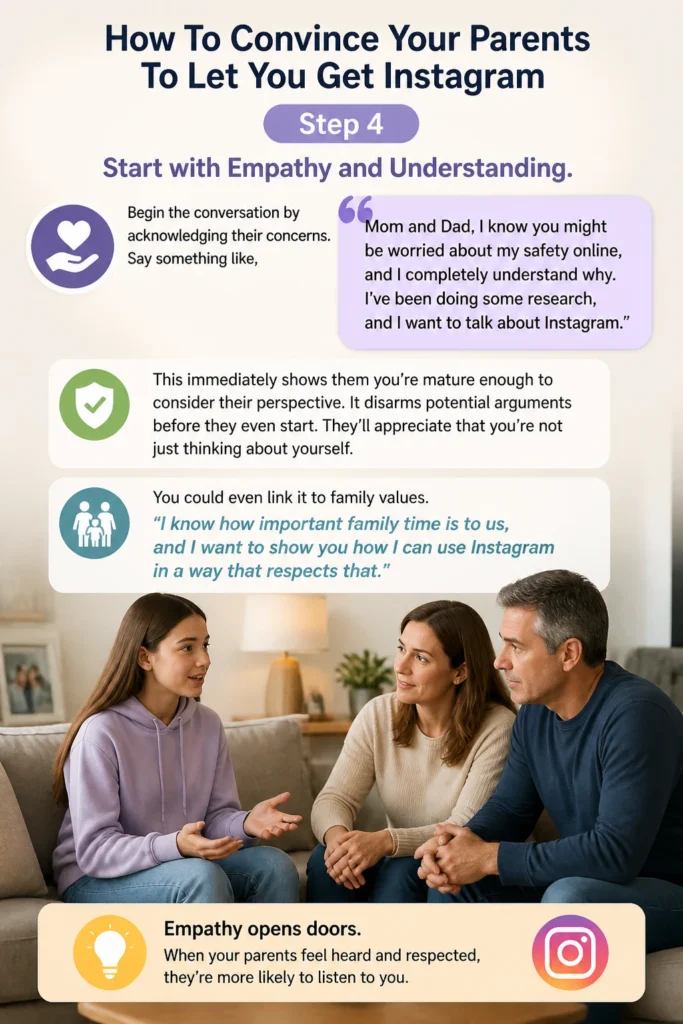
Step 4: Start with Empathy and Understanding
Begin the conversation by acknowledging their concerns. Say something like, “Mom and Dad, I know you might be worried about my safety online, and I completely understand why. I’ve been doing some research, and I want to talk about Instagram.”
This immediately shows them you’re mature enough to consider their perspective. It disarms potential arguments before they even start. They’ll appreciate that you’re not just thinking about yourself.
You could even link it to family values. “I know how important family time is to us, and I want to show you how I can use Instagram in a way that respects that.”
Step 5: Present Your Plan for Responsible Use
This is where your homework really pays off. Don’t just ask; tell them how you plan to use it safely. Propose specific rules and boundaries you’re willing to follow.
Suggest a private account: This means only people you approve can see your posts.
Offer to let them follow you: This shows transparency and trust.
Propose daily time limits: Suggest using a timer or an app to manage your screen time. “I’m happy to limit my Instagram time to 30 minutes a day, perhaps after my homework is done.”
Discuss content rules: “I’ll only post things that are positive and appropriate, and I’ll never share personal information.”
Talk about who you’ll follow: “I’ll only follow people I know in real life, and I’ll ask you before I accept any requests from strangers.”
You could even suggest using Instagram for family bonding! “We could create a shared album of our family vacations, or I could post pictures of our weekend adventures, like our hike last Saturday or our fun craft session making friendship bracelets.”

Imagine sharing pictures of your school outfits, but always checking with your parents first. Or perhaps documenting the process of planning a themed birthday party, from the invitations to the decorations, showing them you’re thinking creatively and responsibly.
Pro Tip: Connect your plan to existing family rules. If you have a “no phones at the dinner table” rule, affirm that Instagram would follow that. This shows consistency and respect for established boundaries.
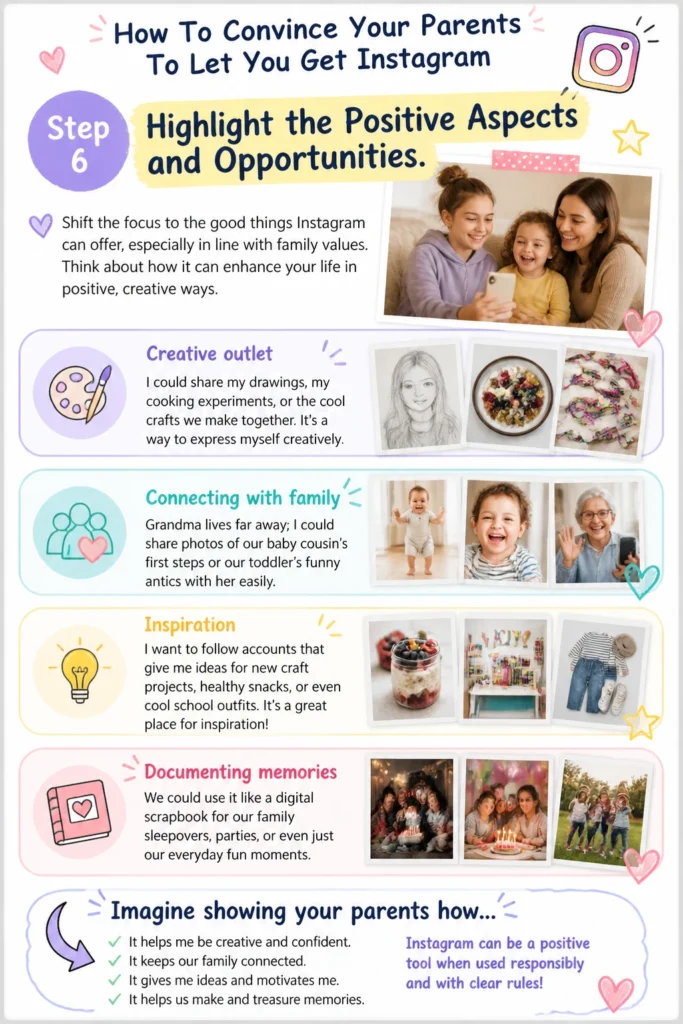
Step 6: Highlight the Positive Aspects and Opportunities
Shift the focus to the good things Instagram can offer, especially in line with family values. Think about how it can enhance your life in positive, creative ways.
Creative outlet: “I could share my drawings, my cooking experiments, or the cool crafts we make together. It’s a way to express myself creatively.”
Connecting with family: “Grandma lives far away; I could share photos of our baby cousin’s first steps or our toddler’s funny antics with her easily.”
Inspiration: “I want to follow accounts that give me ideas for new craft projects, healthy snacks, or even cool school outfits. It’s a great place for inspiration!”
Documenting memories: “We could use it like a digital scrapbook for our family sleepovers, parties, or even just our everyday fun moments.”
Imagine showing your parents how you could follow accounts that inspire amazing party ideas, from a dinosaur-themed toddler party to a glow-in-the-dark sleepover for school-age kids. You could even use it to find ideas for fun family activities, like creating a backyard obstacle course or a themed movie night.
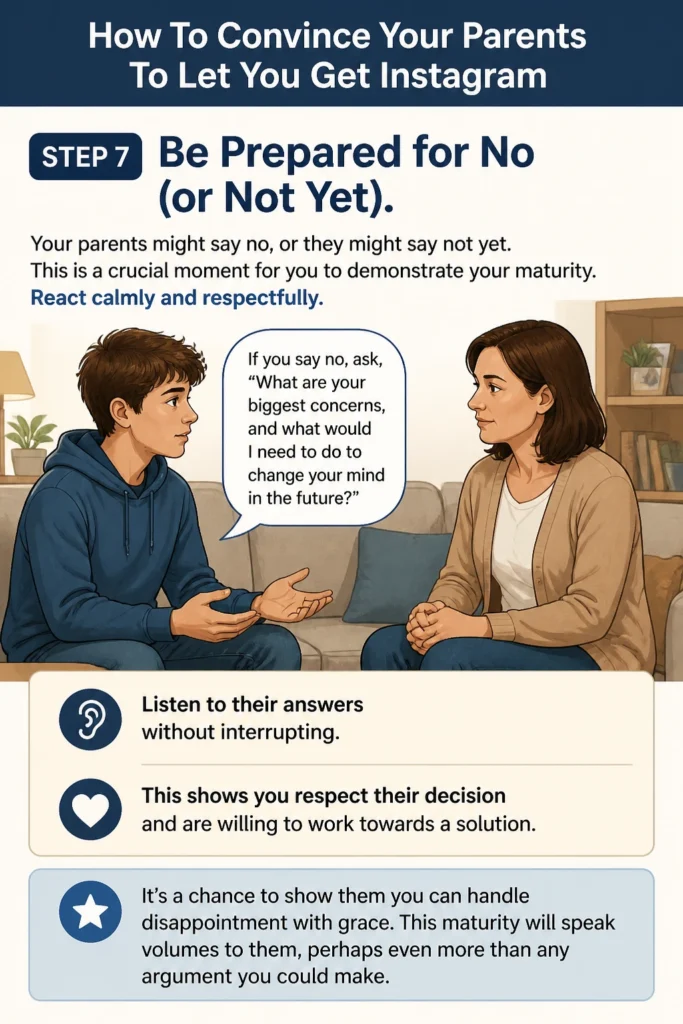
Step 7: Be Prepared for “No” (or “Not Yet”)
Your parents might say no, or they might say “not yet.” This is a crucial moment for you to demonstrate your maturity. React calmly and respectfully.
If they say no, ask, “What are your biggest concerns, and what would I need to do to change your mind in the future?” Listen to their answers without interrupting. This shows you respect their decision and are willing to work towards a solution.
It’s a chance to show them you can handle disappointment with grace. This maturity will speak volumes to them, perhaps even more than any argument you could make.
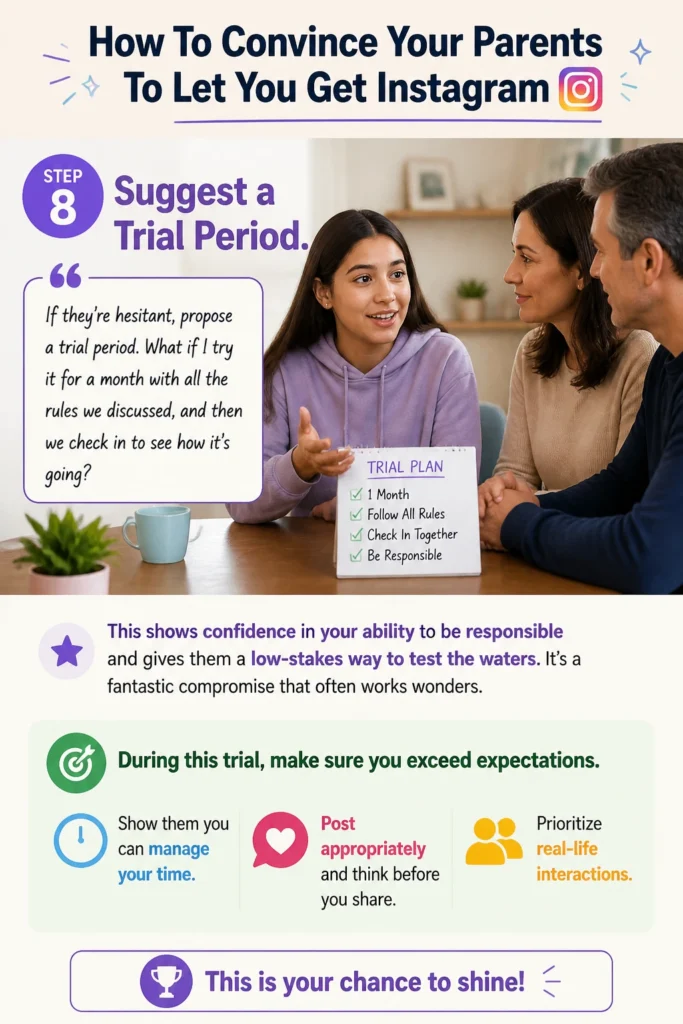
Step 8: Suggest a Trial Period
If they’re hesitant, propose a trial period. “What if I try it for a month with all the rules we discussed, and then we check in to see how it’s going?”
This shows confidence in your ability to be responsible and gives them a low-stakes way to test the waters. It’s a fantastic compromise that often works wonders.
During this trial, make sure you exceed expectations. Show them you can manage your time, post appropriately, and prioritize real-life interactions. This is your chance to shine!
Common Mistakes to Avoid
Demanding or Whining
Coming across as demanding, entitled, or whining will immediately shut down the conversation. Parents want to see maturity and respect, not tantrums. Even if you feel frustrated, keep your tone calm and polite. A respectful approach is far more likely to get a positive response.
Comparing Yourself to Others
Saying “Everyone else has Instagram!” is rarely an effective argument. Your parents care about you and your safety, not what other families are doing. Focus on your own readiness and your specific plan for responsible use, rather than peer pressure.
Not Having a Clear Plan
Just asking for Instagram without having thought through the rules, privacy settings, and how you’ll use it safely is a big mistake. It signals to your parents that you haven’t considered the responsibilities involved, reinforcing their fears. A well-thought-out plan shows you’re serious.
Reacting Emotionally to Pushback
If your parents express concerns or say no, don’t get angry, sad, or defensive. An emotional reaction will confirm their fears that you’re not mature enough to handle the platform or the responsibilities that come with it. Stay calm, listen, and ask clarifying questions.
Troubleshooting
“We just don’t think you’re ready yet.”
This is a common response. Ask them what specific actions or behaviors would demonstrate your readiness to them. “What could I do to show you I’m ready? Is it about better time management with homework, or demonstrating more responsibility around the house?” Listen carefully to their answers and then propose a plan to work on those areas. This shows you’re committed to earning their trust over time.
“It’s too dangerous.”
Acknowledge their fear and reiterate your research. “I understand your concerns about safety. That’s why I’ve looked into private accounts, blocking features, and how we can set up parental controls together. I’m also happy for you to follow me and check my activity whenever you like.” Focus on the proactive steps you’re willing to take to mitigate risks.
“We don’t want you spending more time on screens.”
This is a valid concern. Emphasize your proposed screen time limits and how you plan to balance Instagram with other activities. “I’m happy to stick to a strict time limit, and I promise it won’t take away from my homework, chores, or our family time. Maybe I could even use it to get ideas for our next family craft project or a fun outdoor activity we can do together!” Highlight how it can enhance* rather than replace real-life experiences.
Key Takeaways
- Do your research: Understand Instagram’s features and safety settings.
- Plan your approach: Prepare your reasons and propose clear rules for responsible use.
- Empathize with parents: Acknowledge their concerns about online safety.
- Highlight positive uses: Show how Instagram can be a creative, connective tool.
- Be patient and respectful: Accept their decision and be willing to compromise or work towards their trust.
- Suggest a trial period: Offer a short-term trial to prove your responsibility.
Frequently Asked Questions
At what age is it generally okay to get Instagram?
While Instagram’s official age is 13, many parents make their decision based on their child’s individual maturity, understanding of online safety, and family values. There’s no single “right” age, as every child and family is different.
How can I show my parents I’m responsible enough?
Demonstrate responsibility in your everyday life. This means consistently doing your chores, managing your homework without prompting, being respectful, and adhering to existing family rules. Proposing a detailed plan for Instagram use and offering to stick to strict boundaries also shows maturity.
What if my parents still say no after all this?
If they still say no, ask them what specific actions or changes they would need to see from you to reconsider in the future. It’s important to respect their decision and continue to build trust over time. You might not get it right away, but showing patience and continued responsibility can change their minds later.
Can Instagram actually be good for kids?
Yes, it can! When used responsibly, Instagram can be a creative outlet for sharing art, crafts, or hobbies. It can also be a way to connect with friends and family, follow inspiring accounts (like those for new recipes or fun family activities), and document positive memories. The key is responsible use and strong boundaries.
Our Top Recommended Finds
- Family Tech Contract Template: A printable template that helps you and your parents outline rules and expectations for device and social media use. It makes everything clear for everyone.
- Screen Time Management App: Tools like Apple’s Screen Time or Google’s Family Link can help you and your parents set daily limits and monitor usage, making responsible use much easier to manage.
- “Parenting in the Digital Age” Guidebook: A helpful resource for parents (and you!) to understand the online world, fostering open discussions about digital citizenship and safety.
Building Trust, One Step at a Time
Talking about Instagram is more than just asking for an app; it’s about showing your parents you’re growing up and ready for more responsibility. This conversation is a fantastic opportunity to build trust and show your maturity. Remember, open communication is the foundation of any strong family connection.
Take these steps, put in the effort, and you’ll be well on your way to a thoughtful, positive discussion. Who knows, maybe your first Instagram post will be a picture of the delicious family meal you helped prepare, or a fun craft project you completed together! Start planning today, and show your parents just how ready you are.