
💖 How To Tell If A Boy Likes You
🍼 The Newborn Survival Kit
The first six months of parenthood are a blur of exhaustion. Stop trying to tough it out—these are the 5 absolute life-saving baby essentials that experienced moms literally refuse to live without. They will instantly solve your biggest sleeping, feeding, and soothing struggles.
🌙 Hatch Rest Baby Sound Machine
The ultimate sleep hack. You can entirely control this white noise machine and dimmable nightlight from your smartphone, meaning you never have to accidentally wake the baby while sneaking back out of the nursery after a 3 AM feeding.
🤧 FridaBaby NoseFrida Snotsucker
It sounds incredibly gross until your baby has their first cold and literally cannot breathe to sleep. Throw away those useless hospital bulb syringes—this doctor-invented tool safely clears congestion in seconds, and yes, the filter absolutely prevents any germs from reaching you.
💧 Haakaa Silicone Manual Breast Pump
Every breastfeeding mom's best kept secret. Simply suction this cheap, cord-free silicone cup to the opposite breast while you nurse to effortlessly catch every drop of liquid gold letdown that would otherwise leak onto your shirt and be totally wasted.
🧴 Aquaphor Baby Healing Ointment
Forget buying ten different expensive, highly-fragranced creams. This is the only ointment you need. It miraculously cures severe diaper rash overnight, heals cracked nursing nipples, soothes baby eczema, and aggressively protects delicate skin from harsh winter wind.
☁️ Burt's Bees 100% Organic Burp Cloths
You will go through dozens of these a day, so do not cheap out on thin fabric. These thick, ultra-absorbent organic cotton cloths actually catch massive spit-ups before they ruin your only clean outfit, while remaining incredibly soft against your newborn's face.
Oh, the wonderful, sometimes bewildering world of childhood crushes! It’s such a sweet, tender time, full of new feelings and a whole lot of unspoken questions.
As a mom, I remember those butterflies myself, and now I see my own kids navigating these early social waters. It’s a journey we can guide them through with warmth and understanding.
This guide is all about helping you help your child understand those subtle signs, fostering open communication, and making sure they feel loved and confident through it all.

Quick Overview
It’s about noticing the little things, talking openly, and building confidence. We’ll explore how to help your child spot signs of interest and navigate friendships with grace.
- Time needed: Ongoing conversations, 15-30 minutes for a dedicated chat
- Difficulty: Beginner (for parents), Intermediate (for kids interpreting social cues)
- What you’ll need: Open ears, a kind heart, and maybe some hot cocoa for a cozy chat
Step-by-Step Instructions
Step 1: Observe Their Body Language
Body language speaks volumes, even for little ones. Help your child notice how someone acts around them.
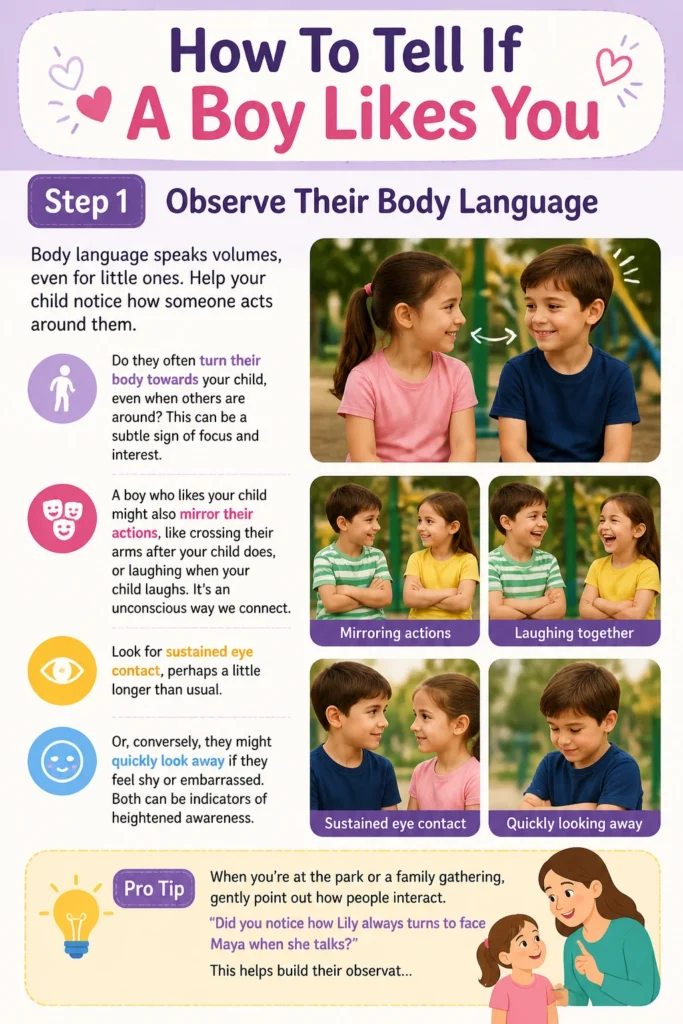
Do they often turn their body towards your child, even when others are around? This can be a subtle sign of focus and interest.
A boy who likes your child might also mirror their actions, like crossing their arms after your child does, or laughing when your child laughs. It’s an unconscious way we connect.
Look for sustained eye contact, perhaps a little longer than usual. Or, conversely, they might quickly look away if they feel shy or embarrassed. Both can be indicators of heightened awareness.
Pro Tip: When you’re at the park or a family gathering, gently point out how people interact. “Did you notice how Lily always turns to face Maya when she talks?” This helps build their observation skills without pressure.
Step 2: Pay Attention to Their Words and Actions
What someone says and does can be very telling. Encourage your child to listen and watch.

Does the boy ask your child a lot of questions, even seemingly small ones about their day or their favorite color? This shows an interest in getting to know them better.
They might go out of their way to help your child, like picking up a dropped pencil or offering assistance with a school project. It’s a kind gesture that can sometimes mean more.
Sometimes, a boy who likes your child might even tease them gently. It’s important to differentiate this from unkind teasing, so talk about what feels good and what doesn’t.
Step 3: Notice Their Friends’ Behavior
Friends often pick up on these things too, and sometimes they’re a little less subtle! Their friends might drop hints.
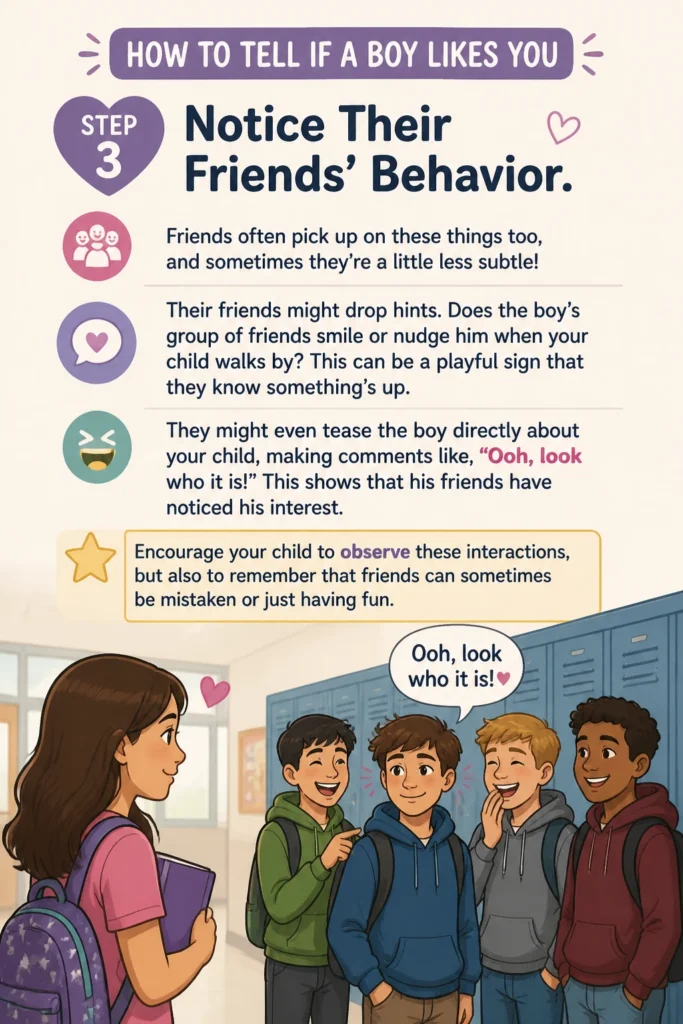
Does the boy’s group of friends smile or nudge him when your child walks by? This can be a playful sign that they know something’s up.
They might even tease the boy directly about your child, making comments like, “Ooh, look who it is!” This shows that his friends have noticed his interest.
Encourage your child to observe these interactions, but also to remember that friends can sometimes be mistaken or just having fun.
Step 4: Look for Increased Proximity
People tend to gravitate towards those they like. Help your child notice physical closeness.
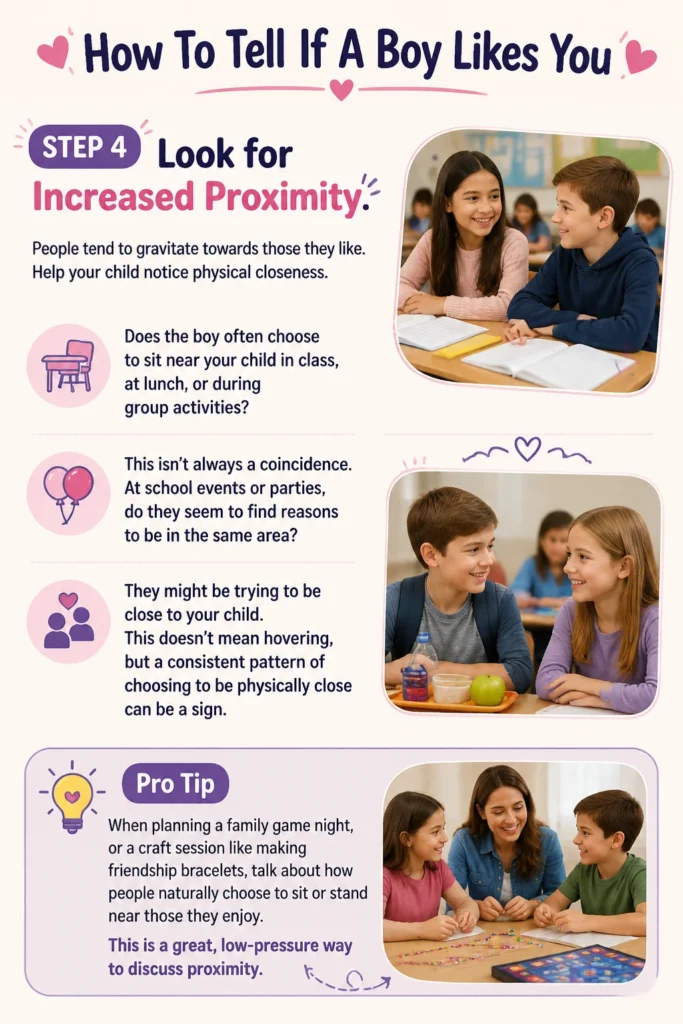
Does the boy often choose to sit near your child in class, at lunch, or during group activities? This isn’t always a coincidence.
At school events or parties, do they seem to find reasons to be in the same area? They might be trying to be close to your child.
This doesn’t mean hovering, but a consistent pattern of choosing to be physically close can be a sign.
Pro Tip: When planning a family game night, or a craft session like making friendship bracelets, talk about how people naturally choose to sit or stand near those they enjoy. This is a great, low-pressure way to discuss proximity.
Step 5: How They Treat Others vs. Your Child
A key indicator can be how their behavior changes when your child is involved. It’s about a difference.

Do they seem generally shy or quiet, but become more talkative and animated around your child? This could mean your child brings out a different side of them.
Conversely, if they’re usually boisterous, do they become a little quieter or more reserved specifically when your child is present? Shyness can manifest in different ways.
Help your child notice if the boy offers compliments or special attention only to them, or if it’s a general friendly behavior.
Step 6: Observe Their Online or Texting Habits (for older school-age kids)
For kids who are starting to use devices, digital interactions can offer clues. This is especially true for pre-teens and early teens.
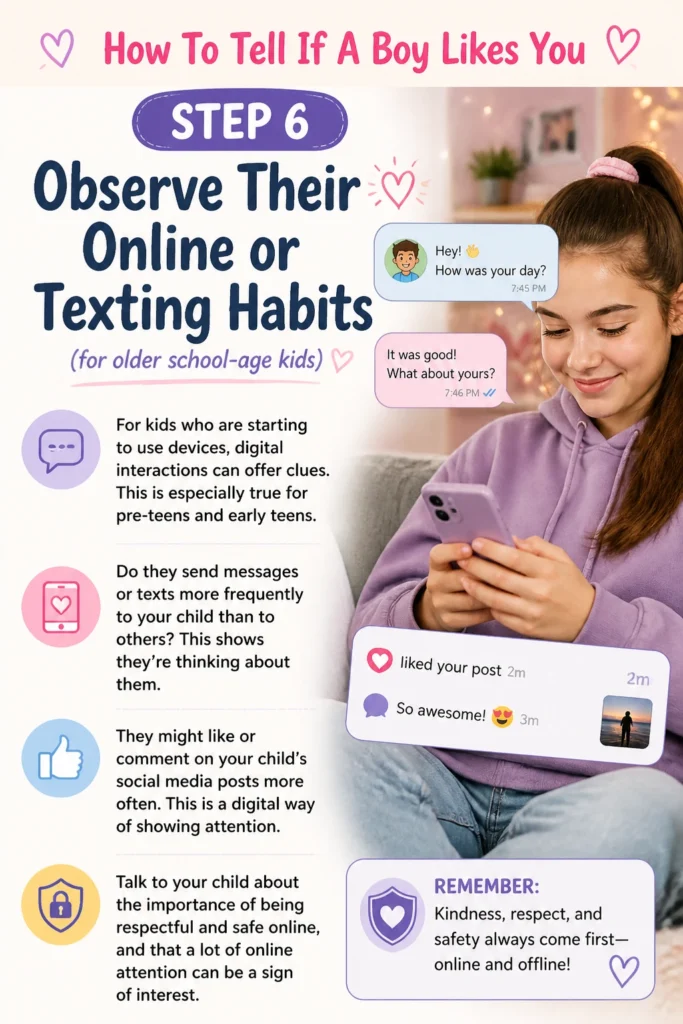
Do they send messages or texts more frequently to your child than to others? This shows they’re thinking about them.
They might like or comment on your child’s social media posts more often. This is a digital way of showing attention.
Talk to your child about the importance of being respectful and safe online, and that a lot of online attention can be a sign of interest.
Step 7: Encourage Open Communication
The best way to know is often to ask, or to create an environment where open conversation is natural. This is where your parenting comes in!
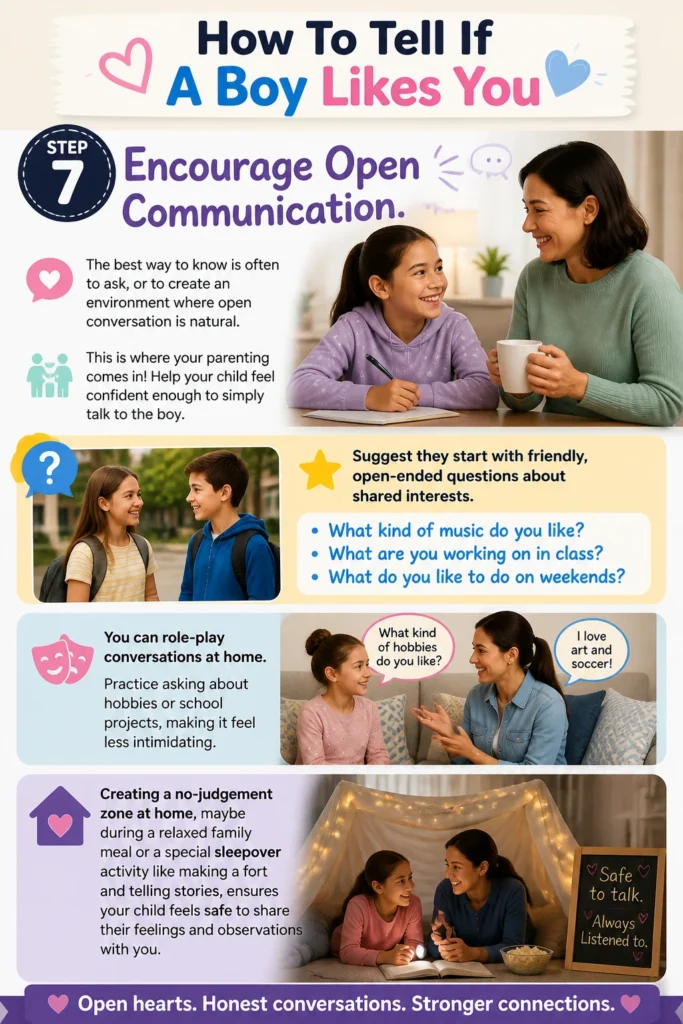
Help your child feel confident enough to simply talk to the boy. Suggest they start with friendly, open-ended questions about shared interests.
You can role-play conversations at home. Practice asking about hobbies or school projects, making it feel less intimidating.
Creating a “no-judgement zone” at home, maybe during a relaxed family meal or a special sleepover activity like making a fort and telling stories, ensures your child feels safe to share their feelings and observations with you.
Step 8: Build Your Child’s Confidence
Feeling good about themselves helps your child navigate social situations, no matter who likes whom. Confidence is key.
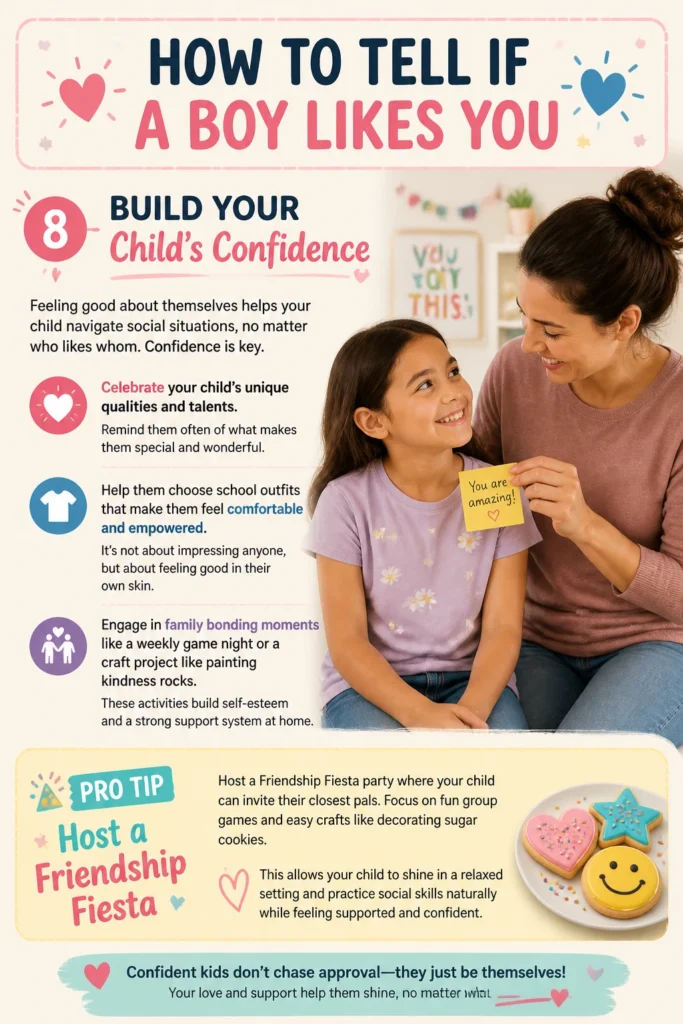
Celebrate your child’s unique qualities and talents. Remind them often of what makes them special and wonderful.
Help them choose school outfits that make them feel comfortable and empowered. It’s not about impressing anyone, but about feeling good in their own skin.
Engage in family bonding moments like a weekly game night or a craft project like painting kindness rocks. These activities build self-esteem and a strong support system at home.
Pro Tip: Host a “Friendship Fiesta” party where your child can invite their closest pals. Focus on fun group games and easy crafts like decorating sugar cookies. This allows your child to shine in a relaxed setting and practice social skills.
Common Mistakes to Avoid
Making Assumptions
It’s easy for kids (and sometimes us parents!) to jump to conclusions. A single friendly gesture doesn’t always mean someone likes your child in a romantic way. Sometimes a boy is just being kind. Help your child observe patterns over time, rather than focusing on one isolated incident.
Pressuring Your Child
Never push your child to act a certain way or to “make a move” if they’re not ready. This is their journey, and they need to feel in control. Encourage them to be themselves and to respond in a way that feels comfortable and genuine to them. Our role is to support, not to direct.
Ignoring Their Feelings
It’s tempting to dismiss crushes as “silly” or “too young,” but these feelings are very real to your child. Validate their emotions, whether they’re excited, confused, or even a little scared. A simple, “It sounds like you’re feeling a bit curious about this, and that’s totally normal,” can make all the difference.
Over-Analyzing Every Interaction
While observation is important, over-analyzing every glance or comment can lead to unnecessary stress. Teach your child to notice general trends rather than scrutinizing every tiny detail. Remind them that friendships and feelings evolve, and it’s okay not to have all the answers right away.
Troubleshooting
“What if I’m wrong and he doesn’t like me?”
It’s a natural worry! Reassure your child that even if the signs are misinterpreted, it’s a valuable learning experience. The most important thing is that they are learning to observe, communicate, and understand social cues. Remind them that friendships are wonderful too, and sometimes a strong friendship is exactly what’s meant to be.
“He’s being mean to me, but I think he likes me.”
This is a crucial conversation. Explain very clearly that genuine liking never involves being unkind or making someone feel bad. Sometimes, boys (and girls!) can be awkward or unsure how to express feelings, but meanness is never okay. Focus on teaching your child to value respect and kindness above all else in any relationship.
“I’m too shy to talk to him.”
Shyness is perfectly normal! Instead of a direct conversation, suggest starting with small, low-pressure interactions. Could they just smile and say “hi” in the hallway? Could they ask about a shared homework assignment? Sometimes, a simple, friendly gesture is the perfect first step. Encourage them to take baby steps, celebrating each small victory.
Key Takeaways
- Encourage your child to observe body language and consistent actions for clues.
- Teach them to notice differences in how someone treats them versus others.
- Foster open communication at home so they feel safe sharing their feelings.
- Build their confidence; feeling good about themselves is always the best foundation.
- Remind them that kindness and respect are non-negotiable in any relationship.
- Focus on patterns of behavior, not just isolated incidents, when interpreting signs.
Frequently Asked Questions
How do I know if it’s just a friendship or something more?
It’s often a blurry line, especially at younger ages! The key difference often lies in the intensity and consistency of the attention, and a certain level of shyness or special treatment. Friendships are wonderful and important, and sometimes a crush can grow into a deep friendship first. Encourage your child to enjoy the connection, whatever form it takes.
What if my child feels uncomfortable with the attention?
Their comfort is paramount. If any attention makes your child feel uneasy, it’s important to address it immediately. Teach them to set boundaries, politely say “no,” or walk away. Reinforce that their feelings matter and they never have to accept attention that makes them feel anything less than respected and safe.
Should I talk to the boy’s parents?
Generally, it’s best to let kids navigate these early social interactions themselves, with your guidance. Stepping in can sometimes make things more awkward or escalate a situation unnecessarily. Only consider talking to other parents if there’s a serious issue like bullying, persistent discomfort, or if the behavior becomes inappropriate.
My child is really upset because they think a boy likes them, but he doesn’t. How can I help?
This is a tough one, and heartbreak is real, even at a young age. Validate their sadness and disappointment. Remind them that it’s okay to feel upset and that everyone experiences these feelings. Focus on all the wonderful friendships they do have and activities they love. A comforting movie night or a special craft project can be a lovely distraction and a chance to reconnect.
Our Top Recommended Finds
- A “Feelings Journal” with fun prompts: A safe space for your child to write down their thoughts and observations without pressure.
- A board game focused on communication: Games that encourage talking and sharing can naturally open up discussions about feelings.
- A simple friendship bracelet kit: A fun activity to do together, and a great way to talk about giving and receiving tokens of friendship.
Nurturing Connection and Confidence
Navigating the world of childhood crushes is a significant part of growing up. It’s a chance for your child to learn about their own feelings, understand social cues, and build confidence in who they are.
By being a warm, supportive presence, and offering practical advice along the way, you’re not just helping them understand if a boy likes them. You’re teaching them invaluable life skills about relationships, respect, and self-worth. So, grab that hot cocoa, snuggle up, and let the conversations begin!