
✨ How To Start A Conversation With A Guy
🍼 The Newborn Survival Kit
The first six months of parenthood are a blur of exhaustion. Stop trying to tough it out—these are the 5 absolute life-saving baby essentials that experienced moms literally refuse to live without. They will instantly solve your biggest sleeping, feeding, and soothing struggles.
🌙 Hatch Rest Baby Sound Machine
The ultimate sleep hack. You can entirely control this white noise machine and dimmable nightlight from your smartphone, meaning you never have to accidentally wake the baby while sneaking back out of the nursery after a 3 AM feeding.
🤧 FridaBaby NoseFrida Snotsucker
It sounds incredibly gross until your baby has their first cold and literally cannot breathe to sleep. Throw away those useless hospital bulb syringes—this doctor-invented tool safely clears congestion in seconds, and yes, the filter absolutely prevents any germs from reaching you.
💧 Haakaa Silicone Manual Breast Pump
Every breastfeeding mom's best kept secret. Simply suction this cheap, cord-free silicone cup to the opposite breast while you nurse to effortlessly catch every drop of liquid gold letdown that would otherwise leak onto your shirt and be totally wasted.
🧴 Aquaphor Baby Healing Ointment
Forget buying ten different expensive, highly-fragranced creams. This is the only ointment you need. It miraculously cures severe diaper rash overnight, heals cracked nursing nipples, soothes baby eczema, and aggressively protects delicate skin from harsh winter wind.
☁️ Burt's Bees 100% Organic Burp Cloths
You will go through dozens of these a day, so do not cheap out on thin fabric. These thick, ultra-absorbent organic cotton cloths actually catch massive spit-ups before they ruin your only clean outfit, while remaining incredibly soft against your newborn's face.
We all know that feeling, don’t we? You’re out and about, maybe at the park, school pickup, or a community event, and you spot someone you’d like to chat with. It could be a new parent, a friendly face, or someone who just seems interesting.
It can feel a little daunting to make that first move, especially when you’re juggling a toddler, a grocery list, and a million other things. But trust me, as a mom who’s navigated countless school events and playdates, connecting with others enriches your family’s world so much. This guide is packed with real-world tips I’ve learned along the way, making it easy and genuine for you to start those conversations.

Quick Overview
This guide will empower you to confidently initiate conversations with new people, building connections that could lead to new friendships for you and your family.
- Time needed: 15-20 minutes to read, a lifetime to practice!
- Difficulty: Beginner
- What you’ll need: An open mind, a friendly smile, and maybe a cute kid accessory!
Step-by-Step Instructions
Step 1: Observe Your Surroundings (and Theirs!)
Before you even think about speaking, take a moment to look around. What’s happening in your shared space? Is it a school fair, a playground, or a grocery store?
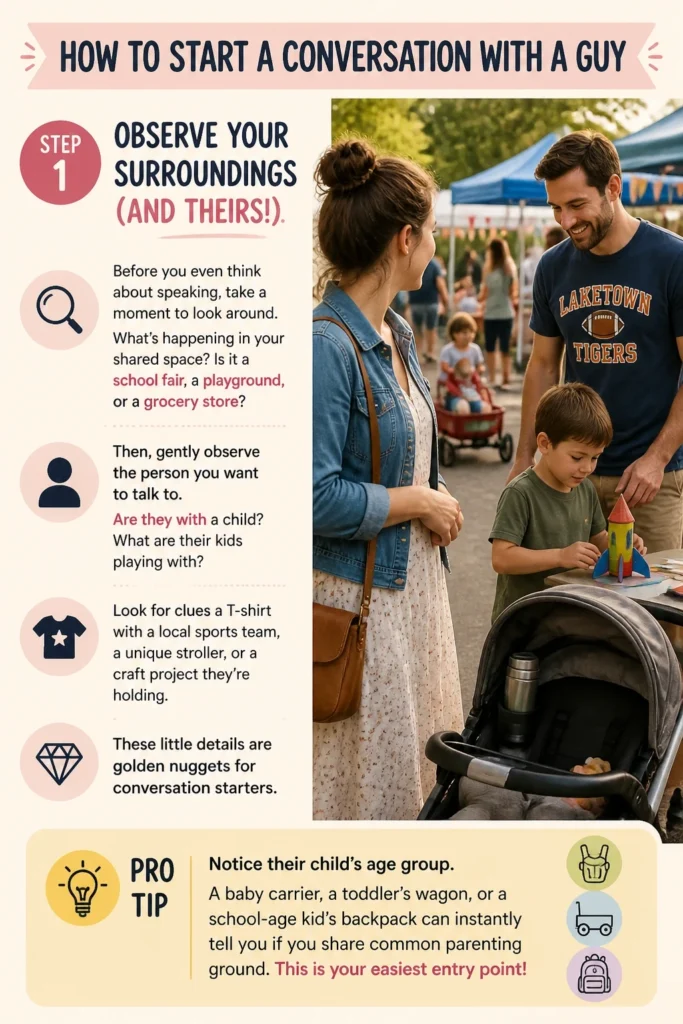
Then, gently observe the person you want to talk to. Are they with a child? What are their kids playing with?
Look for clues: a T-shirt with a local sports team, a unique stroller, or a craft project they’re holding. These little details are golden nuggets for conversation starters.
Pro Tip: Notice their child’s age group. A baby carrier, a toddler’s wagon, or a school-age kid’s backpack can instantly tell you if you share common parenting ground. This is your easiest entry point!
Step 2: Find Your Common Ground
Once you’ve observed, identify something you genuinely have in common. This could be the event you’re both attending, a shared interest indicated by their clothes or accessories, or, most often, your children.
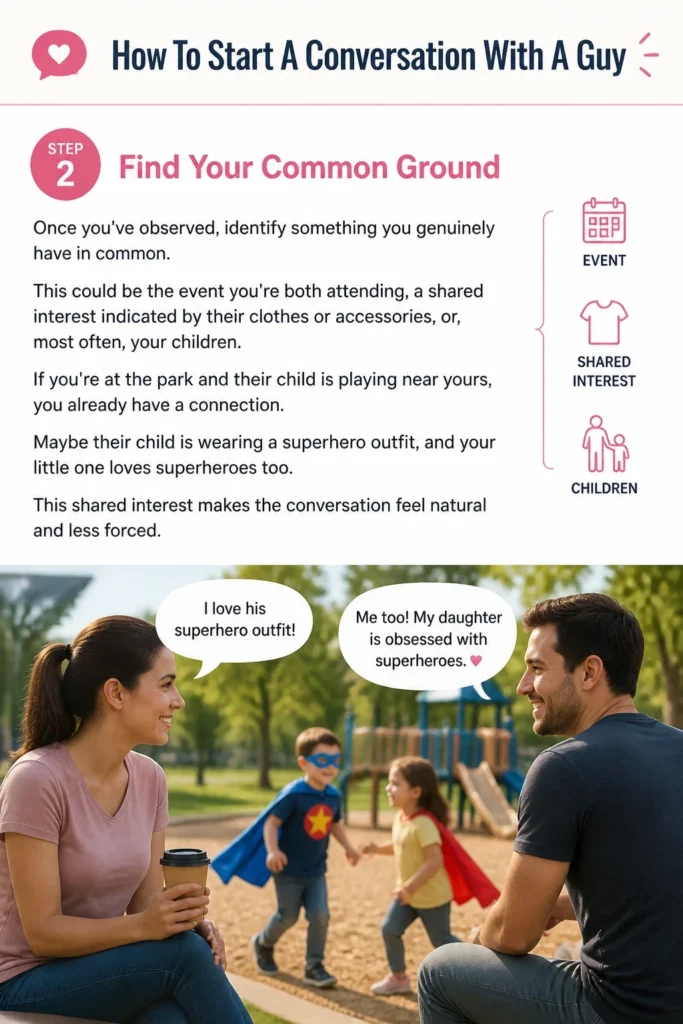
If you’re at the park and their child is playing near yours, you already have a connection. Maybe their child is wearing a superhero outfit, and your little one loves superheroes too. This shared interest makes the conversation feel natural and less forced.
Step 3: Choose Your Opening Line
Now for the actual words! The best opening lines are specific, open-ended, and not too personal. Avoid generic “Hi” or “How are you?” which can lead to a dead end.
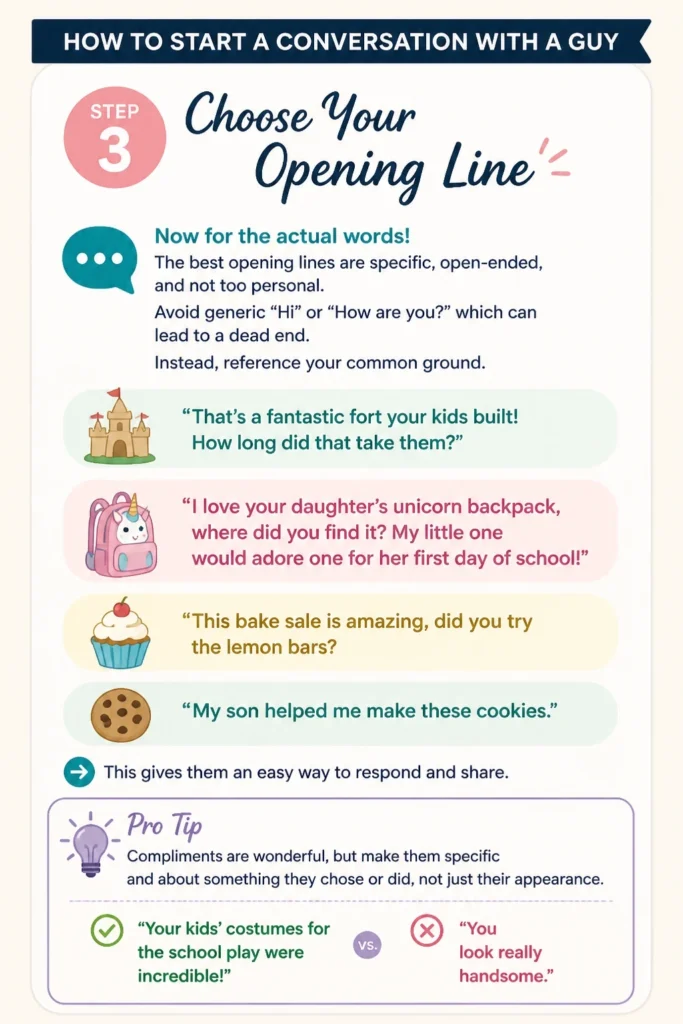
Instead, reference your common ground. “That’s a fantastic fort your kids built! How long did that take them?” or “I love your daughter’s unicorn backpack, where did you find it? My little one would adore one for her first day of school!”
If you’re at a school event, you could say, “This bake sale is amazing, did you try the lemon bars? My son helped me make these cookies.” This gives them an easy way to respond and share.
Pro Tip: Compliments are wonderful, but make them specific and about something they chose or did, not just their appearance. “Your kids’ costumes for the school play were incredible!” is better than just “You look nice.” For Pinterest-worthy ideas, if you see a parent with a beautifully decorated bento box lunch for their child, a simple “Wow, that’s such a creative lunchbox! My kids would be thrilled with something like that. Any tips for a busy mom?” can work wonders.
Step 4: Offer a Helping Hand (When Appropriate)
Sometimes, the best way to start a conversation is through a small act of kindness. If you see someone struggling with a stroller up a curb, or dropping something, a simple “Can I grab that for you?” or “Need an extra hand?” can open the door.
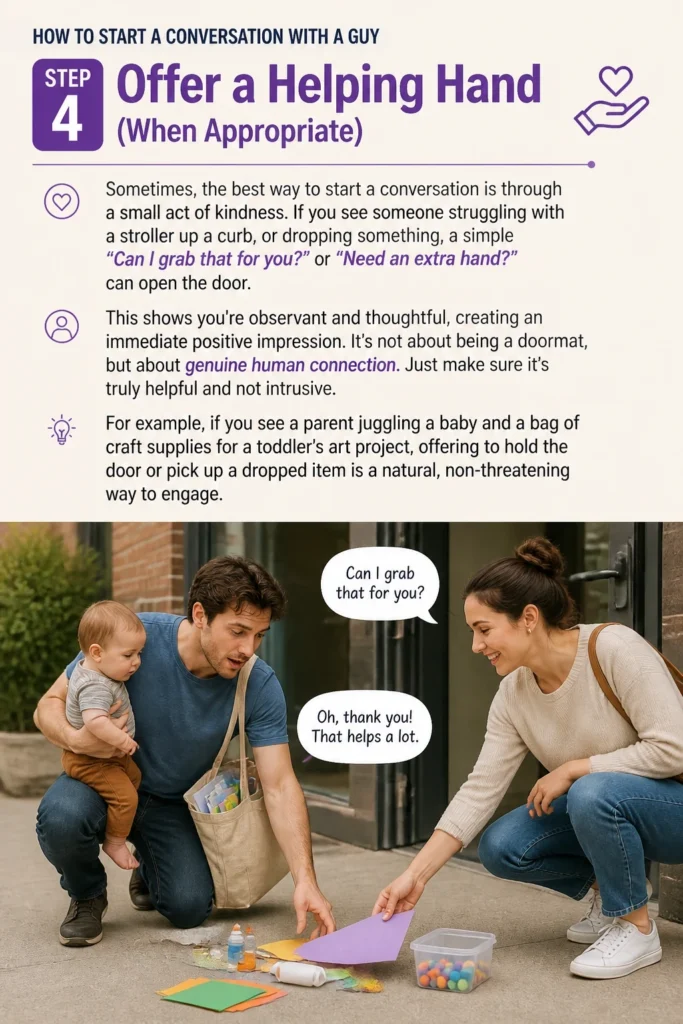
This shows you’re observant and thoughtful, creating an immediate positive impression. It’s not about being a doormat, but about genuine human connection. Just make sure it’s truly helpful and not intrusive.
For example, if you see a parent juggling a baby and a bag of craft supplies for a toddler’s art project, offering to hold the door or pick up a dropped item is a natural, non-threatening way to engage.
Step 5: Listen Actively and Ask Follow-Up Questions
Once they respond, truly listen to what they say. Don’t just wait for your turn to speak. Active listening shows respect and genuine interest.
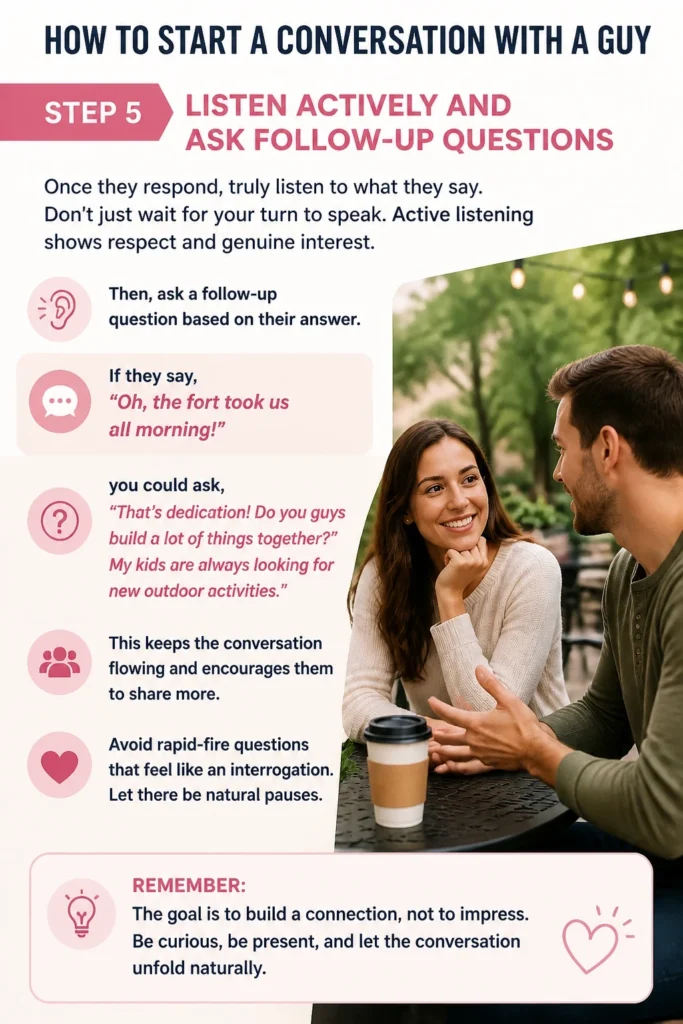
Then, ask a follow-up question based on their answer. If they say, “Oh, the fort took us all morning!” you could ask, “That’s dedication! Do you guys build a lot of things together? My kids are always looking for new outdoor activities.” This keeps the conversation flowing and encourages them to share more.
Avoid rapid-fire questions that feel like an interrogation. Let there be natural pauses.
Step 6: Share a Little About Yourself (Reciprocity)
A conversation is a two-way street. After they’ve shared, offer a little information about yourself that relates to the topic. This balances the interaction and makes you seem approachable.
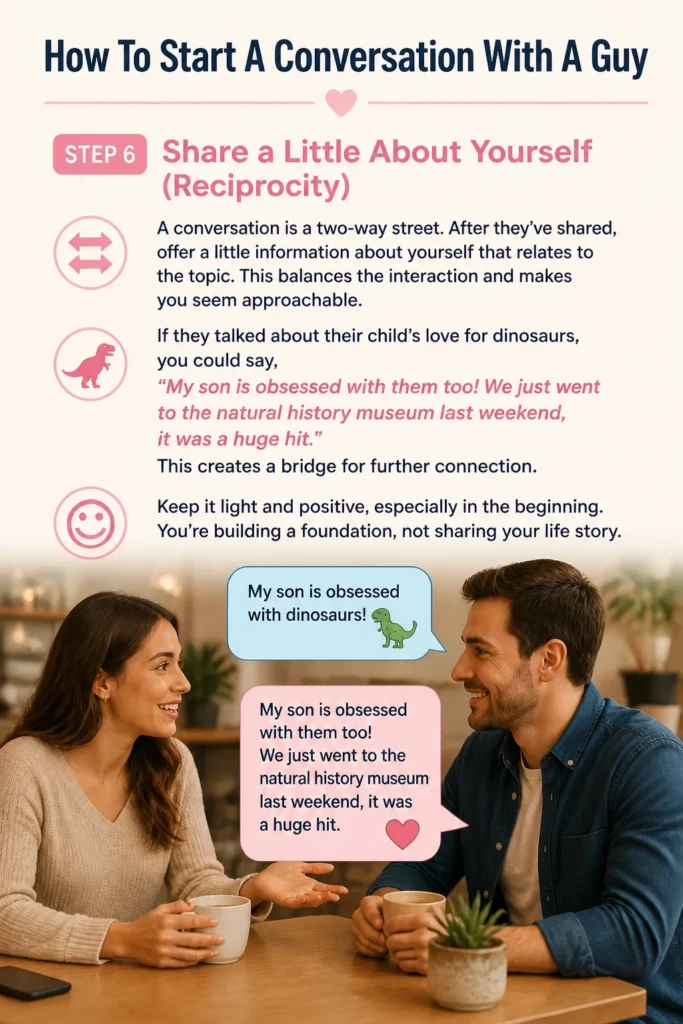
If they talked about their child’s love for dinosaurs, you could say, “My son is obsessed with them too! We just went to the natural history museum last weekend, it was a huge hit.” This creates a bridge for further connection.
Keep it light and positive, especially in the beginning. You’re building a foundation, not sharing your life story.
Step 7: Know When to Wrap It Up
Not every conversation needs to last an hour. Sometimes, a quick, friendly chat is enough to make a connection. Pay attention to their cues: are they looking around, checking their watch, or giving shorter answers?
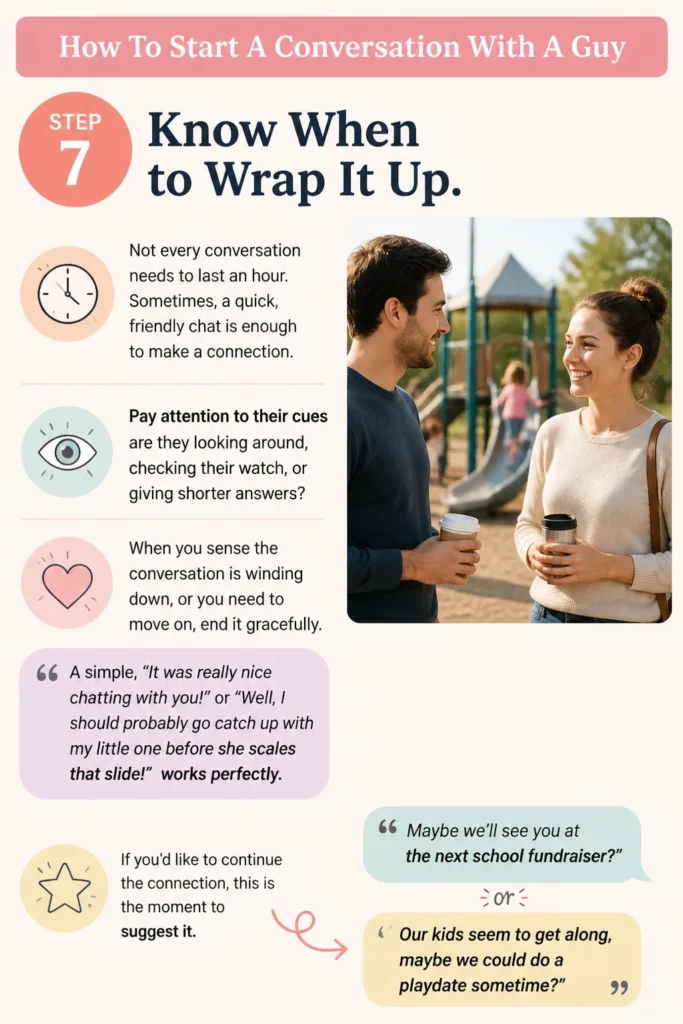
When you sense the conversation is winding down, or you need to move on, end it gracefully. A simple, “It was really nice chatting with you!” or “Well, I should probably go catch up with my little one before she scales that slide!” works perfectly.
If you’d like to continue the connection, this is the moment to suggest it. “Maybe we’ll see you at the next school fundraiser?” or “Our kids seem to get along, maybe we could do a playdate sometime?”
Step 8: Follow Up (If Appropriate)
If you’ve had a really great chat and feel a connection, don’t be afraid to follow up if the opportunity arises. This could be a quick wave and smile the next time you see them, or a friendly comment if you connect on a school app.
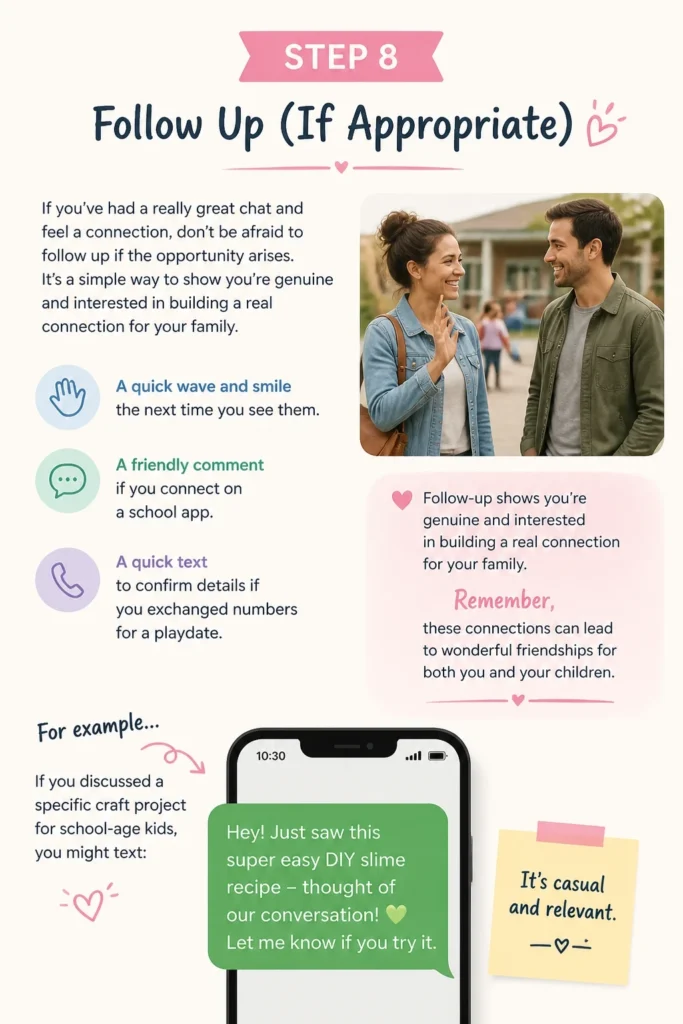
If you exchanged numbers for a playdate, send a quick text to confirm details. Follow-up shows you’re genuine and interested in building a real connection for your family. Remember, these connections can lead to wonderful friendships for both you and your children.
For example, if you discussed a specific craft project for school-age kids, you might text, “Hey! Just saw this super easy DIY slime recipe – thought of our conversation! Let me know if you try it.” It’s casual and relevant.
Common Mistakes to Avoid
Being Too Intrusive or Personal
Starting a conversation is about making a light, friendly connection. Avoid asking deeply personal questions right off the bat, like about their relationship status, job, or finances. This can make people uncomfortable and shut down the interaction. Stick to neutral topics like the weather, the event, or your children’s shared experiences.
Talking Only About Yourself
It’s great to share, but a conversation isn’t a monologue. If you find yourself dominating the discussion, pause and ask them a question. Show genuine interest in what they have to say. People enjoy talking about themselves and their experiences, especially about their kids.
Ignoring Non-Verbal Cues
Body language speaks volumes. If someone is giving short answers, avoiding eye contact, or turning their body away, they might not be open to a conversation at that moment. Respect these cues and politely disengage. Not every person will be in the mood to chat, and that’s okay.
Overthinking It
It’s easy to get inside your head and worry about saying the “perfect” thing. But often, the most genuine conversations start with simple, imperfect words. Don’t let fear of awkwardness stop you. Most people are flattered when someone approaches them in a friendly way. Just be yourself!
Troubleshooting
They Give Short, One-Word Answers
If you’re getting only “yes” or “no” responses, your questions might be too closed-ended. Try rephrasing with open-ended questions that require more than a single word. For example, instead of “Do you like the park?”, try “What do you enjoy most about coming to this park with your kids?” If they still don’t engage, it might be a sign they’re not in the mood to chat, and it’s best to politely excuse yourself.
You Run Out of Things to Say
It happens to the best of us! If you hit a lull, you can always refer back to your initial common ground. “So, how old are your kids again?” or “Have you been to this school’s fall festival before?” You can also gracefully exit the conversation with a polite closing remark. Don’t force it; sometimes a brief, pleasant interaction is all that’s needed.
You Feel Awkward or Nervous
That’s totally normal! Take a deep breath. Remind yourself that most people are just as nervous about starting conversations. Focus on being genuinely curious about the other person. A warm smile and an open posture can do wonders to ease both your nerves and theirs. Practice makes perfect – the more you try, the easier it gets. Even a quick “My little one is just starting to walk, it’s wild! How old is your cutie?” can break the ice.
Key Takeaways
- Observe first: Look for shared interests or common ground, especially involving kids or the setting.
- Be specific and open: Use detailed, open-ended questions that invite more than a yes/no answer.
- Listen actively: Pay attention to their responses and ask relevant follow-up questions.
- Share genuinely: Offer reciprocal information about yourself, keeping it light and positive.
- Respect boundaries: Pay attention to non-verbal cues and know when to politely end the chat.
- Practice makes comfortable: The more you initiate conversations, the more natural it will feel.
Frequently Asked Questions
What if I’m shy and terrible at small talk?
Many people feel this way! The trick isn’t to be a master of small talk, but to be genuinely curious. Instead of trying to think of witty things to say, focus on asking questions about things you’re truly interested in, based on your observations. For example, if you see them with a toddler and you have a baby, you could ask, “How did you manage the transition from one to two naps? My little one is about to drop a nap and I’m bracing myself!” This is a real mom problem, and it invites a real conversation.
How do I make sure I’m not bothering them?
The best way is to observe their body language and listen to their tone. If they seem distracted, give short answers, or don’t make eye contact, they might be busy or not in the mood to chat. Keep your approach brief and polite, and be prepared to gracefully disengage if they don’t seem receptive. A quick “No worries at all if you’re busy, just wanted to say hi!” can smooth things over.
What if they bring up a topic I know nothing about?
It’s perfectly fine to admit you don’t know much about a topic! You can say, “Oh, I’m not very familiar with that, but it sounds interesting! Could you tell me a little more?” This shows you’re still engaged and open to learning. Or, you can gently pivot back to a topic you both know about, like the kids or the event you’re at.
Is it okay to talk about my kids right away?
Absolutely, especially if they also have kids or you’re in a family-friendly setting! Talking about your kids is often the most natural and relatable common ground for parents. “Your daughter’s braid is beautiful! My little one is always asking for fun hairstyles for school, do you have any go-to styles?” This is a perfect example of a mom-to-mom (or mom-to-dad) conversation starter that’s both practical and friendly.
Our Top Recommended Finds
- Cute Kids’ Accessories: A fun backpack, a unique water bottle, or a personalized toy can be an instant conversation starter for your child, and thus for you!
- Small, Shareable Snacks: Bringing a small bag of goldfish crackers or fruit snacks to the park can lead to a friendly offer and a natural chat with other parents.
- A Stylish, Functional Tote Bag: Carry your essentials (and your kids’ treasures) in something that reflects your personality. It can be a subtle detail that sparks a compliment or question.
Connecting Your World, One Hello at a Time
Starting a conversation doesn’t have to be a grand gesture or a perfectly scripted interaction. It’s about genuine curiosity and finding common ground, often through the wonderful shared experience of family life. Every “hello” is an opportunity to expand your network, find new playdate buddies, or simply brighten someone’s day.
Think of all the fun family activities you could discover or share! Imagine swapping tips on the best places for toddler story time, ideas for a stress-free school-age sleepover, or even creative crafts for a rainy afternoon. These connections make our busy lives richer and more joyful. So next time you’re out and about, take a deep breath, smile, and just say hi. You’ve got this, mama!