
🤗 How To Make Your Mom Not Mad At You
🍼 The Newborn Survival Kit
The first six months of parenthood are a blur of exhaustion. Stop trying to tough it out—these are the 5 absolute life-saving baby essentials that experienced moms literally refuse to live without. They will instantly solve your biggest sleeping, feeding, and soothing struggles.
🌙 Hatch Rest Baby Sound Machine
The ultimate sleep hack. You can entirely control this white noise machine and dimmable nightlight from your smartphone, meaning you never have to accidentally wake the baby while sneaking back out of the nursery after a 3 AM feeding.
🤧 FridaBaby NoseFrida Snotsucker
It sounds incredibly gross until your baby has their first cold and literally cannot breathe to sleep. Throw away those useless hospital bulb syringes—this doctor-invented tool safely clears congestion in seconds, and yes, the filter absolutely prevents any germs from reaching you.
💧 Haakaa Silicone Manual Breast Pump
Every breastfeeding mom's best kept secret. Simply suction this cheap, cord-free silicone cup to the opposite breast while you nurse to effortlessly catch every drop of liquid gold letdown that would otherwise leak onto your shirt and be totally wasted.
🧴 Aquaphor Baby Healing Ointment
Forget buying ten different expensive, highly-fragranced creams. This is the only ointment you need. It miraculously cures severe diaper rash overnight, heals cracked nursing nipples, soothes baby eczema, and aggressively protects delicate skin from harsh winter wind.
☁️ Burt's Bees 100% Organic Burp Cloths
You will go through dozens of these a day, so do not cheap out on thin fabric. These thick, ultra-absorbent organic cotton cloths actually catch massive spit-ups before they ruin your only clean outfit, while remaining incredibly soft against your newborn's face.
We’ve all been there, haven’t we? That moment when you realize you’ve accidentally stepped on a landmine, and now Mom’s giving you that look. It’s a universal experience.
But don’t worry, it’s not the end of the world. As a mom myself, I’ve seen it all from both sides, and I’m here to share some real, practical ways to turn that frown upside down.
This guide is packed with gentle, actionable steps that work for every age, bringing peace and connection back into your home.

Quick Overview
This guide will help you mend fences, understand perspectives, and build a stronger, happier family bond. You’ll learn simple yet effective strategies to navigate those tricky moments with grace and genuine effort.
- Time needed: Varies, from 15 minutes for immediate action to ongoing daily practice
- Difficulty: Beginner
- What you’ll need: An open heart, a listening ear, and a willingness to try
Step-by-Step Instructions
Step 1: Pause and Reflect
Before you do anything, take a moment to understand what happened. What specifically made Mom upset? Was it a forgotten chore, a broken rule, or a misunderstanding?
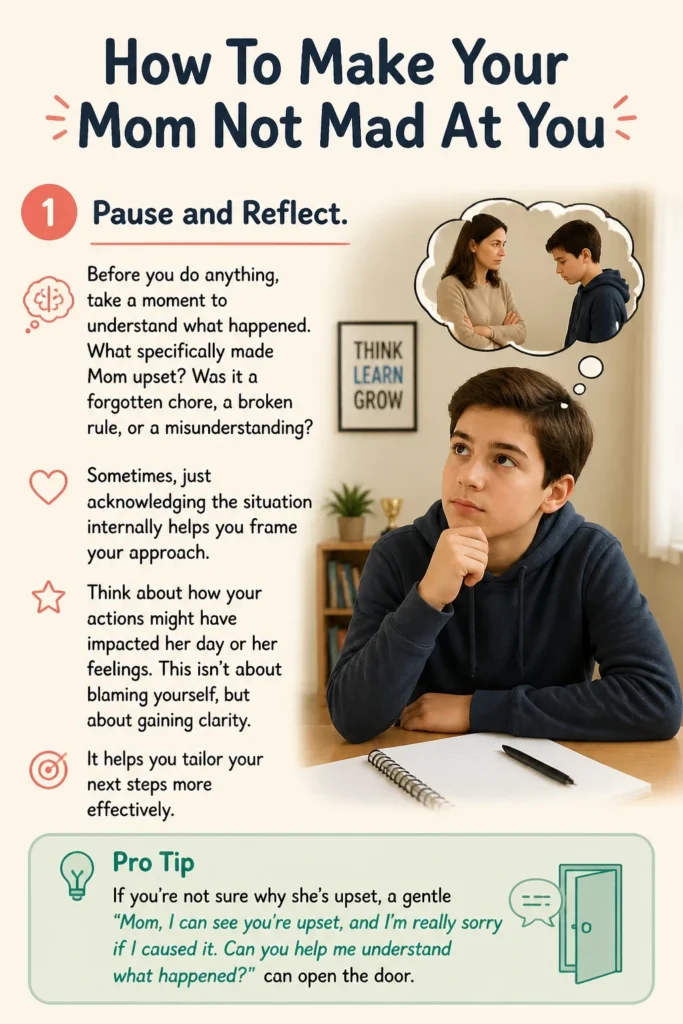
Sometimes, just acknowledging the situation internally helps you frame your approach. Think about how your actions might have impacted her day or her feelings.
This isn’t about blaming yourself, but about gaining clarity. It helps you tailor your next steps more effectively.
Pro Tip: If you’re not sure why she’s upset, a gentle “Mom, I can see you’re upset, and I’m really sorry if I caused it. Can you help me understand what happened?” can open the door.
Step 2: Offer a Sincere Apology
A genuine apology is the most powerful tool you have. It’s not just saying “sorry”; it’s about acknowledging her feelings and your role in the situation.
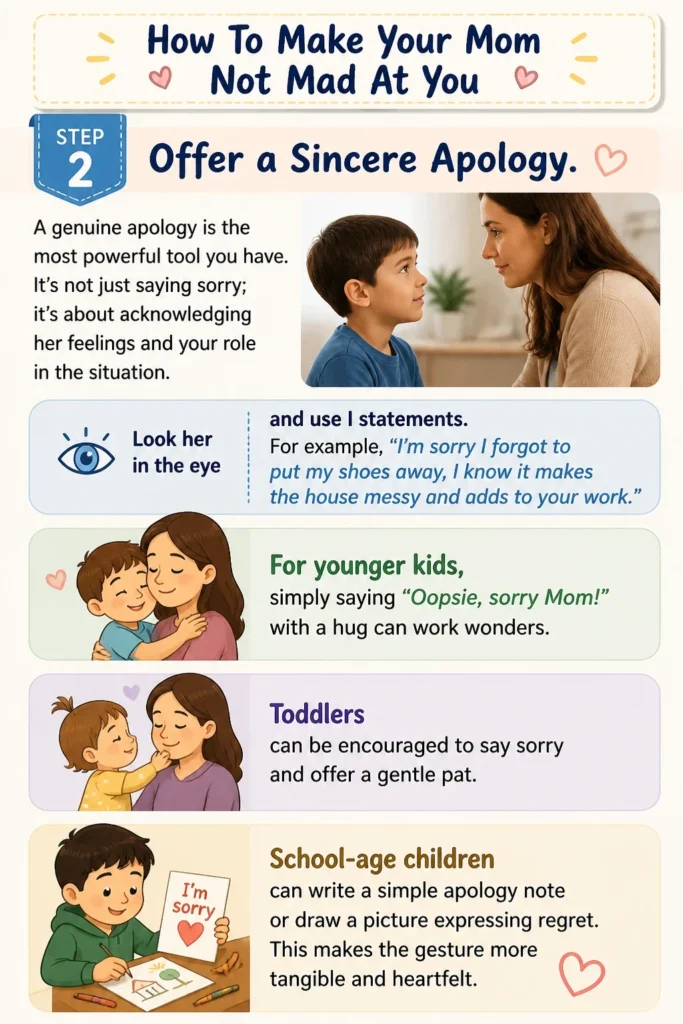
Look her in the eye and use “I” statements. For example, “I’m sorry I forgot to put my shoes away, I know it makes the house messy and adds to your work.”
For younger kids, simply saying “Oopsie, sorry Mom!” with a hug can work wonders. Toddlers can be encouraged to say “sorry” and offer a gentle pat.
School-age children can write a simple apology note or draw a picture expressing regret. This makes the gesture more tangible and heartfelt.
Step 3: Ask How You Can Help
An apology is great, but action speaks volumes. Once you’ve apologized, offer to make things right or help out in some way.
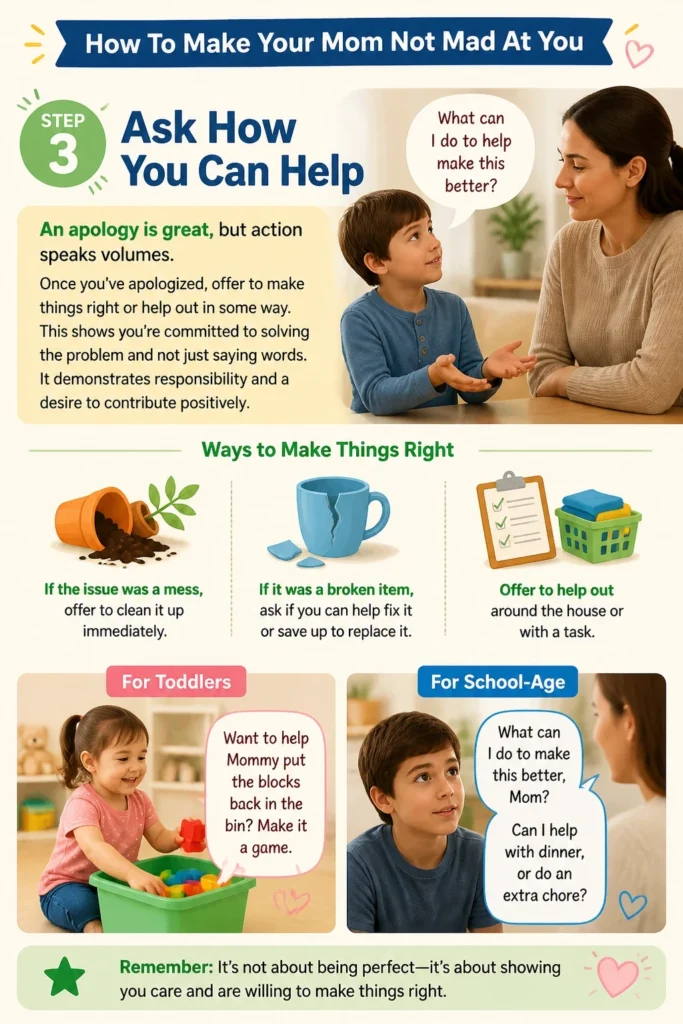
This shows you’re committed to solving the problem and not just saying words. It demonstrates responsibility and a desire to contribute positively.
If the issue was a mess, offer to clean it up immediately. If it was a broken item, ask if you can help fix it or save up to replace it.
For Toddlers: “Want to help Mommy put the blocks back in the bin?” Make it a game.
For School-Age: “What can I do to make this better, Mom? Can I help with dinner, or do an extra chore?”
Step 4: Spend Quality Time Together
Sometimes, all Mom needs is a little connection. After a disagreement, intentionally carving out quality time can help rebuild bridges and remind you both of your strong bond.
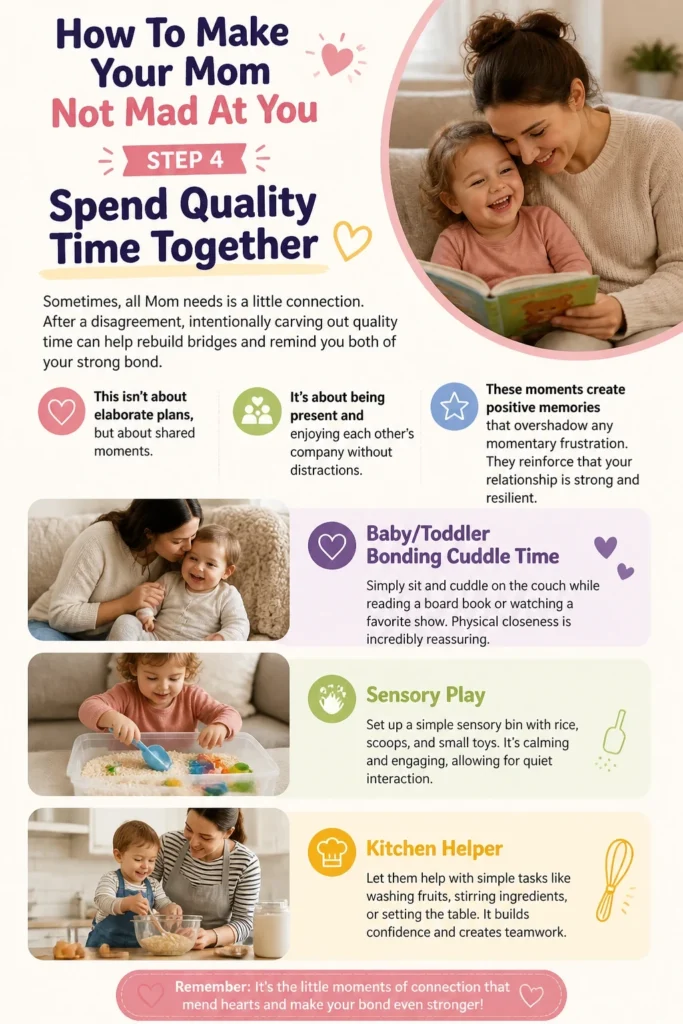
This isn’t about elaborate plans, but about shared moments. It’s about being present and enjoying each other’s company without distractions.
These moments create positive memories that overshadow any momentary frustration. They reinforce that your relationship is strong and resilient.
Baby/Toddler Bonding:
Cuddle Time: Simply sit and cuddle on the couch while reading a board book or watching a favorite show. Physical closeness is incredibly reassuring.
Sensory Play: Set up a simple sensory bin with rice, scoops, and small toys. It’s calming and engaging, allowing for quiet interaction.
Kitchen Helper: Let them “help” stir a bowl of water with a spoon while you cook. It makes them feel involved and valued.
School-Age Activities:
Family Game Night: Pull out a board game or a deck of cards. Laughter and friendly competition are fantastic bonding agents.
Bake Together: Choose a simple cookie or brownie recipe. The process of creating something delicious together is wonderfully collaborative.
Outdoor Adventure: Go for a walk in a local park, ride bikes, or simply play catch in the yard. Fresh air and movement are great for everyone.
“Mom & Me” Craft Session:
Idea: “Gratitude Jar” Decorate a simple mason jar with paint or markers. Throughout the week, write down things you’re grateful for on small slips of paper and put them in the jar. Read them aloud during dinner.
Idea: DIY Bracelets: Use colorful beads and elastic string to make matching friendship bracelets. It’s simple, creative, and you get a wearable reminder of your bond.
Step 5: Surprise Her with Thoughtful Gestures
Small acts of kindness can make a huge difference. These don’t need to be grand; they just need to show you were thinking of her.
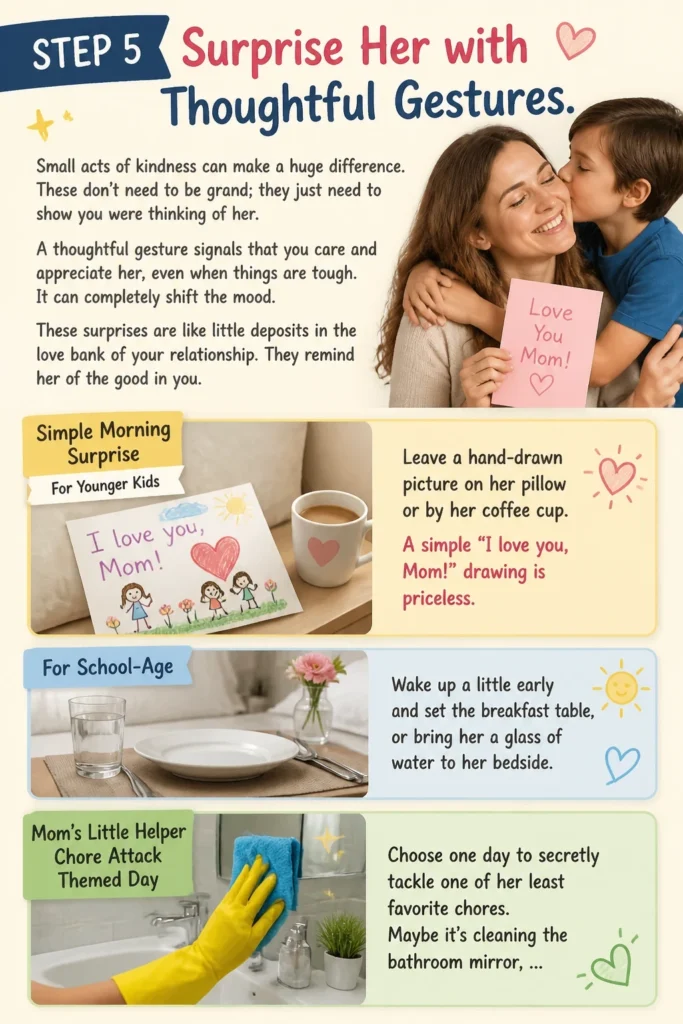
A thoughtful gesture signals that you care and appreciate her, even when things are tough. It can completely shift the mood.
These surprises are like little deposits in the “love bank” of your relationship. They remind her of the good in you.
Simple Morning Surprise:
For Younger Kids: Leave a hand-drawn picture on her pillow or by her coffee cup. A simple “I love you, Mom!” drawing is priceless.
For School-Age: Wake up a little early and set the breakfast table, or bring her a glass of water to her bedside.
“Mom’s Little Helper” Chore Attack:
Themed Day: Choose one day to secretly tackle one of her least favorite chores. Maybe it’s cleaning the bathroom mirror, wiping down kitchen counters, or folding a load of laundry.
“Coupon Book” Idea: Create a small coupon book with “coupons” for chores like “One free dishwashing,” “A room cleaned,” or “Back rub.” She can “redeem” them when she needs a little help.
Creative “Thinking of You” Crafts (Pinterest-worthy, but easy!):
“Open When…” Letters: Write a few short notes on colorful paper, folded and labeled “Open when you need a laugh,” “Open when you feel tired,” or “Open when you miss me.”
Painted Rock Garden: Find a few smooth rocks, paint them with bright colors and positive messages like “You’re amazing,” “Best Mom,” or simply a heart. Place them in her garden or on her desk.
DIY Photo Coasters: Print out some favorite family photos. Glue them onto plain ceramic tiles (available cheaply at hardware stores) and seal with Mod Podge. They make a lovely, personalized gift.
Step 6: Improve Communication and Understanding
Often, anger stems from feeling unheard or misunderstood. Work on actively listening to your mom and expressing your own feelings calmly.
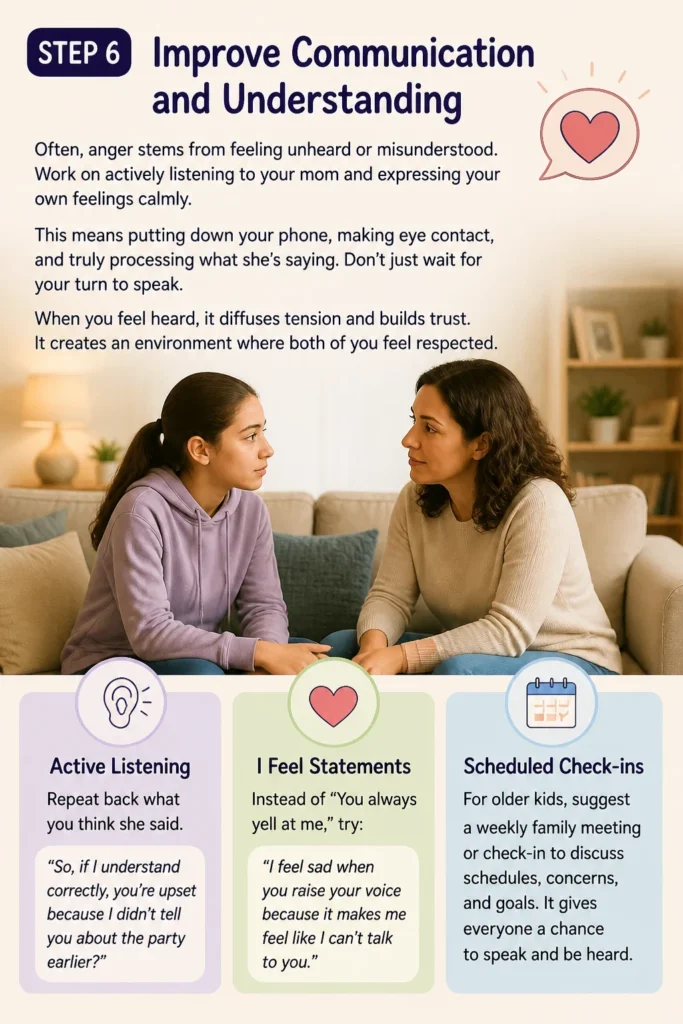
This means putting down your phone, making eye contact, and truly processing what she’s saying. Don’t just wait for your turn to speak.
When you feel heard, it diffuses tension and builds trust. It creates an environment where both of you feel respected.
Active Listening: Repeat back what you think she said: “So, if I understand correctly, you’re upset because I didn’t tell you about the party earlier?”
“I Feel” Statements: Instead of “You always yell at me,” try “I feel sad when you raise your voice because it makes me feel like I can’t talk to you.”
Scheduled Check-ins: For older kids, suggest a weekly “family meeting” or check-in to discuss schedules, concerns, and successes. This normalizes open communication.
Step 7: Proactively Prevent Future Issues
The best way to make Mom not mad is to prevent the reasons for her anger in the first place. This requires consistent effort and a bit of foresight.
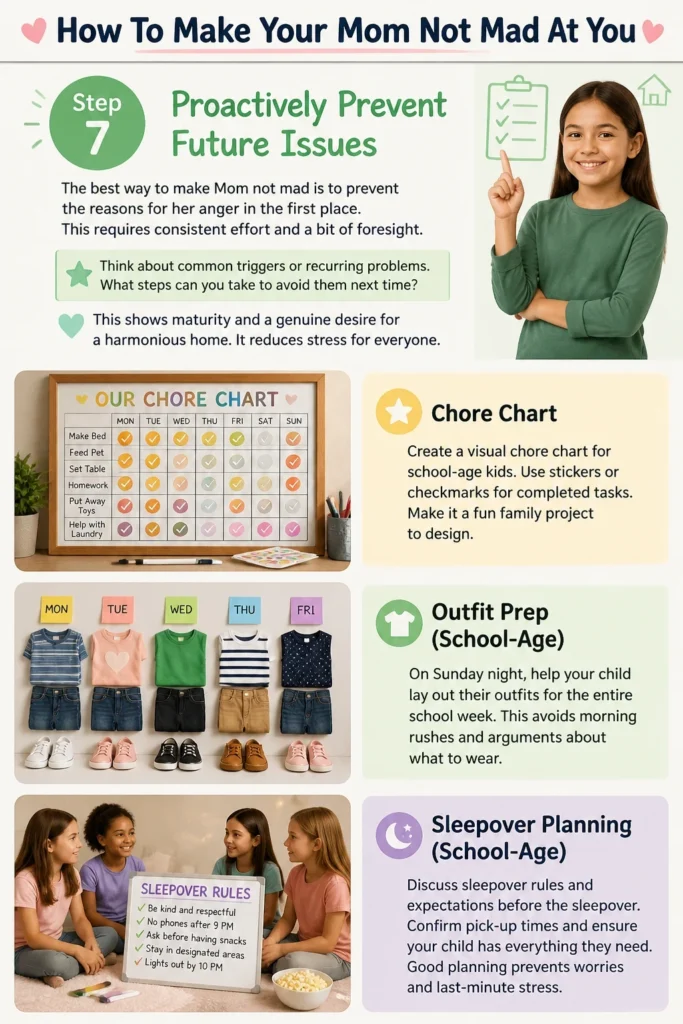
Think about common triggers or recurring problems. What steps can you take to avoid them next time?
This shows maturity and a genuine desire for a harmonious home. It reduces stress for everyone.
Chore Chart: Create a visual chore chart for school-age kids. Use stickers or checkmarks for completed tasks. Make it a fun family project to design.
Outfit Prep (School-Age): On Sunday night, help your child lay out their outfits for the entire school week. This avoids morning rushes and arguments about what to wear.
Sleepover Planning (School-Age): Discuss sleepover rules and expectations before the sleepover. Confirm pick-up times and ensure your child knows to check in.
Daily “Reset” Routine: Before bedtime, spend 10-15 minutes as a family tidying up common areas. Put toys away, clear surfaces, and prepare for the next day.
* “Kindness Jar” (All Ages): Decorate a jar. Whenever someone does something kind or helpful, write it on a slip of paper and put it in the jar. Read them aloud at dinner and celebrate positive actions.
Common Mistakes to Avoid
Making Excuses
It’s tempting to explain away your actions, but often, it sounds like you’re trying to avoid responsibility. Your mom wants to know you understand the impact of your actions, not just the logic behind them.
Instead of “I didn’t clean my room because I was busy playing,” try “I apologize for not cleaning my room. I got distracted, and I know it’s a mess.” Take ownership first, then you can offer a brief explanation if needed, but only after acknowledging your part.
Ignoring the Problem
Hoping the anger will just blow over rarely works. It often makes Mom feel dismissed or unimportant, leading to deeper resentment. Unaddressed issues tend to fester.
Address the situation head-on, even if it feels uncomfortable. A simple “Mom, I noticed you’re upset, and I want to talk about it” is much better than pretending nothing happened.
Being Defensive
When Mom expresses her feelings, it’s natural to want to defend yourself, especially if you feel unfairly accused. However, getting defensive can escalate the situation and shut down communication.
Listen to her perspective without interrupting. Try to understand her feelings, even if you don’t fully agree with her interpretation of events. You can share your side calmly once she feels heard.
Giving a Half-Hearted Apology
A mumbled “sorry” while looking at your phone or rolling your eyes isn’t going to cut it. It feels insincere and can make things worse. Your mom can tell if you truly mean it.
Make eye contact, use a sincere tone, and clearly state what you’re apologizing for. Show through your actions that you are truly remorseful and ready to make amends.
Troubleshooting
“Mom is still mad even after I apologized.”
Sometimes, emotions run deep, and it takes time for anger to dissipate. An apology is the first step, but it might not instantly erase all frustration.
Give her space if she needs it, but don’t disappear. Continue with thoughtful actions like doing extra chores or offering a warm hug. Reassure her that you’re genuinely trying to do better. Patience and consistent effort are key.
“I don’t know what to do to make it better.”
It’s okay not to have all the answers. The important thing is your willingness to try. If you’re unsure, simply ask her directly and respectfully.
Say, “Mom, I’m really trying to make things right, but I’m not sure what else I can do. Can you tell me what would help you feel better?” This shows humility and a desire to connect.
“I keep making the same mistake.”
This is a common challenge, especially for kids learning responsibility. It indicates that you might need a clearer system or more consistent reminders.
Work with your mom to create a plan. This could be a visual checklist for chores, setting phone alarms for tasks, or a reward system for consistent positive behavior. Focus on small, achievable steps for improvement.
Key Takeaways
- Acknowledge and Apologize Sincerely: Start by understanding the issue and offering a heartfelt apology.
- Follow Up with Action: Show your commitment by asking how you can help and then actively making amends.
- Prioritize Quality Connection: Dedicate time for shared activities, creating positive memories together.
- Practice Thoughtful Gestures: Small surprises and acts of kindness reinforce your love and appreciation.
- Improve Communication: Listen actively, express your feelings calmly, and work towards mutual understanding.
- Focus on Prevention: Identify recurring issues and implement strategies to avoid them in the future.
Frequently Asked Questions
How can I apologize effectively without feeling awkward?
The key is sincerity and specificity. Focus on how your actions affected her, not just saying the word “sorry.” Practice what you want to say beforehand.
Start with “I’m sorry for…” and then explain what you understand her feelings to be, e.g., “I’m sorry for leaving my clothes on the floor, I know it makes the room messy and adds to your chores.” A hug or a written note can also help if words feel too difficult.
What if Mom doesn’t want to talk right away?
Give her space. Sometimes, people need time to process their emotions before they can engage constructively. Respect her need for quiet.
You can say, “I understand if you need some time. I’ll be here when you’re ready to talk.” In the meantime, you can still show you care through actions, like tidying up or doing a helpful chore without being asked.
How can I make sure I don’t make Mom mad again?
Consistency and proactive planning are your best friends. Identify the common triggers for her anger and brainstorm ways to prevent them.
This might involve creating a chore chart, setting reminders for tasks, or discussing expectations more clearly. It’s about building new habits and showing a sustained effort over time.
Are there any gifts that can help?
While gifts aren’t a substitute for genuine apology and effort, a thoughtful, homemade gift can be a lovely gesture. The most meaningful gifts are those that come from the heart and show you put thought into them.
Think about a personalized card, a simple craft you made yourself, or a “coupon book” for future helpful tasks. These show love and effort, which are truly priceless.
Our Top Recommended Finds
- Family Game Night Box: A collection of diverse board games and card games suitable for various ages, perfect for spontaneous bonding.
- Art & Craft Supply Kit: A well-stocked box of colorful papers, markers, glue sticks, and simple craft supplies for impromptu creative sessions.
- “My First Cookbook” for Kids: A cookbook with easy, kid-friendly recipes that encourage little ones to help in the kitchen and build confidence.
Embrace Connection, One Step at a Time
Navigating disagreements is a normal part of family life, but how we handle them makes all the difference. Remember, your mom loves you deeply, and these moments are opportunities to strengthen that bond, not break it.
Every apology, every act of kindness, and every shared laugh builds a foundation of trust and understanding. Don’t wait for the next “mad moment” to put these tips into practice.
Start today. Choose one small step from this guide and make it happen. You’ll be amazed at the positive ripple effect it creates in your home and in your relationship with Mom.