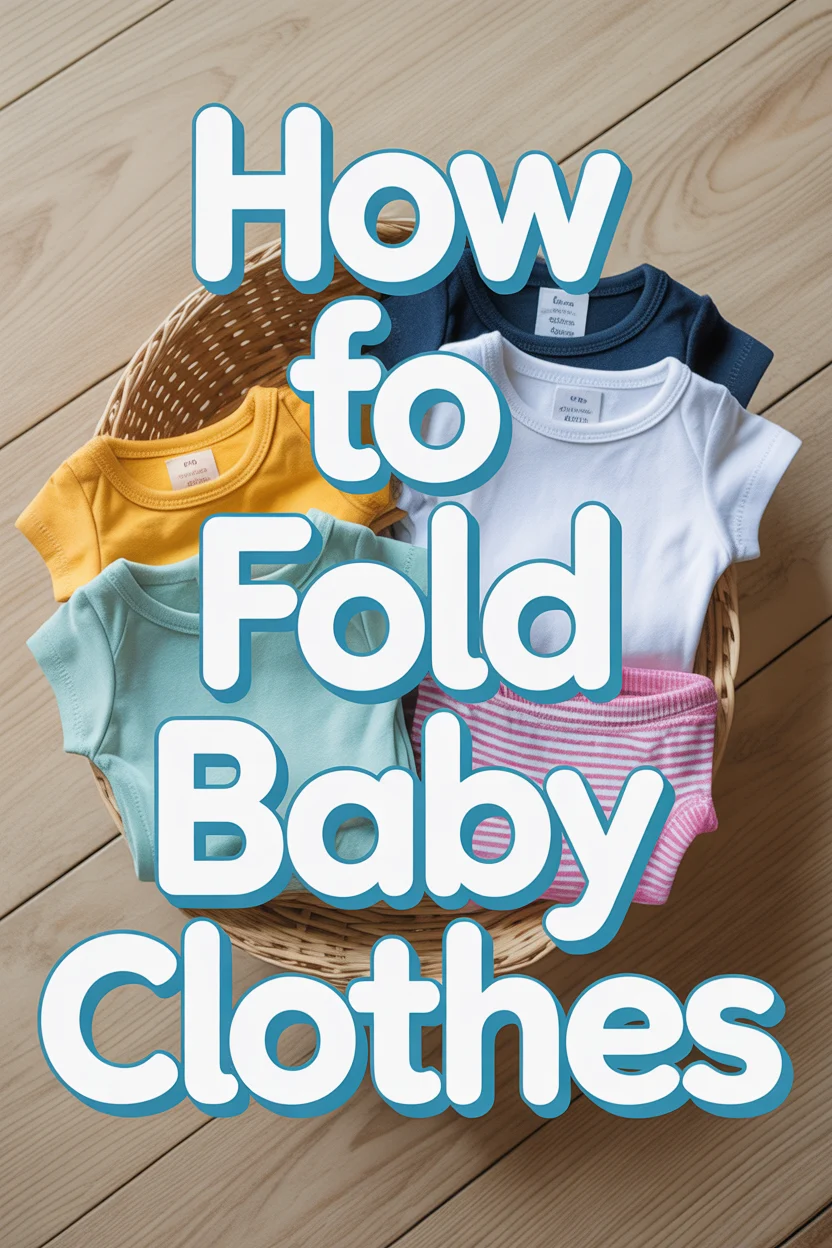
🧺 How To Fold Baby Clothes
🍼 The Newborn Survival Kit
The first six months of parenthood are a blur of exhaustion. Stop trying to tough it out—these are the 5 absolute life-saving baby essentials that experienced moms literally refuse to live without. They will instantly solve your biggest sleeping, feeding, and soothing struggles.
🌙 Hatch Rest Baby Sound Machine
The ultimate sleep hack. You can entirely control this white noise machine and dimmable nightlight from your smartphone, meaning you never have to accidentally wake the baby while sneaking back out of the nursery after a 3 AM feeding.
🤧 FridaBaby NoseFrida Snotsucker
It sounds incredibly gross until your baby has their first cold and literally cannot breathe to sleep. Throw away those useless hospital bulb syringes—this doctor-invented tool safely clears congestion in seconds, and yes, the filter absolutely prevents any germs from reaching you.
💧 Haakaa Silicone Manual Breast Pump
Every breastfeeding mom's best kept secret. Simply suction this cheap, cord-free silicone cup to the opposite breast while you nurse to effortlessly catch every drop of liquid gold letdown that would otherwise leak onto your shirt and be totally wasted.
🧴 Aquaphor Baby Healing Ointment
Forget buying ten different expensive, highly-fragranced creams. This is the only ointment you need. It miraculously cures severe diaper rash overnight, heals cracked nursing nipples, soothes baby eczema, and aggressively protects delicate skin from harsh winter wind.
☁️ Burt's Bees 100% Organic Burp Cloths
You will go through dozens of these a day, so do not cheap out on thin fabric. These thick, ultra-absorbent organic cotton cloths actually catch massive spit-ups before they ruin your only clean outfit, while remaining incredibly soft against your newborn's face.
Oh, the never-ending mountain of laundry! As a parent, it often feels like we’re in a constant cycle of washing, drying, and folding. And baby clothes? They’re adorable, yes, but their tiny size can make folding feel like a fiddly, time-consuming chore. But what if I told you that mastering the art of folding baby clothes could actually simplify your life, save you precious time, and even become a moment for connection or a fun activity with your little ones? Get ready to transform that overwhelming pile into neatly organized treasures, making those early mornings and late nights just a tiny bit smoother.
Quick Overview
This guide will walk you through simple, effective strategies to fold and organize your baby’s wardrobe. You’ll learn techniques that not only keep clothes tidy but also maximize space and make finding that perfect tiny outfit a breeze.
- Time needed: 30-60 minutes for a full basket, 15-20 minutes for daily maintenance
- Difficulty: Beginner
- What you’ll need: Clean baby clothes, a flat surface, optional drawer dividers or small baskets
Step-by-Step Instructions
Step 1: Gather Your Gear & Set the Scene
Before you dive into the folding frenzy, take a moment to set yourself up for success. Just like preparing for a fun craft session or a cozy family movie night, a little prep goes a long way. Find a comfortable, flat surface – your bed, a changing table, or even a clean floor space works perfectly. Make sure it’s clear of distractions (as much as possible in a busy home!). Put on some music, maybe a podcast, or even an audiobook. This isn’t just about folding clothes; it’s about creating a calm, focused moment for yourself in the midst of the beautiful chaos of parenting.
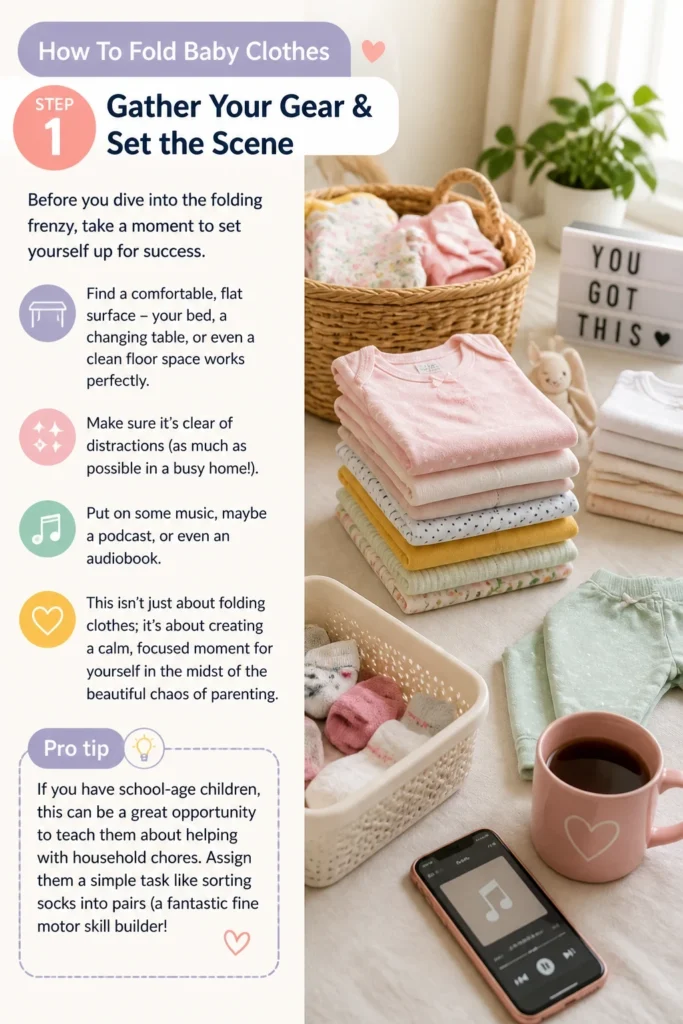
Pro tip: If you have school-age children, this can be a great opportunity to teach them about helping with household chores. Assign them a simple task like sorting socks into pairs (a fantastic fine motor skill builder!) or putting already-folded items into their designated drawers. For toddlers, even just having them sit nearby and “help” by putting a soft toy into a basket can make them feel included. It’s all about making chores a family affair, turning routine tasks into bonding moments.
Step 2: Sort by Size & Type
Now that your workspace is ready, let’s tackle the pile. Before you start folding, quickly sort the clothes. Create separate piles for onesies, tops, bottoms, sleepers, socks, and accessories (like hats or bibs). Within these piles, you might also want to sort by size (e.g., 0-3 months, 3-6 months) if you have a mix, especially if your little one is growing quickly! This initial sort saves you time in the long run and helps you quickly identify what you have. It also makes it easier to put away clothes that are too small or to pull out the next size up when your baby has a growth spurt.
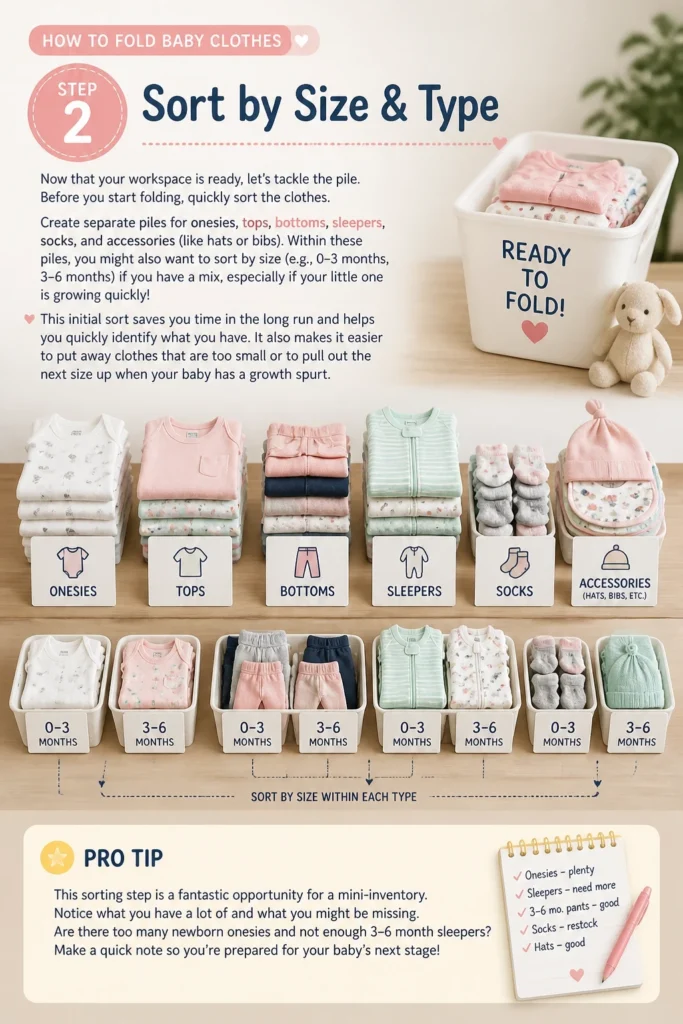
Pro tip: This sorting step is a fantastic opportunity for a mini-inventory. Notice what you have a lot of and what you might be missing. Are there too many newborn onesies and not enough 3-6 month sleepers? This can guide your next shopping trip or help you decide what to pass on to a friend. For toddlers, you can turn this into a color-matching game: “Can you put all the blue shirts together?” For school-age kids, they can help categorize clothes for donation or hand-me-downs, teaching them about giving back.
Step 3: Master the Onesie Fold
Onesies are the workhorses of a baby’s wardrobe, so mastering their fold is key!
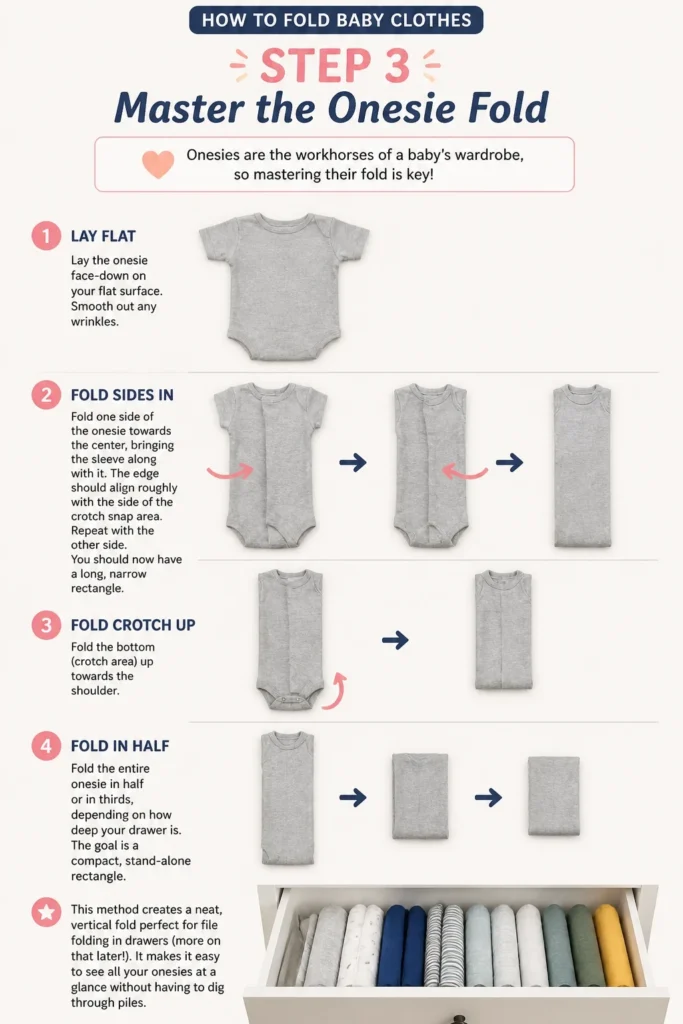
- Lay Flat: Lay the onesie face-down on your flat surface. Smooth out any wrinkles.
- Fold Sides In: Fold one side of the onesie towards the center, bringing the sleeve along with it. The edge should align roughly with the side of the crotch snap area. Repeat with the other side. You should now have a long, narrow rectangle.
- Fold Crotch Up: Fold the bottom (crotch area) up towards the shoulder.
- Fold in Half: Fold the entire onesie in half or in thirds, depending on how deep your drawer is. The goal is a compact, stand-alone rectangle.
This method creates a neat, vertical fold perfect for “file folding” in drawers (more on that later!). It makes it easy to see all your onesies at a glance without having to dig through stacks.
Pro tip: For those adorable “special occasion” onesies – think holiday outfits or birthday attire – fold them neatly and store them in a separate, clearly labeled bin or drawer. This makes it easy to grab them for a last-minute party invite or a family photo session. Imagine the ease of pulling out a perfectly pressed little outfit for a baby’s first birthday party, without having to iron it at the last minute!
Step 4: Tackle Tiny Tops & Bottoms
Next up, the cute little shirts and pants! These follow a similar principle to the onesie fold.
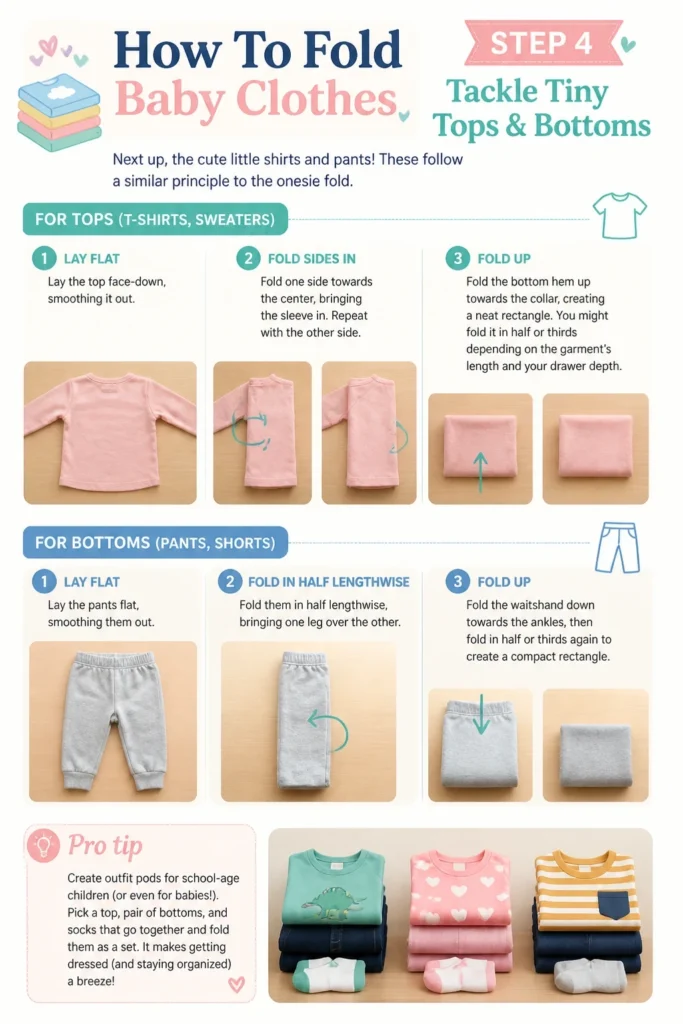
For Tops (T-shirts, Sweaters):
- Lay Flat: Lay the top face-down, smoothing it out.
- Fold Sides In: Fold one side towards the center, bringing the sleeve in. Repeat with the other side.
- Fold Up: Fold the bottom hem up towards the collar, creating a neat rectangle. You might fold it in half or thirds depending on the garment’s length and your drawer depth.
For Bottoms (Pants, Shorts):
- Lay Flat: Lay the pants flat, smoothing them out.
- Fold in Half Lengthwise: Fold them in half lengthwise, bringing one leg over the other.
- Fold Up: Fold the waistband down towards the ankles, then fold in half or thirds again to create a compact rectangle.
Pro tip: Create “outfit pods” for school-age children (or even for yourself!). Once you’ve folded a top and a matching bottom, you can fold them together or stack them neatly. For older kids, having pre-matched outfits for school days can be a huge time-saver in the morning rush. You can even involve them in picking out their outfits for the week on Sunday, making it a fun planning activity. This also works wonderfully for babies – imagine having a ready-to-go play outfit or a slightly dressier one for errands, all neatly bundled!
Step 5: Conquer Sleepers & Pajamas
Sleepers and pajamas often have feet or are a single long garment, requiring a slightly different approach.
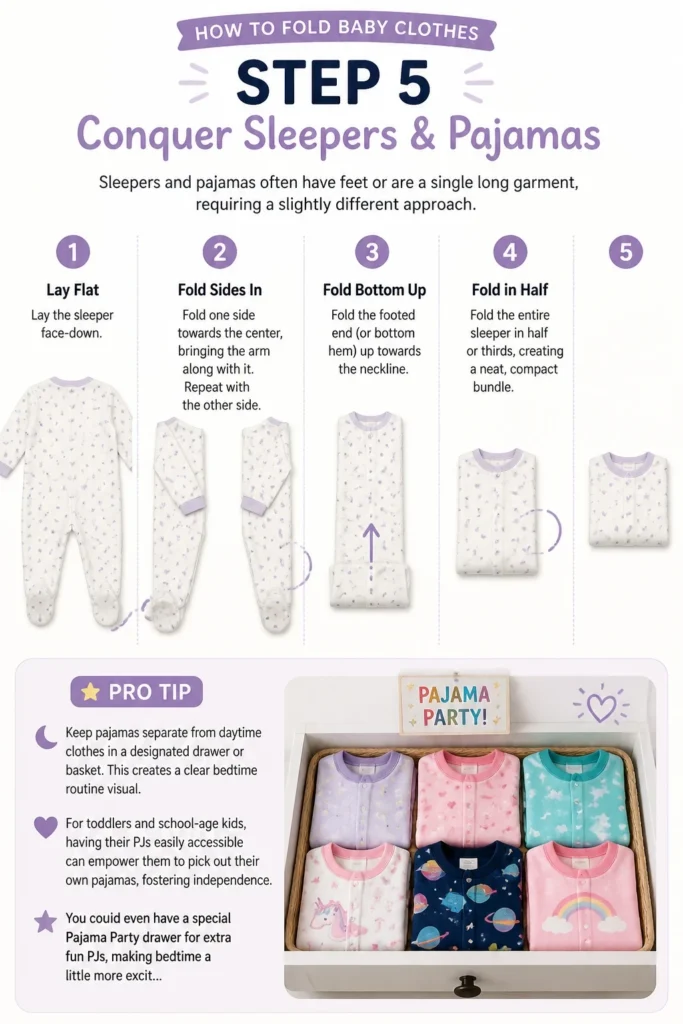
- Lay Flat: Lay the sleeper face-down.
- Fold Sides In: Fold one side towards the center, bringing the arm along with it. Repeat with the other side.
- Fold Bottom Up: Fold the footed end (or bottom hem) up towards the neckline.
- Fold in Half: Fold the entire sleeper in half or thirds, creating a neat, compact bundle.
Pro tip: Keep pajamas separate from daytime clothes in a designated drawer or basket. This creates a clear “bedtime routine” visual. For toddlers and school-age kids, having their PJs easily accessible can empower them to pick out their own pajamas, fostering independence. You could even have a special “Pajama Party” drawer for extra fun PJs, making bedtime a little more exciting. For family bonding, consider a “Pajama Day” tradition on a lazy weekend, complete with a movie and homemade popcorn.
Step 6: Wrangle Socks & Accessories
Tiny socks, hats, and bibs can be the trickiest to keep organized!
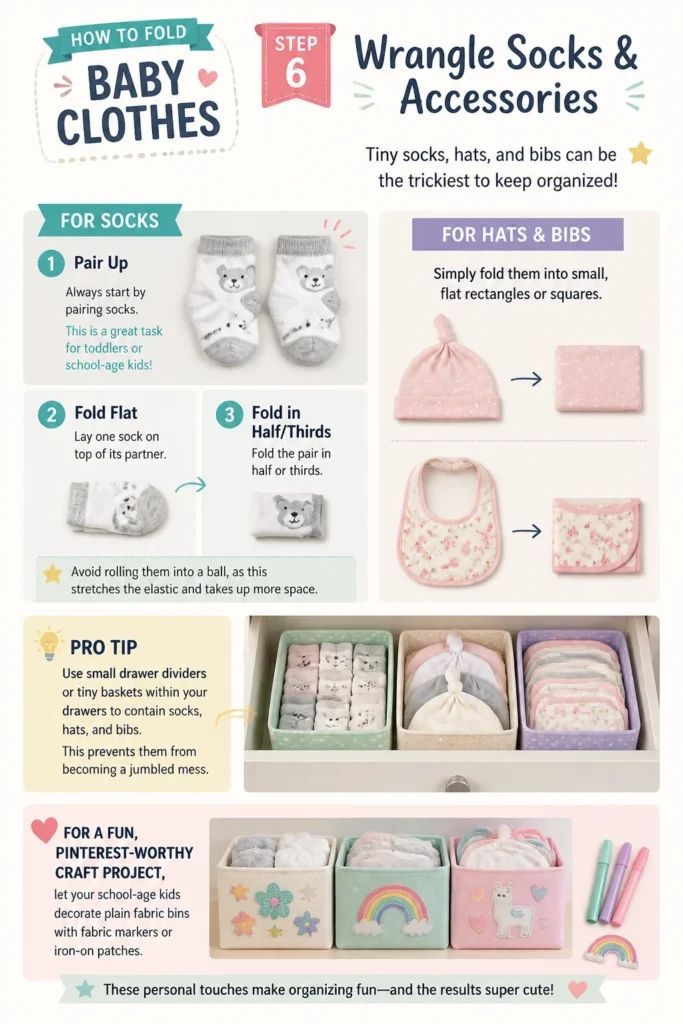
For Socks:
- Pair Up: Always start by pairing socks. This is a great task for toddlers or school-age kids!
- Fold Flat: Lay one sock on top of its partner.
- Fold in Half/Thirds: Fold the pair in half or thirds. Avoid rolling them into a ball, as this stretches the elastic and takes up more space.
For Hats & Bibs:
Simply fold them into small, flat rectangles or squares.
Pro tip: Use small drawer dividers or tiny baskets within your drawers to contain socks, hats, and bibs. This prevents them from becoming a jumbled mess. You can find cute, inexpensive fabric bins that fit perfectly. For a fun, Pinterest-worthy craft project, let your school-age kids decorate plain fabric bins with fabric markers or iron-on patches. These personalized bins can make laundry organization feel less like a chore and more like a creative endeavor!
Step 7: Fold for Storage: The File Fold Method
This is where the magic happens for maximizing space and visibility! Instead of stacking clothes on top of each other (which makes it hard to see what’s at the bottom), you’re going to “file fold” them.
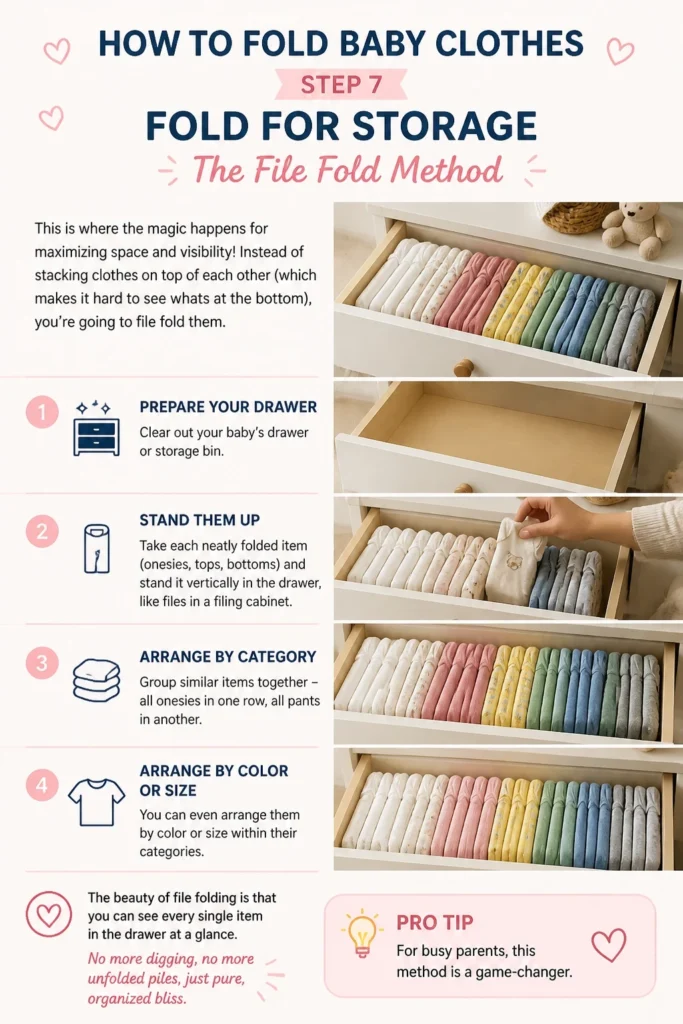
- Prepare Your Drawer: Clear out your baby’s drawer or storage bin.
- Stand Them Up: Take each neatly folded item (onesies, tops, bottoms) and stand it vertically in the drawer, like files in a filing cabinet.
- Arrange by Category: Group similar items together – all onesies in one row, all pants in another. You can even arrange them by color or size within their categories.
The beauty of file folding is that you can see every single item in the drawer at a glance. No more digging, no more unfolded piles, just pure, organized bliss.
Pro tip: For busy parents, this method is a game-changer. Imagine grabbing a fresh outfit for your baby in the dark during a 3 AM diaper change, without rummaging and waking them up further! For school-age kids, this teaches them excellent organizational skills that will benefit them for life. You can even make cute labels for the front of the drawers (“Onesies,” “Pants,” “PJs”) – another fun, easy craft project that adds a Pinterest-worthy touch!
Step 8: Organize Your Drawers & Closet
Now that everything is perfectly folded, it’s time to put it all away!
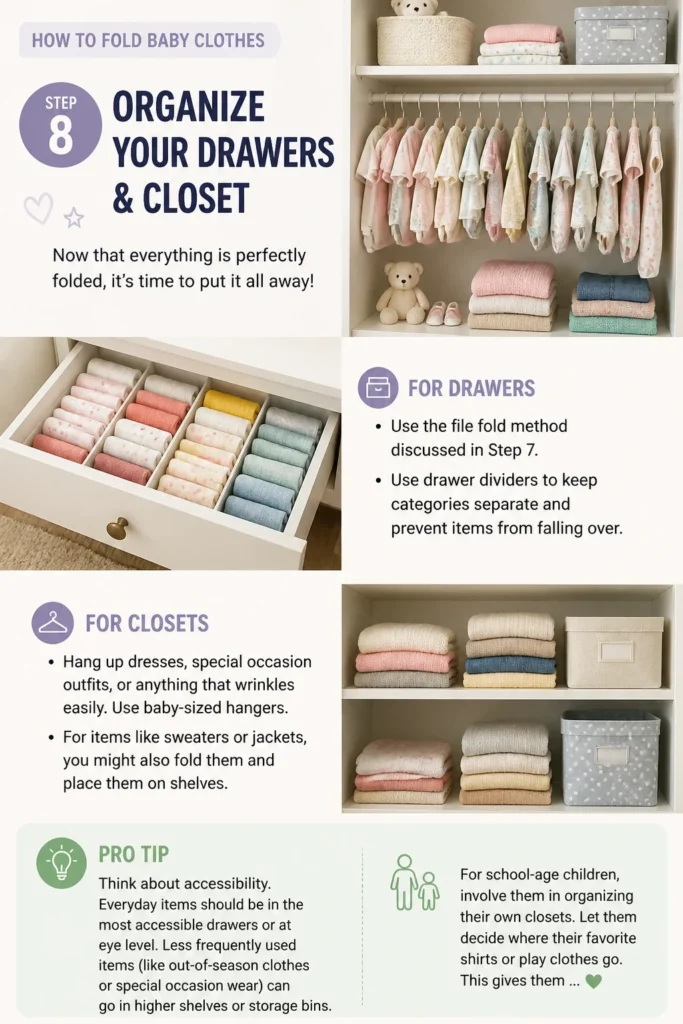
For Drawers:
Use the file fold method discussed in Step 7. Use drawer dividers to keep categories separate and prevent items from falling over.
For Closets:
Hang up dresses, special occasion outfits, or anything that wrinkles easily. Use baby-sized hangers. For items like sweaters or jackets, you might also fold them and place them on shelves.
Pro tip: Think about accessibility. Everyday items should be in the most accessible drawers or at eye level. Less frequently used items (like out-of-season clothes or special occasion wear) can go in higher shelves or storage bins. For school-age children, involve them in organizing their own closets. Let them decide where their favorite shirts or play clothes go. This gives them a sense of ownership and encourages them to keep things tidy. For a fun family bonding activity, dedicate a weekend afternoon to a “closet clean-out party” where everyone helps organize their own space, followed by a pizza night!
Common Mistakes to Avoid
- Overstuffing Drawers:
Problem: Cramming too many clothes into a drawer makes it impossible to see what you have, causes wrinkles, and makes it difficult to pull items out without disturbing everything else. It also damages the clothes over time.
Correct Approach: Only put as many clothes as can comfortably fit using the file fold method. Regularly declutter outgrown clothes. If you have too many clothes for the space, consider rotating seasonal items or storing extras elsewhere.
- Rolling Socks into Balls:
Problem: While seemingly efficient, rolling socks into a ball stretches the elastic over time, shortening their lifespan. It also creates lumpy shapes that don’t sit neatly in a drawer.
Correct Approach: Lay socks flat, pair them up, and fold them into a small, flat rectangle. Use a small divider or basket to keep them contained in the drawer.
- Stacking Clothes High:
Problem: Stacking items vertically in piles means you only see the top item. To get to something at the bottom, you have to pull out the whole stack, making a mess and increasing friction.
Correct Approach: Embrace the file fold method! Standing clothes up vertically allows you to see every item at a glance and easily pull out what you need without disturbing the rest of the drawer.
- Ignoring Outgrown Clothes:
Problem: Keeping clothes that no longer fit clutters drawers, takes up valuable space, and makes it harder to find current sizes. It can also be emotionally draining to constantly see clothes your baby has already outgrown.
Correct Approach: As soon as an item is too small, remove it from the drawer. Have a designated “too small” bin. Once it’s full, sort items for donation, hand-me-downs to friends, or storage for future children. Make this a quarterly ritual!
Troubleshooting
- “My baby’s clothes are still a jumbled mess!”
Solution: Don’t get discouraged! Start small. Pick one drawer or one type of clothing (e.g., just onesies) and focus on folding and organizing those first. Once you see the success there, you’ll be motivated to tackle the rest. Consistency is key, not perfection.
- “I don’t have enough drawer space for everything.”
Solution: This is a common challenge! First, ruthlessly declutter anything that doesn’t fit or isn’t worn. Then, consider vertical storage solutions like hanging closet organizers with cubbies, under-bed storage bins for out-of-season items, or even a small dresser in another room. Remember, babies don’t need a huge wardrobe; a curated selection of functional, well-fitting items is more practical.
- “My folded clothes keep falling over in the drawer.”
Solution: This usually happens when the drawer isn’t full enough to support the standing items. Use drawer dividers (adjustable ones work great!) or small, empty shoeboxes or fabric bins as makeshift dividers to create compartments. This will hold your file-folded items upright and neat.
Key Takeaways
- Prep your space and involve family members for a smoother experience.
- Sorting by size and type before folding saves time and helps with inventory.
- Master the compact “file fold” for onesies, tops, and bottoms to maximize drawer space and visibility.
- Avoid rolling socks to maintain elasticity and neatness.
- Regularly declutter outgrown clothes to keep your baby’s wardrobe functional.
- Utilize drawer dividers and small bins for superior organization of tiny items.
Frequently Asked Questions
Q: How often should I sort through my baby’s clothes for outgrown items?
A: Aim for a quick sort every 1-2 months, or whenever you notice clothes getting too snug. Babies grow so fast, so staying on top of it prevents clutter from building up.
Q: Is it okay to hang baby clothes instead of folding them?
A: Absolutely! Items like dresses, jackets, or special occasion outfits often benefit from being hung to prevent wrinkles. For everyday items like onesies and pants, folding and file-folding in drawers is generally more space-efficient and easier to access.
Q: What’s the best way to store clothes for a future baby?
A: Wash and thoroughly dry all clothes. Store them by size in airtight, clear plastic bins to protect them from moisture, pests, and yellowing. Add a dryer sheet or cedar sachet for freshness. Label the bins clearly by size and season.
Q: Can I get my toddler to help with folding?
A: Yes! While they might not achieve perfect folds, toddlers can help with simple tasks like matching socks, putting folded items into a designated basket, or sorting clothes by color. Make it a game, and praise their effort, not just the outcome. It’s a wonderful way to build life skills and foster a sense of responsibility from a young age.
What’s Next?
You’ve just conquered the art of folding baby clothes – give yourself a huge pat on the back! This isn’t just about tidiness; it’s about creating a more functional, less stressful home environment. Why not take this newfound organizational zen to other areas of your home? Perhaps tackle the linen closet next, or create a designated craft station for your school-age kids. Remember, every small step towards organization makes a big difference in the daily rhythm of family life. So go ahead, open that organized drawer, breathe a sigh of relief, and enjoy a moment of calm amidst your beautiful, busy life. You’ve got this, mama!