
💖 How To Ask A Boy To Be Your Boyfriend
🍼 The Newborn Survival Kit
The first six months of parenthood are a blur of exhaustion. Stop trying to tough it out—these are the 5 absolute life-saving baby essentials that experienced moms literally refuse to live without. They will instantly solve your biggest sleeping, feeding, and soothing struggles.
🌙 Hatch Rest Baby Sound Machine
The ultimate sleep hack. You can entirely control this white noise machine and dimmable nightlight from your smartphone, meaning you never have to accidentally wake the baby while sneaking back out of the nursery after a 3 AM feeding.
🤧 FridaBaby NoseFrida Snotsucker
It sounds incredibly gross until your baby has their first cold and literally cannot breathe to sleep. Throw away those useless hospital bulb syringes—this doctor-invented tool safely clears congestion in seconds, and yes, the filter absolutely prevents any germs from reaching you.
💧 Haakaa Silicone Manual Breast Pump
Every breastfeeding mom's best kept secret. Simply suction this cheap, cord-free silicone cup to the opposite breast while you nurse to effortlessly catch every drop of liquid gold letdown that would otherwise leak onto your shirt and be totally wasted.
🧴 Aquaphor Baby Healing Ointment
Forget buying ten different expensive, highly-fragranced creams. This is the only ointment you need. It miraculously cures severe diaper rash overnight, heals cracked nursing nipples, soothes baby eczema, and aggressively protects delicate skin from harsh winter wind.
☁️ Burt's Bees 100% Organic Burp Cloths
You will go through dozens of these a day, so do not cheap out on thin fabric. These thick, ultra-absorbent organic cotton cloths actually catch massive spit-ups before they ruin your only clean outfit, while remaining incredibly soft against your newborn's face.
As a mom, I know navigating the world of crushes and early relationships can feel like a whole new frontier for our kids.
It’s a time filled with big feelings, and our children need our steady guidance, support, and understanding more than ever.
I’ve been right there, helping my own navigate these waters, and I’m here to share what I’ve learned to make this journey a little smoother for you and your child.

Quick Overview
- Time needed: Ongoing support and open dialogue, but initial conversations can be quick.
- Difficulty: Intermediate (requires empathy, active listening, and consistent communication).
- What you’ll need: An open heart, listening ears, a few fun activity ideas, and a lot of patience.
Step-by-Step Instructions
Step 1: Cultivate Open Communication Early On
Building a foundation of trust and open communication starts long before crushes enter the picture. For babies and toddlers, this means responding to their emotional cues and helping them name feelings like “happy” or “sad.”
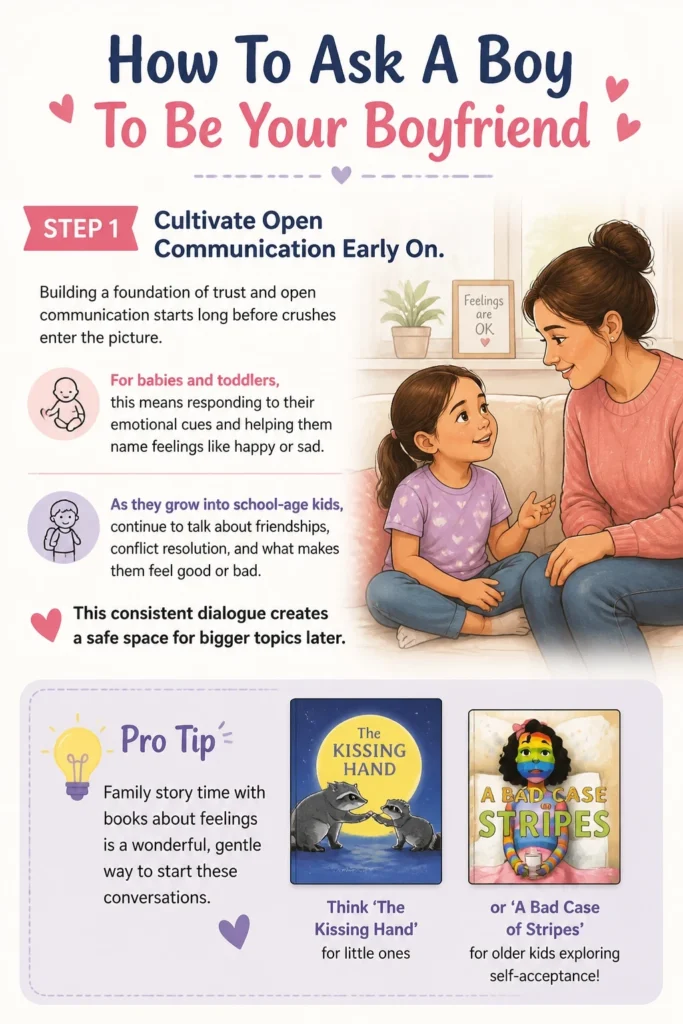
As they grow into school-age kids, continue to talk about friendships, conflict resolution, and what makes them feel good or bad. This consistent dialogue creates a safe space for bigger topics later.
Pro Tip: Family story time with books about feelings is a wonderful, gentle way to start these conversations. Think ‘The Kissing Hand’ for little ones, or ‘A Bad Case of Stripes’ for older kids exploring self-acceptance!
Step 2: Build Unshakeable Self-Esteem
A child who feels good about themselves is more confident in expressing their feelings and handling any outcome. Encourage their unique passions, whether it’s art, sports, or reading, and celebrate their efforts more than just their achievements.
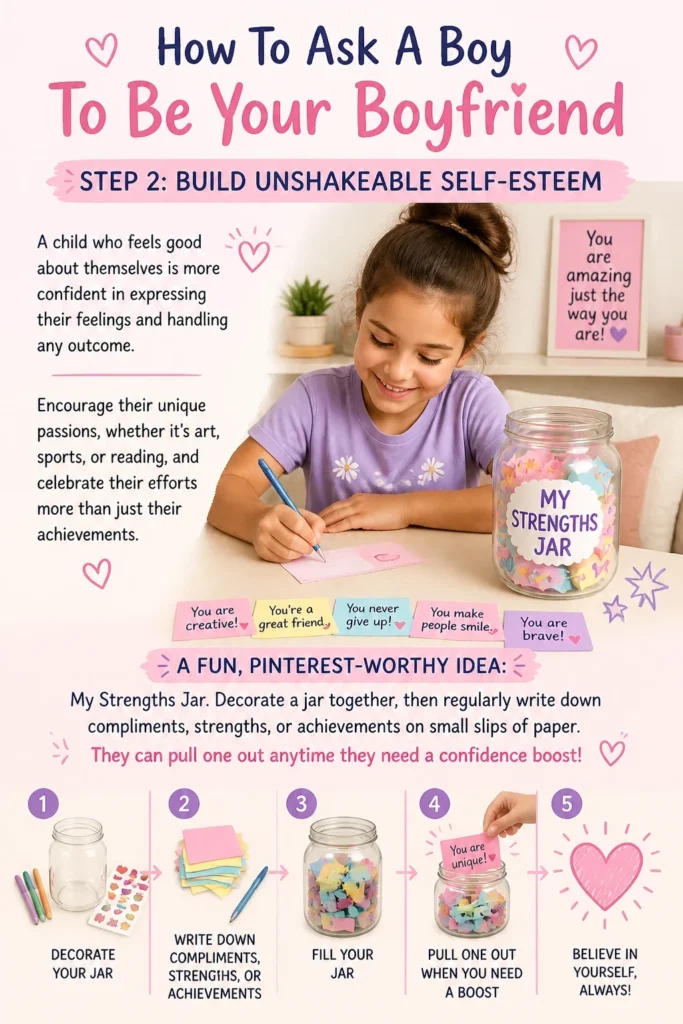
A fun, Pinterest-worthy idea is a “My Strengths” Jar. Decorate a jar together, then regularly write down compliments, strengths, or achievements on small slips of paper. They can pull one out anytime they need a confidence boost!
Step 3: Understand Their Feelings Without Judgment
When your child starts talking about a crush, your primary role is to listen actively and validate their emotions. Avoid dismissive comments like “it’s just a phase” or “you’re too young to know about love.”
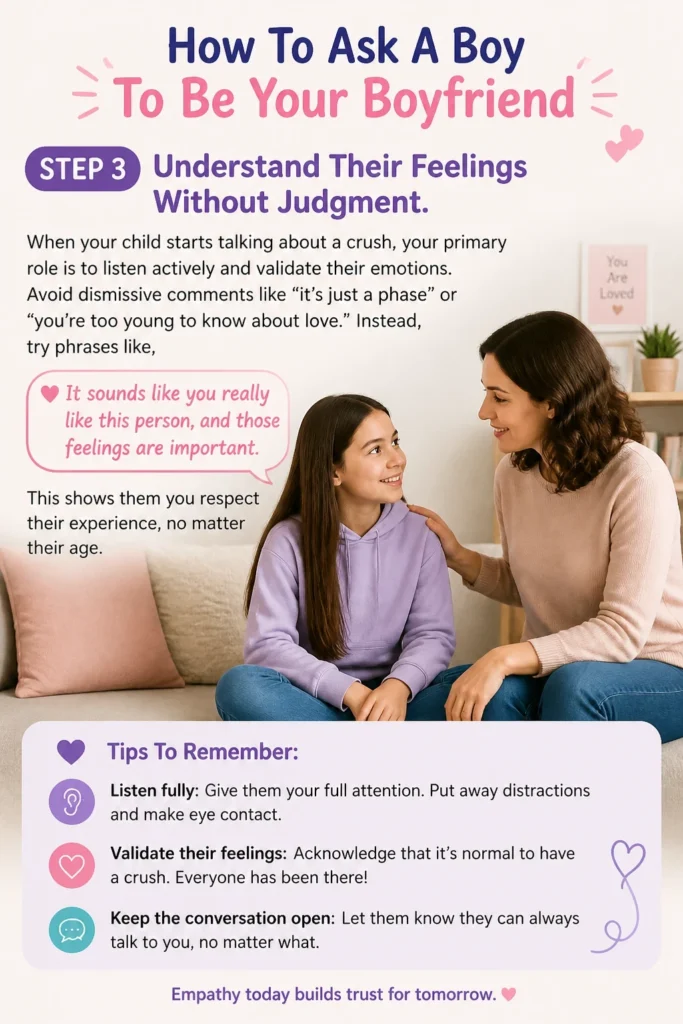
Instead, try phrases like, “It sounds like you really like this person, and those feelings are important.” This shows them you respect their experience, no matter their age.
Step 4: Discuss Healthy Relationships and Boundaries
Before your child considers asking someone out, it’s essential to talk about what makes a relationship healthy. Discuss concepts like respect, kindness, clear communication, and personal boundaries.
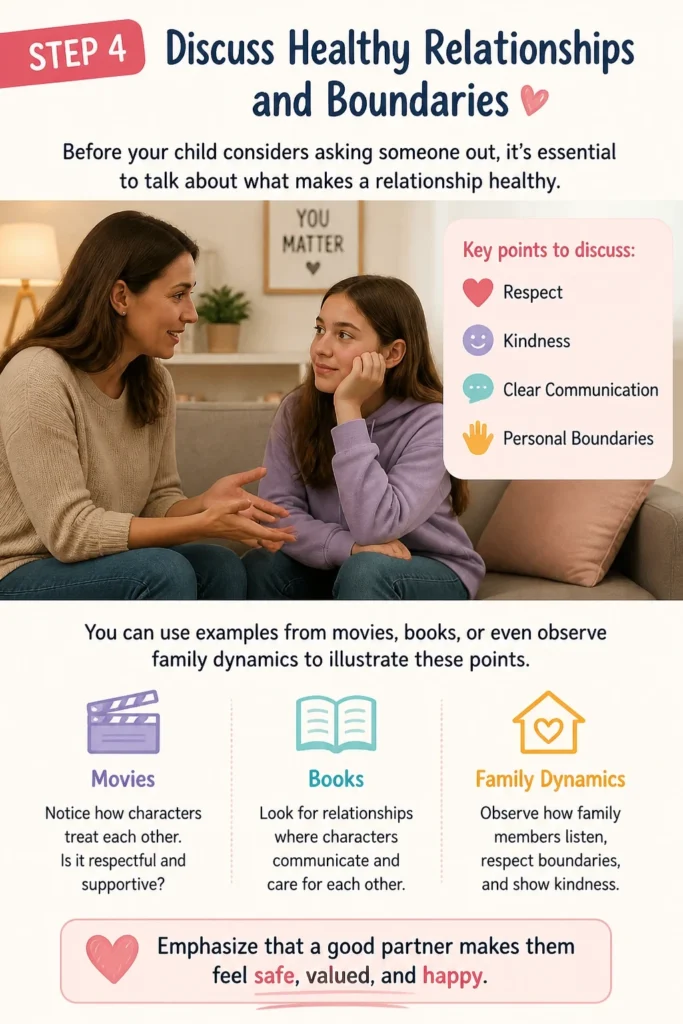
You can use examples from movies, books, or even observe family dynamics to illustrate these points. Emphasize that a good partner makes them feel safe, valued, and happy.
Step 5: Help Them Craft Their Message (If They Choose To Ask)
If your child decides they want to ask someone to be their boyfriend, offer guidance, not a script. Help them brainstorm what they want to say, focusing on being clear, genuine, and respectful of the other person’s feelings.
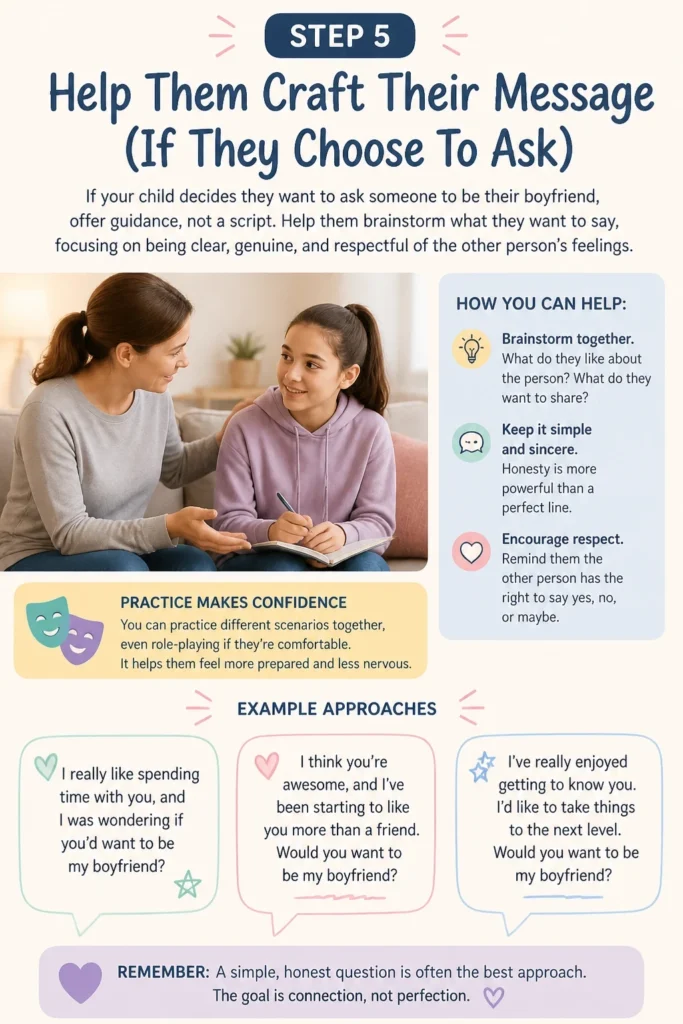
You can practice different scenarios together, even role-playing if they’re comfortable. Remind them that a simple, honest question is often the best approach, like “I really like spending time with you, and I was wondering if you’d want to be my boyfriend?”
Step 6: Prepare for Any Outcome
It’s important to discuss that there are three possible answers: yes, no, or maybe. Help your child understand that a “no” doesn’t diminish their worth, and it’s okay to feel disappointed.
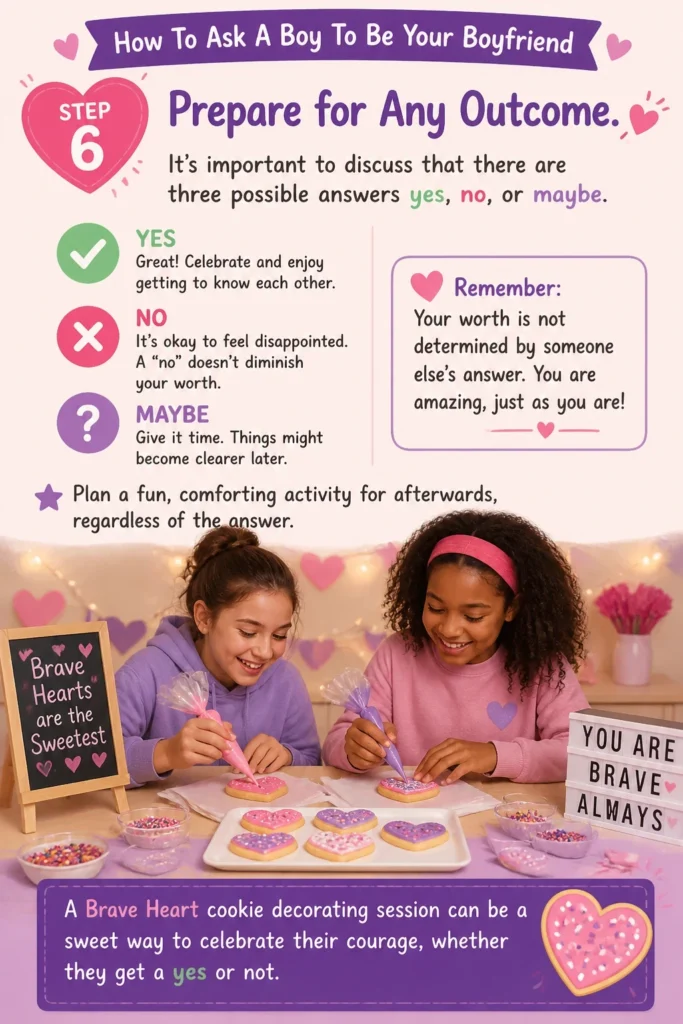
Plan a fun, comforting activity for afterwards, regardless of the answer. A “Brave Heart” cookie decorating session can be a sweet way to celebrate their courage, whether they get a yes or not.
Step 7: Celebrate Their Courage and Support Their Journey
The act of expressing feelings is incredibly brave, and that alone deserves celebration. Acknowledge your child’s courage and let them know how proud you are, no matter the outcome.
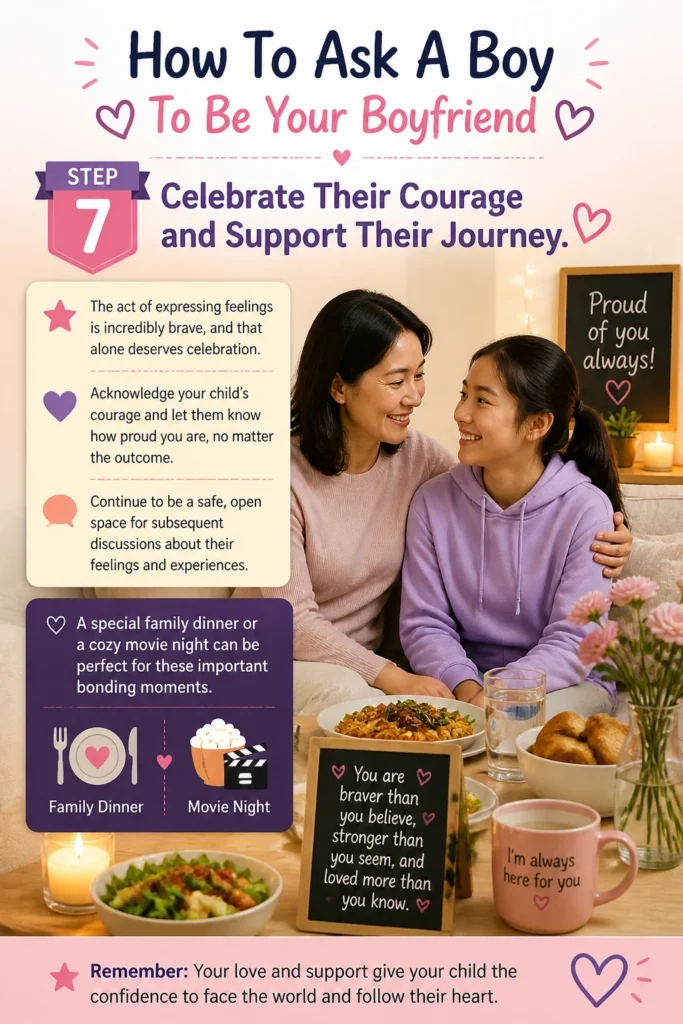
Continue to be a safe, open space for subsequent discussions about their feelings and experiences. A special family dinner or a cozy movie night can be perfect for these important bonding moments.
Common Mistakes to Avoid
Pressuring Your Child
Never push your child to ask someone out if they’re not ready, or conversely, forbid them from doing so if they feel prepared. This is their journey, and they need to feel in control of their own choices and feelings.
Your role is to offer guidance and support, allowing them the space to make decisions at their own pace. Respecting their autonomy builds trust and fosters their confidence.
Dismissing Their Feelings
Underestimating the intensity of their emotions, even for what might seem like a fleeting crush, can shut down communication. Telling them “it’s just a crush” or “you’ll get over it” minimizes their experience.
Instead, validate their feelings by saying, “It sounds like this is really important to you right now.” This approach encourages them to share more openly with you.
Living Vicariously Through Them
It’s easy to project our own past experiences or hopes onto our children, but this moment is theirs alone. Avoid giving unsolicited advice based on your own teenage years or trying to guide them towards your preferred outcome.
Focus on what they need and want, helping them navigate their unique situation. This ensures the experience is truly about their growth and learning.
Over-Scripting Their Approach
While it’s helpful to brainstorm what to say, giving your child a precise script can make them feel inauthentic or nervous about forgetting lines. Their words should sound like them, not like you.
Encourage them to find their own voice and express themselves in a way that feels natural and comfortable. Authenticity is key to genuine connection.
Troubleshooting
“My Child is Too Shy to Talk About It”
Some children are naturally more reserved, and that’s perfectly okay. Instead of direct questioning, create an environment where casual conversations can happen naturally, perhaps during a car ride or while doing a craft together.
You can also introduce topics indirectly by talking about characters in books or movies who have crushes. Let them know your door is always open, without pressure, and they’ll come to you when they’re ready.
“They Got Rejected, and They’re Devastated”
Rejection hurts, and it’s important to allow them to feel that sadness. Validate their emotions by saying, “It’s completely normal to feel sad and disappointed right now.”
Remind them that their worth isn’t tied to someone else’s answer. Plan a comforting sleepover activity with their closest friends or a special family movie night to lift their spirits and remind them of all the love surrounding them.
“They Don’t Know How to Handle a ‘Yes'”
Congratulations, they got a “yes!” Now the real conversation begins. Help them think through what being “boyfriend and girlfriend” means at their age, focusing on respectful communication, spending time together, and setting boundaries.
Discuss what a first “date” might look like – maybe a group outing to the park, a movie with friends, or a simple ice cream trip. You can even help them pick out a fun, age-appropriate school outfit that makes them feel confident for their next hangout.
Key Takeaways
- Open communication and a trusting relationship are the bedrock for discussing crushes and relationships.
- Fostering strong self-esteem gives your child the confidence to express their feelings authentically.
- Always validate your child’s feelings, no matter how big or small they seem to you.
- Your role is to guide and support, not to control or dictate their relationship journey.
- Celebrate their courage in expressing their feelings, regardless of the outcome.
- Healthy relationship skills, like respect and boundaries, begin with what they learn at home.
Frequently Asked Questions
What’s an appropriate age to start talking about crushes?
Conversations about crushes can start as early as preschool, often sparked by questions about friendships or who they like to play with. It’s less about a specific age and more about following your child’s lead and keeping communication lines open from an early age.
How do I know if they’re ready for a relationship?
Readiness isn’t just about age, but emotional maturity. Look for signs they can communicate their feelings, understand boundaries, handle disappointment, and show empathy. These are skills developed through consistent parenting and life experiences, not just a birthday.
Should I help them pick out an outfit for a first ‘date’?
Absolutely! Helping them pick an outfit can be a fun, low-pressure bonding activity. Focus on comfort and expressing their personality. For a school event or a casual outing, suggest something that makes them feel good and confident, not something overly formal or revealing.
What if their crush is someone I don’t approve of?
This can be a tough situation for any parent. Instead of outright forbidding the connection, try to understand why you disapprove. Then, gently express your concerns to your child, focusing on behaviors or values rather than personal attacks. Keep communication open, and continue to guide them towards healthy choices and self-respect.
Our Top Recommended Finds
- “A Little Spot of Emotion” Box Set: Fantastic books for helping kids understand and express their feelings in a relatable way.
- Kids’ Journal with Prompts: A wonderful tool for self-reflection and processing big emotions privately.
- Craft Kit for Decorating: Perfect for creating a “My Strengths” jar or personalizing “Brave Heart” cookies together.
Nurturing Confident Hearts for Life’s Big Moments
Guiding our children through the exciting, sometimes bewildering world of crushes and early relationships is one of the most rewarding parts of parenting. It’s a chance to reinforce all the values you’ve instilled since they were little.
Remember, your unwavering support, open ears, and loving guidance are the greatest tools you have. These moments aren’t just about asking a boy to be a boyfriend; they’re about building a confident, emotionally intelligent young person ready for all of life’s connections.
So, take a deep breath, embrace the conversations, and know that you’re doing an amazing job. Start those conversations today, and watch your child flourish!