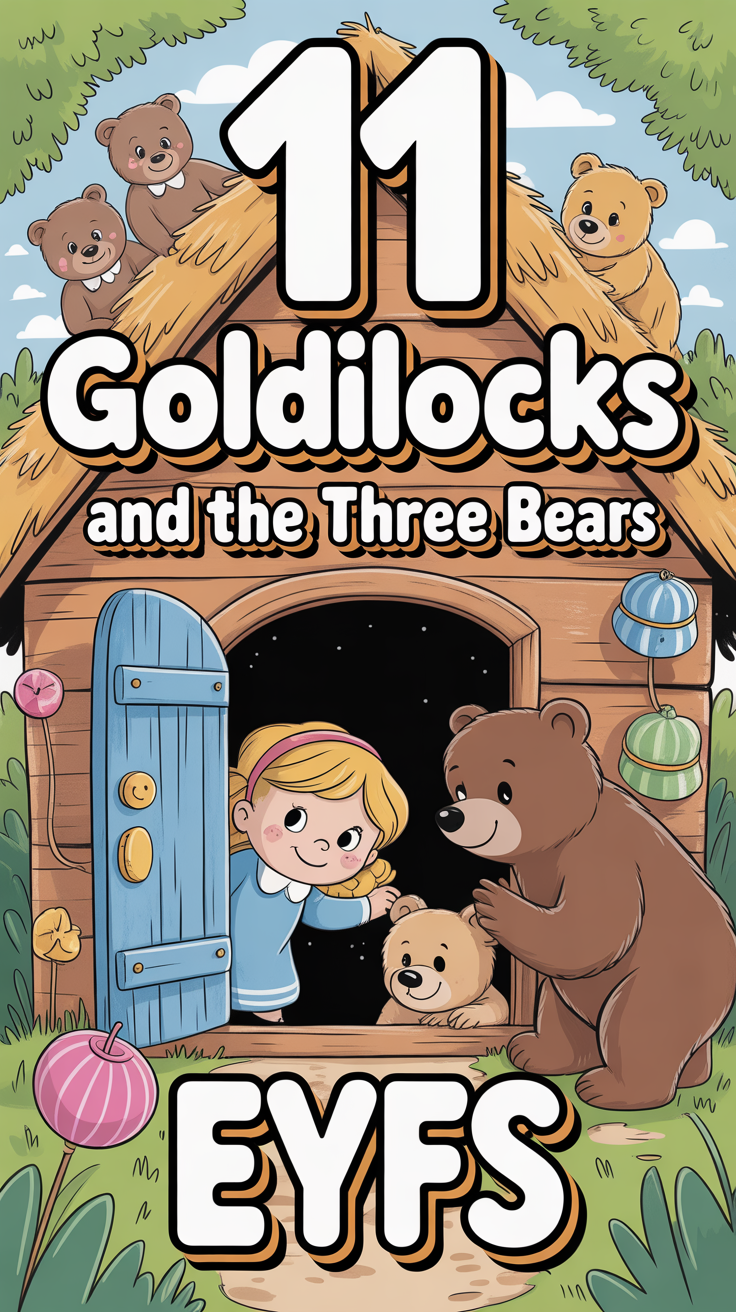
🐻 11 Goldilocks And The Three Bears Eyfs
Alright, listen up, fellow trendsetters and early years enthusiasts! You know that classic tale, Goldilocks and the Three Bears? Turns out, it’s not just for bedtime anymore. We’re talking serious EYFS gold here, packed with learning opportunities that are, dare I say, just right. Forget boring worksheets; we’re diving into playful, hands-on activities that make learning feel like a total adventure. Get ready to level up your little learners’ world with these eleven brilliant ideas.
1. Sensory Porridge Play
Who needs a fancy kitchen when you have a sensory bin? Whip up a batch of “porridge” – think cooked oats, rice, or even just plain flour mixed with water – and let the little ones go wild. They’ll love exploring different textures and temperatures (safely, of course!).
This activity is a fantastic way to develop fine motor skills and introduce concepts like hot, cold, lumpy, and smooth. Pro tip: Add some toy bears and mini bowls for extra narrative play. It’s messy, yes, but the learning benefits are totally worth the clean-up.
2. Bear Family Role-Play
Time to get those acting chops ready! Set up a cozy corner with costumes or simple props for Mama Bear, Papa Bear, Baby Bear, and Goldilocks. Encourage the children to take on different roles and act out the story.
This helps with communication and language development, as well as understanding different perspectives. They get to practice empathy, which, let’s be honest, is a skill some adults are still working on.
3. Size Sorting Fun
The story is practically begging for a size-sorting activity. Gather various objects in three distinct sizes – big, medium, and small. Think bowls, spoons, teddy bears, or even different sized leaves from outside.
Children can sort these items into categories, reinforcing their understanding of mathematical concepts like comparison and measurement. Make it a game: “Can you find Papa Bear’s big spoon?” It’s way more exciting than a textbook.
4. Chair Building Challenge
Remember Goldilocks breaking Baby Bear’s chair? Let’s turn that into a constructive (pun intended) activity! Provide building blocks, cardboard boxes, or even cushions and ask the children to build chairs for each bear.
This encourages problem-solving skills, spatial reasoning, and understanding stability. They’ll quickly learn that Baby Bear’s chair needs to be sturdy! Plus, who doesn’t love a good building challenge?
5. Bedtime Story Reenactment
Create a “bedroom” area with different sized blankets and pillows. Children can take turns being Goldilocks trying out the beds, describing how each one feels. Is it too hard, too soft, or just right?
This activity enhances descriptive language and encourages imaginative play. It’s also a great way to talk about comfort and personal preferences without anyone actually breaking anything (hopefully).
6. “Just Right” Taste Test
While actual porridge might be a hard sell for a taste test, you can adapt this! Offer three different options of a safe snack – maybe three types of fruit, or crackers with different toppings. Children can try each and decide which one is “just right” for them.
This encourages sensory exploration and helps children articulate their preferences and opinions. It’s also a sneaky way to introduce them to new foods. Who knew Goldilocks was a food critic?
7. Forest Walk & Nature Hunt
Take the learning outdoors! Go on a “bear hunt” in a local park or garden. Look for things a bear might find – sticks, leaves, pinecones, or even a cozy “cave” (a bush!). Collect items that could be “too big,” “too small,” or “just right.”
This activity connects the story to the real world, promoting understanding of the world around us and physical development. Plus, fresh air is always a win.
8. Story Sequencing Activity
Print out simple pictures representing key events from the story (Goldilocks entering, eating porridge, breaking the chair, sleeping, bears returning, Goldilocks running away). Ask the children to put them in the correct order.
This is brilliant for developing literacy skills, particularly narrative comprehension and sequencing. It helps them grasp the beginning, middle, and end of a story, which is pretty foundational stuff.
9. Music & Movement
Get those wiggles out! Play some bear-themed music or create simple songs about big, medium, and small. Encourage children to move like bears – big, lumbering steps for Papa Bear, tiny tiptoes for Baby Bear.
This promotes physical development, coordination, and expressive arts. It’s also a fantastic way to burn off some energy, making for a calmer group later. Win-win!
10. Creating Bear Art
Unleash their inner artists! Provide materials for creating bear masks, drawing the bear family, or even making “paw prints” with paint. They can choose their favorite character to depict.
This fosters creativity and expressive arts and design. It allows children to interpret the story in their own unique way and express their understanding visually. Who knows, you might discover the next Picasso!
11. Emotional Exploration
The story is rich with emotions! Discuss how the bears felt when they discovered their porridge, chair, and bed had been disturbed. How did Goldilocks feel when the bears returned? Use emoji cards or facial expressions to help them identify feelings.
This is crucial for Personal, Social and Emotional Development (PSED), helping children understand and articulate different emotions. It teaches empathy and helps them relate to characters’ experiences.
Conclusion
So there you have it, folks! Goldilocks and the Three Bears isn’t just a quaint fairy tale; it’s a goldmine for early years learning. From sensory play to emotional literacy, these activities make learning ridiculously fun and totally unforgettable. Go forth, get creative, and make some “just right” memories with your little learners!