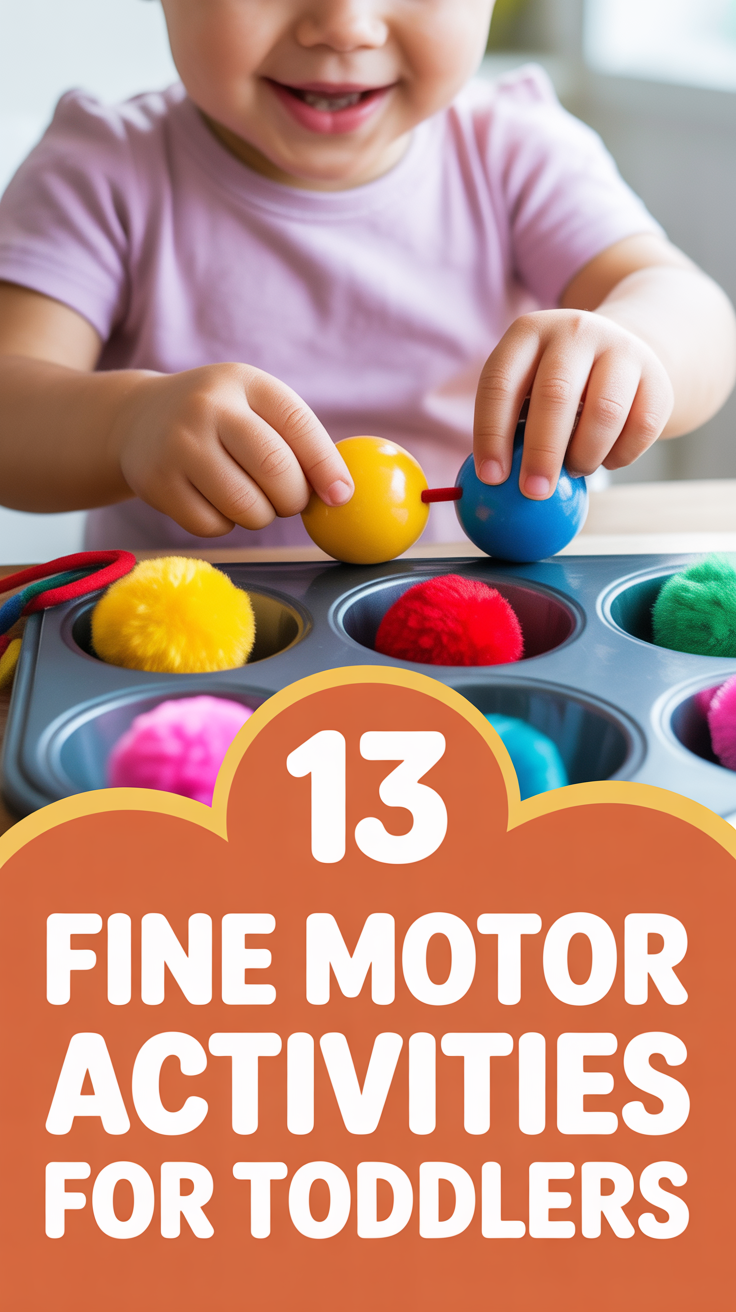
🤏 13 Fine Motor Activities For Toddlers
Hey there, fellow parent or cool guardian! You know that tiny human who somehow manages to both melt your heart and dismantle your entire living room in under five minutes? Yeah, that one. While they’re busy being adorable agents of chaos, we can totally sneak in some serious skill-building. We’re talking about fine motor skills, which are basically those super important small muscle movements in their hands and wrists. Think future crayon wielders, button fasteners, and maybe even self-feeders (a parent can dream, right?). Don’t sweat it, you don’t need a fancy Montessori setup. We’re about to dive into 13 ridiculously easy, often messy, but always effective activities that will have those little fingers working overtime.
1. Cereal Stringing
Who knew breakfast could double as a serious skill-building session? Grab some O-shaped cereal (Cheerios are the MVP here) and a pipe cleaner or a piece of yarn with a taped end. Your toddler pushes the cereal onto the string, developing their pincer grasp and hand-eye coordination. It’s surprisingly calming, unless they decide to eat all the supplies.
Pro tip: Use slightly stale cereal; it’s less crumbly and easier for tiny hands to grasp. They’ll also be less tempted to eat all the learning materials.
This activity builds focus and refines that crucial finger dexterity needed for future tasks.
2. Pom-Pom Sort
Colorful fluff with a purpose! Get a bag of pom-poms (various sizes are a bonus), some kid-safe tongs or tweezers, and a muffin tin or small bowls. Your little one uses the tongs to pick up and sort the pom-poms into the different compartments.
Pro tip: Start with larger pom-poms and progress to smaller ones as their skills develop. You can even color-match them for an added cognitive boost.
This is pure gold for developing precision grip and finger strength.
3. Playdough Fun
The OG sensory activity is also a fine motor powerhouse. Give them a blob of playdough and let them squish, roll, pinch, and pull. Add some kid-safe scissors, plastic knives, or cookie cutters for extra engagement.
Pro tip: Hide small beads or pieces of pasta in the playdough and have them “find” and pull them out, using their pincer grasp.
Playdough is fantastic for strengthening all those little hand muscles, preparing them for writing and cutting.
4. Sticker Peeling
Simple, yet ridiculously effective. Get a sheet of stickers (the larger ones are easier to start with) and a piece of paper. Your toddler peels the stickers off the sheet and sticks them wherever their heart desires.
Pro tip: Peel a corner of the sticker backing for them initially; it reduces frustration and lets them focus on the peeling motion.
This seemingly mundane task is a superstar for developing that crucial pincer grasp and finger separation.
5. Water Dropper Art
Science meets art, with a side of delightful mess. Fill small bowls with watercolors (or just water with food coloring) and give your toddler a water dropper or pipette. They squeeze the dropper to pick up water and release it onto coffee filters or paper towels.
Pro tip: Put a towel down. Seriously. A big one. This activity is worth the cleanup, though.
Squeezing the dropper is excellent for building hand strength and control, plus it’s visually stimulating.
6. Pipe Cleaner Push
Who knew a humble colander could be such a fine motor gym? Grab a colander (the one with small holes) and a bunch of pipe cleaners. Your toddler pushes the pipe cleaners into the holes, then pulls them out.
Pro tip: Bend the ends of the pipe cleaners slightly to make them easier for tiny hands to grasp and manipulate.
This activity requires precision, bilateral coordination (using both hands), and problem-solving.
7. Button Threading
Time to level up from cereal stringing. Find some large buttons with big holes and a sturdy shoelace or thick piece of yarn. Your toddler threads the lace through the buttonholes.
Pro tip: Tie a knot at one end of the yarn to prevent the buttons from slipping off, which saves everyone’s sanity.
This boosts hand-eye coordination, concentration, and refines that precise movement.
8. Zipper and Button Boards
Practical life skills in the making! You can buy these, or make your own using old clothes or fabric scraps. These boards feature zippers, buttons, snaps, and buckles for your toddler to practice fastening and unfastening.
Pro tip: Start with larger, easier-to-manipulate fasteners and gradually introduce smaller, more complex ones.
This prepares them for dressing themselves, which, let’s be honest, is a win for everyone involved.
9. Block Stacking
The timeless classic, and for good reason. Whether it’s wooden blocks, LEGO Duplo, or even cardboard boxes, stacking requires precision and control. Your toddler carefully places one block on top of another, aiming for the highest tower possible.
Pro tip: Introduce different sized blocks to vary the challenge. Stacking smaller blocks requires more refined motor control.
This activity hones precision, balance, and develops a healthy dose of patience (mostly yours, probably).
10. Peg Boards
Those colorful little pegs are mighty fine motor builders. A peg board with matching pegs is a fantastic tool. Your toddler grasps the pegs and pushes them into the holes on the board, often creating patterns or pictures.
Pro tip: Start by just having them place a few pegs, guiding their hand if needed. Soon they’ll be making masterpieces.
Excellent for developing the pincer grasp, hand-eye coordination, and spatial reasoning.
11. Sponge Squeezing
A practical life skill that’s a sneaky strength builder. Grab two bowls, some water, and a sponge. Fill one bowl with water, and your toddler transfers the water to the empty bowl by soaking the sponge and squeezing it out.
Pro tip: Add a drop of food coloring to the water for extra visual appeal and to make the transfer more exciting.
This simple activity builds serious hand strength and coordination, perfect for pre-writing skills.
12. Scissor Practice
Time to snip, safely. Get some kid-safe scissors (the blunt-tipped ones) and strips of paper. Start by having them snip straight lines, then move to zigzags or simple shapes.
Pro tip: Begin with thicker paper or cardstock; it’s easier for them to cut and provides more tactile feedback.
Scissor practice is a huge boost for hand strength, bilateral coordination, and pre-writing readiness.
13. Tweezer Games
Tiny tools, big development. Provide your toddler with some kid-safe tweezers and small, graspable objects like cotton balls, pom-poms, or large beads. They use the tweezers to pick up and transfer the objects.
Pro tip: Use an ice cube tray for sorting. They can pick up objects and sort them by color or type into the different compartments.
This activity refines that delicate pincer grasp and develops incredible hand control and precision.
Conclusion
See? You’re not just distracting them with colorful bits and bobs; you’re actively building future neurosurgeons, or at least kids who can eventually tie their own shoes without a full-blown meltdown. These activities are super easy to set up, often using things you already have lurking around the house. So go forth, embrace the mess, and give yourself a well-deserved pat on the back. You’re basically a fine motor skill guru now.