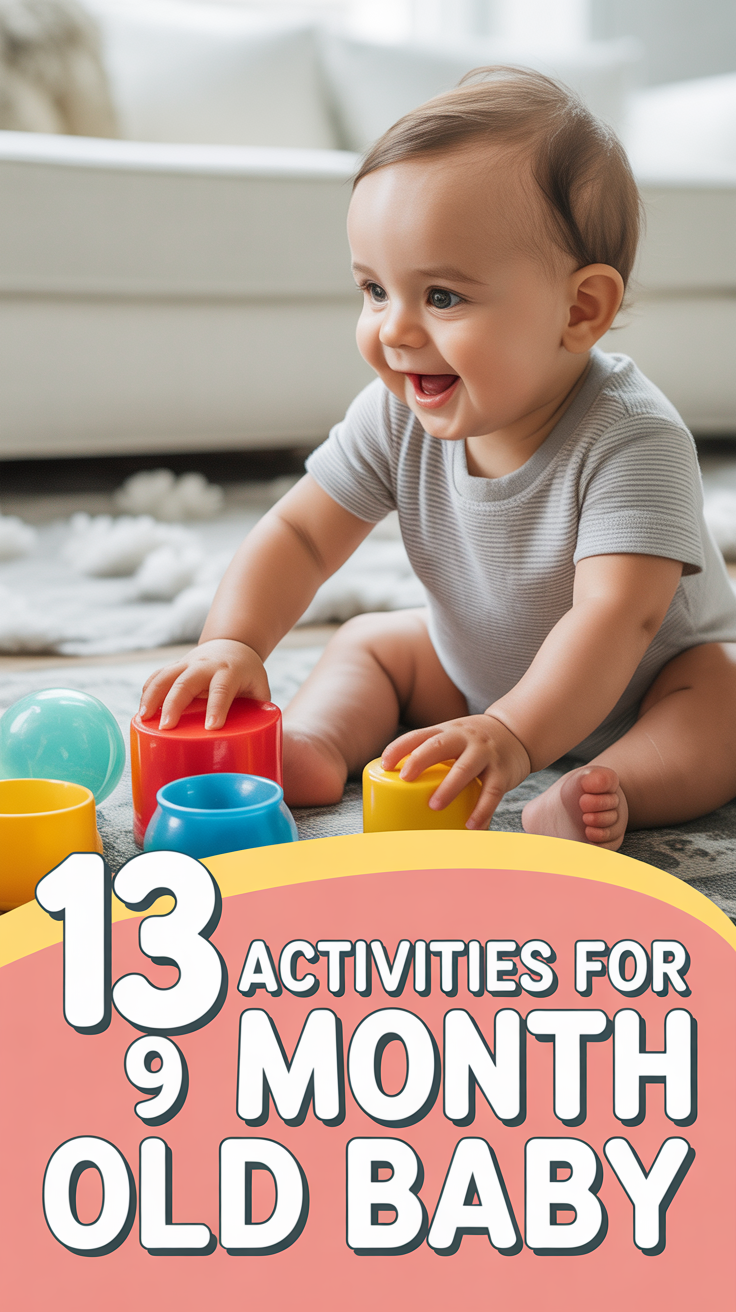
👶 13 Activities For 9 Month Old Baby
Okay, so your little human is officially nine months old. Congrats, you’ve survived the newborn haze and now have a tiny, mobile-ish explorer on your hands. They’re probably crawling, maybe pulling up, definitely babbling, and getting into everything. It’s a blast, right? But also, how do you keep that curious brain stimulated without just letting them eat your houseplant? Don’t sweat it, I’ve got your back. These aren’t just time-fillers; they’re genuine brain-boosters disguised as pure fun. Get ready to rock that nine-month mark!
1. Sensory Bins (The Safe & Edible Version)
Time to get a little messy, but in a good way. Grab a shallow bin and fill it with something interesting and, crucially, safe for tiny mouths. Think cooked, cooled pasta (different shapes are a win!), dried oats, or even water with a few floating toys. They’ll love exploring the textures and making a glorious mess.
Pro tip: Throw in some measuring cups and spoons for extra scooping and pouring action. It’s basically a baby science experiment, without the potential for explosions.
Why it works: This activity seriously sparks their curiosity and develops fine motor skills, plus it’s hilarious to watch them get so focused.
2. Object Permanence Games
Your little one is starting to understand that things still exist even when they can’t see them. So, peek-a-boo is no longer just a cute game; it’s a developmental milestone! Hide a favorite toy under a blanket and ask, “Where did it go?” then dramatically reveal it. Pure joy, every single time.
Pro tip: Use a clear container to hide a toy at first, then move to opaque ones. It’s like training wheels for their brain.
Why it works: This builds cognitive skills and helps them understand the world is a consistent place, even when things disappear for a second.
3. Container Play
Ever notice how much they love putting things into a box and then dumping them out? Embrace it! Provide a basket, a bucket, or a large bowl, along with a collection of safe, small items like soft blocks, large fabric scraps, or even clean socks. They will fill, dump, and repeat until you question your sanity.
Pro tip: Vary the containers and the items. A laundry basket with soft balls is a whole different vibe than a small bowl with wooden rings.
Why it works: This hones their fine motor skills, teaches cause and effect, and honestly, it keeps them occupied for a surprising amount of time.
4. Crawl Obstacle Course
If your nine-month-old is on the move, let’s make it an adventure. Arrange pillows, blankets, and soft cushions to create a mini obstacle course. They’ll crawl over, under, and through, feeling like tiny adventurers conquering Everest (or at least your living room).
Pro tip: Drape a blanket over two chairs to make a tunnel. Instant fort, instant fun.
Why it works: Excellent for gross motor development, spatial awareness, and burning off that endless baby energy.
5. Music & Movement
Turn on some tunes and let loose! Dance with your baby, clap their hands to the beat, or gently bounce them. Sing silly songs with actions, even if your singing voice rivals a dying cat. They don’t care; they just love the interaction and rhythm.
Pro tip: Invest in some safe, baby-friendly instruments like shakers or soft drums. They love making their own noise (and you might regret it later, but hey, developmental benefits!).
Why it works: Boosts auditory development, encourages self-expression, and is a fantastic way to bond and share some giggles.
6. DIY Board Books
Make a personalized board book using photos of family, pets, and familiar objects. Print out pictures, laminate them (or use clear contact paper), and bind them together with a ring. Your baby will adore seeing familiar faces and pointing them out.
Pro tip: Include photos of everyday items they interact with, like their bottle or favorite toy. It helps with vocabulary recognition.
Why it works: This enhances language development, strengthens recognition skills, and creates a cherished keepsake.
7. Water Play (Supervised Splash Time)
A little bit of water goes a long way. Fill a shallow basin or the bathtub with just an inch or two of warm water and let them splash with some floating toys. Cups for pouring and plastic animals for “swimming” are always a hit. Always, always supervise them closely.
Pro tip: Add a few drops of baby-safe food coloring for a colorful experience. Just a tiny bit, you don’t want to stain anything.
Why it works: Engages multiple senses, encourages hand-eye coordination, and is surprisingly calming for many babies.
8. Mirror Play
Babies are fascinated by reflections. Sit your little one in front of a baby-safe mirror and watch them interact with their own reflection. Point to their nose, eyes, and mouth in the mirror. They might try to kiss their reflection or just babble happily at their “friend.”
Pro tip: Use a mirror during tummy time to make it more engaging. It adds a whole new dimension to floor play.
Why it works: Promotes self-awareness, encourages social interaction (even if it’s with themselves!), and helps them recognize their own features.
9. Stacking Cups or Blocks
Simple, classic, and always a hit. Provide a set of stacking cups or soft blocks. They’ll love knocking down your towers (because chaos is fun!) and might even start trying to stack a few themselves. Don’t expect architectural masterpieces just yet.
Pro tip: Narrate what you’re doing as you stack: “Up, up, up! Oh, down it goes!” This adds a language element to the play.
Why it works: Develops hand-eye coordination, problem-solving skills, and introduces basic concepts of size and order.
10. Reading Aloud
Never underestimate the power of a good book. Choose board books with bright pictures, different textures, or lift-the-flaps. Point to objects, make animal sounds, and let them turn the pages (or try to eat them). It’s never too early to foster a love for reading.
Pro tip: Let them choose the book. Even if it’s the same one for the tenth time, following their lead makes it more engaging for them.
Why it works: Boosts language development, strengthens the parent-child bond, and introduces them to new words and concepts.
11. “Fetch” with Soft Toys
If your baby is crawling, this is a fantastic way to encourage movement. Gently toss a soft ball or a stuffed animal a short distance away and encourage them to “go get it!” Celebrate their retrieval with lots of praise and claps.
Pro tip: Use different types of balls – soft, bumpy, crinkly – to add a sensory element to the game.
Why it works: Enhances gross motor skills, encourages crawling and movement, and teaches cause and effect in a playful way.
12. Kitchen Exploration (The Safe Version)
When you’re in the kitchen, give your baby a few safe, non-breakable items to play with on the floor. Think wooden spoons, plastic bowls, empty clean food containers, or a silicone whisk. They’ll love banging, shaking, and examining these “grown-up” tools.
Pro tip: Create a “kitchen drawer” just for baby-safe items they can pull out and explore. It’s a win-win.
Why it works: Develops fine motor skills, encourages imaginative play, and lets them feel involved in your daily activities.
13. Texture Basket
Gather a collection of safe items with different textures. Think a soft feather boa, a bumpy silicone teether, a smooth wooden block, a crinkly fabric square, or a piece of felt. Let them explore each item, feeling the differences with their hands and mouth.
Pro tip: Introduce one new texture at a time, letting them fully explore it before adding another. Don’t overwhelm their senses.
Why it works: Stimulates sensory development, expands their understanding of the world, and boosts tactile exploration.
Conclusion
There you have it! Thirteen ways to keep that tiny nine-month-old brain buzzing and those little hands busy. Remember, the best “activity” is simply being present and engaging with your baby. You don’t need fancy toys or elaborate setups; just a little creativity and a whole lot of love. So go forth, embrace the beautiful chaos, and enjoy watching your little one discover the world, one playful moment at a time!