🖊 14 Activity Sheets For Kids Free Printables
🍼 The Newborn Survival Kit
The first six months of parenthood are a blur of exhaustion. Stop trying to tough it out—these are the 5 absolute life-saving baby essentials that experienced moms literally refuse to live without. They will instantly solve your biggest sleeping, feeding, and soothing struggles.
🌙 Hatch Rest Baby Sound Machine
The ultimate sleep hack. You can entirely control this white noise machine and dimmable nightlight from your smartphone, meaning you never have to accidentally wake the baby while sneaking back out of the nursery after a 3 AM feeding.
🤧 FridaBaby NoseFrida Snotsucker
It sounds incredibly gross until your baby has their first cold and literally cannot breathe to sleep. Throw away those useless hospital bulb syringes—this doctor-invented tool safely clears congestion in seconds, and yes, the filter absolutely prevents any germs from reaching you.
💧 Haakaa Silicone Manual Breast Pump
Every breastfeeding mom's best kept secret. Simply suction this cheap, cord-free silicone cup to the opposite breast while you nurse to effortlessly catch every drop of liquid gold letdown that would otherwise leak onto your shirt and be totally wasted.
🧴 Aquaphor Baby Healing Ointment
Forget buying ten different expensive, highly-fragranced creams. This is the only ointment you need. It miraculously cures severe diaper rash overnight, heals cracked nursing nipples, soothes baby eczema, and aggressively protects delicate skin from harsh winter wind.
☁️ Burt's Bees 100% Organic Burp Cloths
You will go through dozens of these a day, so do not cheap out on thin fabric. These thick, ultra-absorbent organic cotton cloths actually catch massive spit-ups before they ruin your only clean outfit, while remaining incredibly soft against your newborn's face.
Okay, real talk. We all love our little humans, but sometimes their boundless energy and insatiable need for entertainment can turn us into a slightly frazzled version of ourselves. Enter the unsung hero of parental sanity: activity sheets. Seriously, these aren’t just busywork; they’re tiny packets of joy that sneak in some serious skill-building while you, ahem, enjoy a hot coffee. Or just stare blankly at a wall. No judgment here.
Forget the endless scrolling for inspiration or the frantic search for a working craft supply store. We’re talking instant gratification, printable magic that keeps those tiny hands and minds engaged. And the best part? They’re totally free. Your wallet can breathe a sigh of relief, and your kids get to dive into some seriously cool stuff. Let’s get printing, shall we?
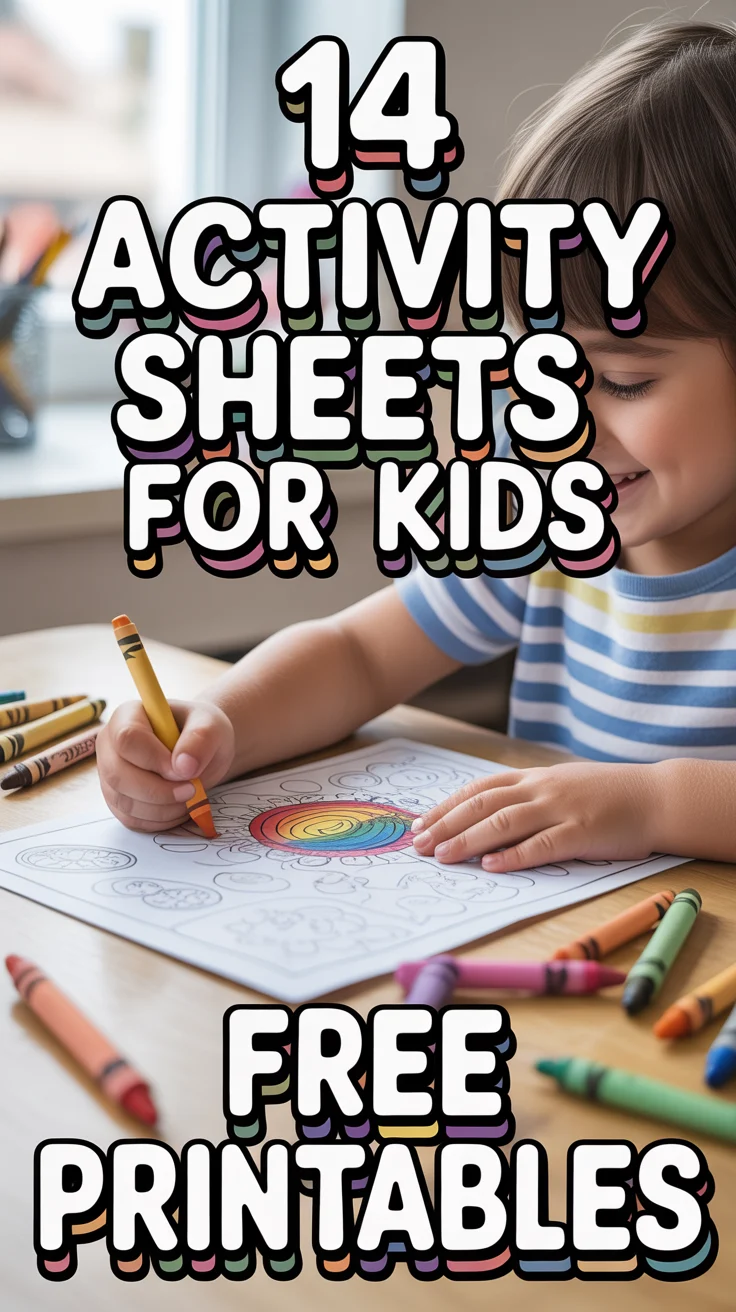
1. Coloring Pages Galore
Talk about a classic for a reason. Coloring pages are the OG of quiet time activities, and for good reason. They’re fantastic for developing fine motor skills, encouraging creativity, and even helping with color recognition. Plus, who doesn’t love seeing their little artist proudly display their masterpiece?
Pro tip: Print out a stack on slightly heavier paper or cardstock. Crayons and pencils are great, but markers can bleed through standard printer paper faster than a toddler can find a permanent marker. You’re welcome.
They work because sometimes, simple truly is best. A blank canvas (well, a not-so-blank one) and some colors are pure magic.
2. Scavenger Hunt Printables
Want to turn your living room into an adventure zone or make a walk around the park feel like a grand expedition? Scavenger hunt printables are your secret weapon. These get kids moving, observing, and thinking.
You can find themed hunts for indoor fun (find something red, find something soft) or outdoor escapades (find a leaf, find a smooth stone). Seriously, it’s like a treasure hunt without having to hide actual treasure. Genius.
Pro tip: Laminate a few generic ones. That way, you can reuse them with a dry-erase marker whenever boredom strikes. Environmentally friendly and budget-friendly. Win-win.
They work because they inject a dose of playful mystery into the everyday, turning chores into quests.
3. Dot-to-Dot Adventures
Connecting the dots isn’t just about revealing a picture; it’s a fantastic way to reinforce number recognition and sequential thinking. Plus, there’s that super satisfying moment when the hidden image finally appears.
From simple shapes for preschoolers to more complex animals and scenes for older kids, there’s a dot-to-dot out there for every age. It’s like a tiny mystery novel, but with pencils.
Pro tip: For the littlest learners, find ones that only go up to 10 or 20. It builds confidence before they tackle the big numbers. We’re nurturing future math wizards here.
They work because they combine a puzzle with an art project, keeping attention spans locked in.
4. Word Search Wonders
Who knew finding hidden words could be so addictive? Word searches are brilliant for boosting vocabulary, improving spelling, and developing pattern recognition skills. It’s like a secret agent mission for letters.
You can find them themed for holidays, seasons, or even specific learning topics. They’re perfect for a quiet moment at home or a car ride that feels like it’s never going to end.
Pro tip: Encourage them to use different colored highlighters for each word. It makes the task more visually engaging and helps them track their progress. Plus, highlighters are just inherently fun.
They work because they’re deceptively simple but offer a satisfying mental workout.
5. Crossword Puzzles for Little Brains
Don’t let the word “crossword” intimidate you. There are tons of kid-friendly versions out there with simple clues, often accompanied by pictures. These are fantastic for problem-solving and early literacy skills.
They help kids think logically about words and concepts, all while feeling like they’re tackling a grown-up challenge. It’s like a mini brain gym, but way more fun than actual gym class.
Pro tip: Start by doing one or two clues together. Once they get the hang of it, they’ll be off to the races. Scaffolding, people, scaffolding!
They work because they challenge without overwhelming, building confidence with every correct answer.
6. Symmetry Drawing Challenges
Who knew art could be so mathematical? Symmetry drawing involves completing one half of an image to match the other, helping kids understand spatial reasoning, mirror images, and basic geometry concepts.
It’s a fantastic way to combine artistic expression with a bit of brainpower. Plus, the results often look super cool, even if they’re not perfectly symmetrical. Perfection is overrated anyway.
Pro tip: Provide a ruler for older kids to help them draw straight lines and measure distances. For younger ones, just let them freehand it; the process is more important than the precision.
They work because they blend creativity with logical thinking in a visually engaging way.
7. Sudoku for Juniors
Yes, even little ones can get in on the Sudoku action! Kid-friendly versions use fewer squares (think 4×4 or 6×6 grids) and sometimes even pictures instead of numbers. It’s a brilliant way to introduce logic and critical thinking.
They learn to deduce, strategize, and fill in the blanks, all without realizing they’re doing something super good for their brains. It’s a mental workout disguised as a game.
Pro tip: For beginners, use small stickers or stamps instead of writing numbers. It makes correcting mistakes less frustrating and more fun. Nobody likes erasing a perfectly good number.
They work because they build foundational problem-solving skills in a playful, accessible format.
8. I Spy Games
“I spy with my little eye something that is green!” Sound familiar? Printable I Spy sheets take this classic game and put it on paper, challenging kids to find specific objects among a busy scene. It’s fantastic for observation skills and visual discrimination.
These are perfect for keeping little ones engaged quietly, whether you’re waiting at a doctor’s office or just need five minutes of peace. They’re like a mini Where’s Waldo, but with a clearer objective.
Pro tip: Make it a timed challenge for older kids. “Find all the apples in 30 seconds!” A little friendly competition never hurt anyone (much).
They work because they sharpen focus and visual processing in a super engaging way.
9. Mazes to Master
Navigating a maze is more than just drawing a line; it’s about problem-solving, spatial reasoning, and developing fine motor control. Plus, there’s that satisfying feeling of finally reaching the end.
From simple, chunky paths for preschoolers to intricate labyrinths for older kids, mazes offer a delightful challenge. They’re like a tiny adventure right on the page.
Pro tip: Encourage them to trace the path with their finger first before committing with a pencil. It helps them plan ahead and reduces frustration. We’re building resilience, one maze at a time.
They work because they offer a clear goal and a rewarding sense of accomplishment upon completion.
10. Cut and Paste Crafts
Scissors and glue are practically magic wands for kids, and cut-and-paste activity sheets harness that power for good. These help develop fine motor skills, hand-eye coordination, and creativity.
Whether they’re assembling an animal, building a scene, or creating a funny monster, these activities offer a tangible result they can be proud of. It’s like a mini construction project, but with less sawdust.
Pro tip: Have a designated “craft bin” with kid-safe scissors, glue sticks, and a stack of colorful paper. Easy access means more spontaneous crafting sessions.
They work because they’re hands-on, creative, and result in a cool, personalized creation.
11. Build-Your-Own Story Prompts
Unleash the inner author! Story prompts provide a starting point – a character, a setting, a problem – and let kids fill in the rest. These are brilliant for fostering imagination, narrative structure, and early writing skills.
Some printables offer blank spaces for drawing, while others have lines for writing. It’s a fantastic way to encourage creative expression without the pressure of a completely blank page. Think of it as story scaffolding.
Pro tip: Don’t just let them write it; have them read their story aloud to you. It boosts confidence and helps them hear the flow of their narrative. Plus, you get a free bedtime story.
They work because they spark creativity and give structure to imaginative play, turning kids into storytellers.
12. Memory Matching Games
Print two copies of any coloring page, cut out the individual elements, and boom – instant memory matching game! These are fantastic for boosting concentration, visual recall, and pattern recognition.
They’re simple to set up, highly engaging, and can be adapted for any age by varying the number of cards. Plus, it’s a great excuse to print out those cute animal pictures twice.
Pro tip: Laminate the cards for durability. They’ll withstand countless rounds of intense memory matching, even if a juice box accidentally gets involved.
They work because they’re a fun, low-prep way to sharpen cognitive skills and encourage focus.
13. Shadow Matching Fun
Can they match the object to its silhouette? Shadow matching printables are excellent for developing visual discrimination and logical thinking. It’s like a game of “Who’s That Pokémon?” but with everyday objects or animals.
These activities challenge kids to pay close attention to shapes and forms, strengthening their ability to recognize details. It’s a bit like being a detective, but for shadows.
Pro tip: For a playful twist, have them try to make their own shadow puppets with their hands and guess what they are. Real-world application, baby!
They work because they encourage keen observation and critical thinking about visual cues.
14. DIY Puppet Templates
Time for a show! Printable puppet templates are an absolute blast for encouraging imaginative play, storytelling, and developing fine motor skills as they cut and color. From finger puppets to stick puppets, the possibilities are endless.
Once assembled, these little characters become the stars of countless spontaneous plays and narratives. It’s like having a whole cast of actors ready for their next big performance, all on demand.
Pro tip: Once colored and cut, glue them onto craft sticks or even old straws for easy handling. A shoebox can quickly become a makeshift puppet theater. Curtain up!
They work because they transform a simple printout into a springboard for hours of creative, dramatic play.
🧩 The Toddler Sanity & Learning Kit
Toddlers are tiny tornados. Instead of turning on the iPad in a moment of desperation, these 5 open-ended toys and clever tools foster independent, screen-free play while simultaneously saving your house from milk spills and crayon disasters.
🧱 Magna-Tiles 100-Piece Building Set
The undeniable king of open-ended play. It is the one single toy that a 2-year-old and a 10-year-old will both happily play with for an hour straight. They develop spatial reasoning, math skills, and independent focus—worth absolutely every penny.
🥛 Munchkin Miracle 360 Trainer Cups
Stop wiping up milk puddles. These genius, dentist-recommended cups allow kids to drink from anywhere around the rim like a real glass, but they instantly seal themselves the second the child stops drinking—even if they drop it on the floor.
🎧 Yoto Mini Kids Audio Player
The ultimate distraction for car rides or quiet time without the guilt of handing over a glowing screen. Kids control it completely by inserting physical cards to play audiobooks, music, and educational podcasts completely independently.
🧹 Melissa & Doug Wooden Cleaning Set
Toddlers desperately want to do exactly what you do. This kid-sized, highly durable wooden sweeping and mopping set redirects their chaotic energy into productive, confidence-building life skills while you actually get the real cleaning done in peace.
🎒 Montessori Travel Busy Board
The secret to surviving restaurants and airplanes with a two-year-old. Packed with buckles, zippers, shoelaces, and snaps, this soft, lightweight 'briefcase' develops critical fine-motor skills and keeps busy little hands occupied for surprisingly long stretches.
Conclusion
So there you have it, 14 totally free, totally awesome activity sheets ready to save your day (and your sanity). Who knew a few sheets of paper could hold so much power? These printables aren’t just about keeping kids busy; they’re about fostering creativity, boosting cognitive skills, and giving you those precious few minutes to yourself. Go forth, print, and conquer that endless energy with a stack of fun. You’ve got this.
- Easy to access and print
- Boosts a range of developmental skills
- Provides quiet, engaging entertainment
- Saves your wallet and your sanity