
📱 How To Get A Phone From Your Parents
🍼 The Newborn Survival Kit
The first six months of parenthood are a blur of exhaustion. Stop trying to tough it out—these are the 5 absolute life-saving baby essentials that experienced moms literally refuse to live without. They will instantly solve your biggest sleeping, feeding, and soothing struggles.
🌙 Hatch Rest Baby Sound Machine
The ultimate sleep hack. You can entirely control this white noise machine and dimmable nightlight from your smartphone, meaning you never have to accidentally wake the baby while sneaking back out of the nursery after a 3 AM feeding.
🤧 FridaBaby NoseFrida Snotsucker
It sounds incredibly gross until your baby has their first cold and literally cannot breathe to sleep. Throw away those useless hospital bulb syringes—this doctor-invented tool safely clears congestion in seconds, and yes, the filter absolutely prevents any germs from reaching you.
💧 Haakaa Silicone Manual Breast Pump
Every breastfeeding mom's best kept secret. Simply suction this cheap, cord-free silicone cup to the opposite breast while you nurse to effortlessly catch every drop of liquid gold letdown that would otherwise leak onto your shirt and be totally wasted.
🧴 Aquaphor Baby Healing Ointment
Forget buying ten different expensive, highly-fragranced creams. This is the only ointment you need. It miraculously cures severe diaper rash overnight, heals cracked nursing nipples, soothes baby eczema, and aggressively protects delicate skin from harsh winter wind.
☁️ Burt's Bees 100% Organic Burp Cloths
You will go through dozens of these a day, so do not cheap out on thin fabric. These thick, ultra-absorbent organic cotton cloths actually catch massive spit-ups before they ruin your only clean outfit, while remaining incredibly soft against your newborn's face.
Oh honey, I know that feeling. Wishing for your very own phone, watching your friends chat away, and wondering how you can ever convince Mom and Dad.
It’s a big step, and a common one in many families.
I’ve been on both sides of this conversation, as a kid who wanted a phone and now as a parent navigating those exact talks with my own children. Trust me, I get it!

Quick Overview
This guide will walk you through a thoughtful, step-by-step process to prepare your case and talk to your parents about getting a phone. It’s all about showing them you’re ready and responsible.
- Time needed: 1-2 weeks (for preparation and conversations)
- Difficulty: Intermediate
- What you’ll need: A clear head, a positive attitude, and a little bit of patience.
Step-by-Step Instructions
Step 1: Understand Their Worries
Before you even think about asking, take a moment to put yourself in your parents’ shoes. What might they be worried about?
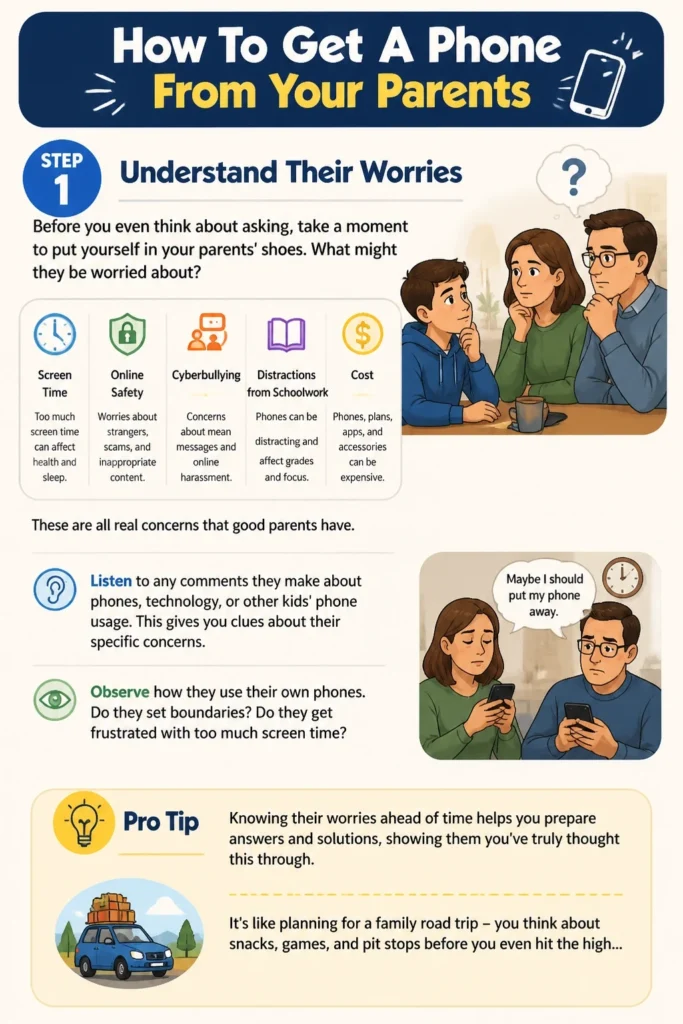
They’re probably thinking about screen time, online safety, cyberbullying, distractions from schoolwork, and the cost. These are all real concerns that good parents have.
- Listen to any comments they make about phones, technology, or other kids’ phone usage. This gives you clues about their specific concerns.
- Observe how they use their own phones. Do they set boundaries? Do they get frustrated with too much screen time?
Pro Tip: Knowing their worries ahead of time helps you prepare answers and solutions, showing them you’ve truly thought this through. It’s like planning for a family road trip – you think about snacks, games, and pit stops before you even hit the highway!
Step 2: Show Responsibility Around The House
This is where the magic really happens! Parents want to see that you can handle existing responsibilities before taking on a new one.
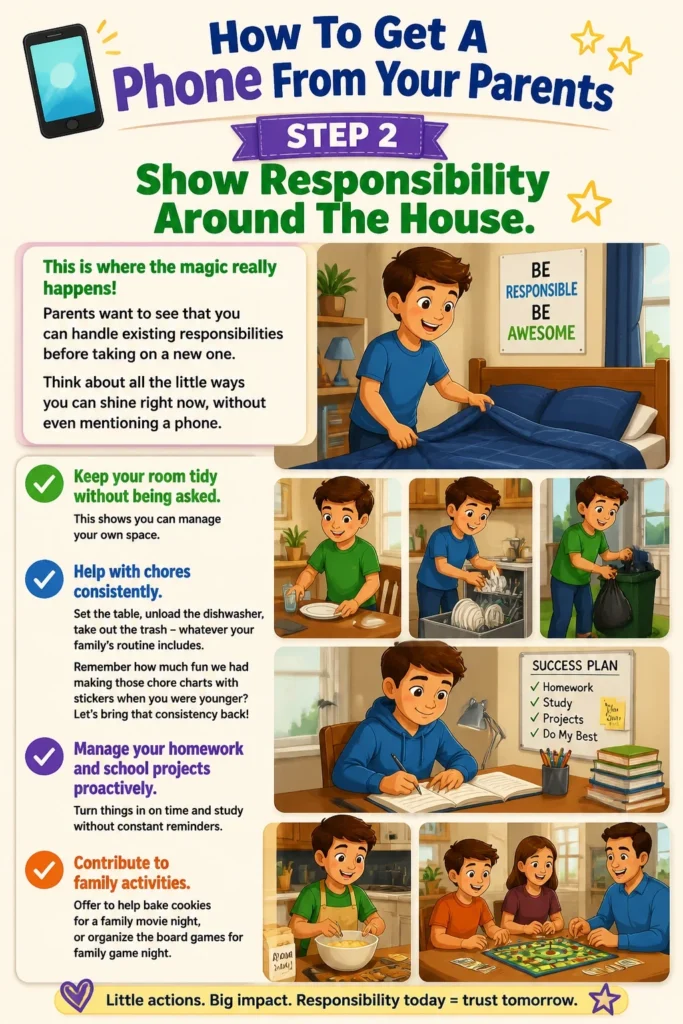
Think about all the little ways you can shine right now, without even mentioning a phone.
- Keep your room tidy without being asked. This shows you can manage your own space.
- Help with chores consistently. Set the table, unload the dishwasher, take out the trash – whatever your family’s routine includes. Remember how much fun we had making those chore charts with stickers when you were younger? Let’s bring that consistency back!
- Manage your homework and school projects proactively. Turn things in on time and study without constant reminders.
- Contribute to family activities. Offer to help bake cookies for a family movie night, or organize the board games for a fun afternoon.
Step 3: Research and Prepare Your “Why”
This isn’t just about “I want one because everyone else has one.” That’s not a strong argument for parents.
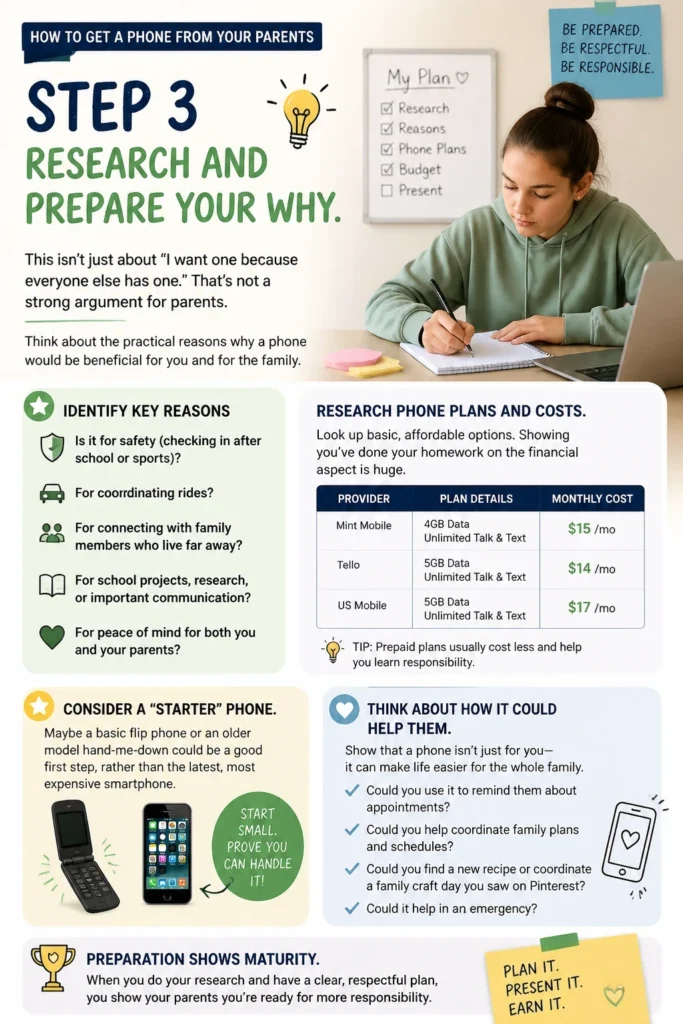
Think about the practical reasons why a phone would be beneficial for you and for the family.
- Identify key reasons: Is it for safety (checking in after school or sports)? For coordinating rides? For connecting with family members who live far away?
- Research phone plans and costs. Look up basic, affordable options. Showing you’ve done your homework on the financial aspect is huge.
- Consider a ‘starter’ phone. Maybe a basic flip phone or an older model hand-me-down could be a good first step, rather than the latest, most expensive smartphone.
- Think about how it could help them. Could you use it to remind them about appointments, or coordinate a family craft day you saw on Pinterest?
Step 4: Draft a Phone Contract Proposal
This sounds super serious, but it’s actually a fantastic way to show maturity and commitment. Think of it like planning a big family event, like a birthday party – you need to think through all the details!
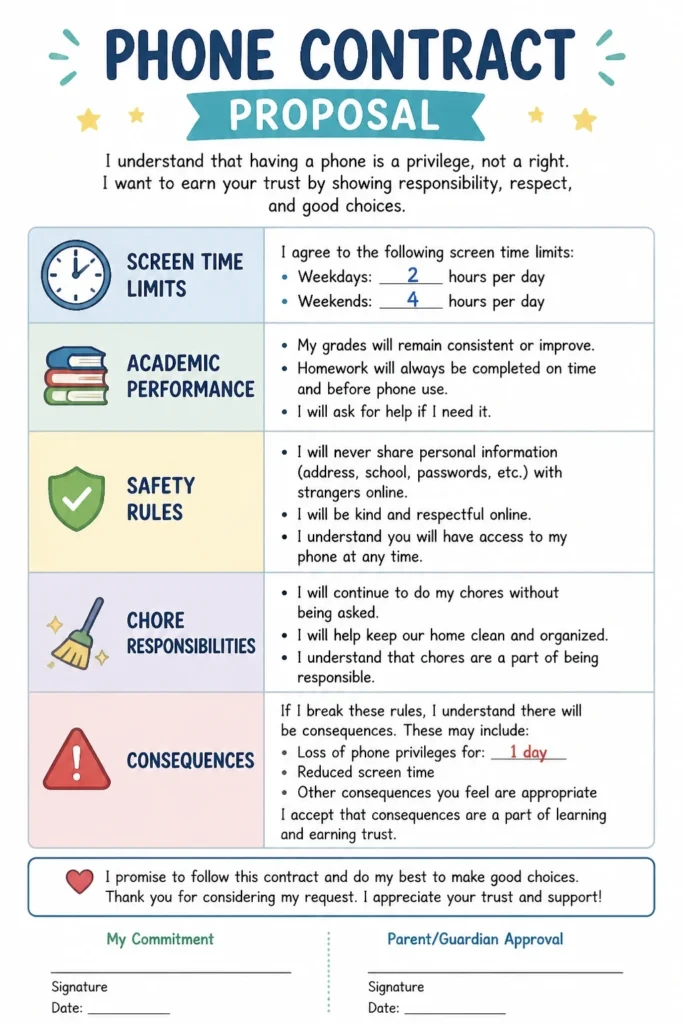
A phone contract outlines your responsibilities and their expectations.
- Include screen time limits: “I agree to X hours of screen time on weekdays and Y hours on weekends.”
- Address academic performance: “My grades will remain consistent, and homework will always come first.”
- Outline safety rules: “I will never share personal information with strangers online, and I understand you will have access to my phone.”
- Detail chore responsibilities: “I will continue to do my chores without being asked.”
- Discuss consequences: “If I break these rules, I understand you may take the phone away for a set period.”
- Suggest a “phone-free” zone: “I will keep my phone out of my bedroom at night and during family meals.”
Pro Tip: You can even add a section about how the phone could enhance family life, like using it to capture fun moments during our family bike rides or coordinating a surprise picnic. Parents love to see you thinking about the bigger picture!
Step 5: Choose the Right Time and Place
Timing is everything! Don’t spring this on them when they’re stressed, tired, or rushing out the door.
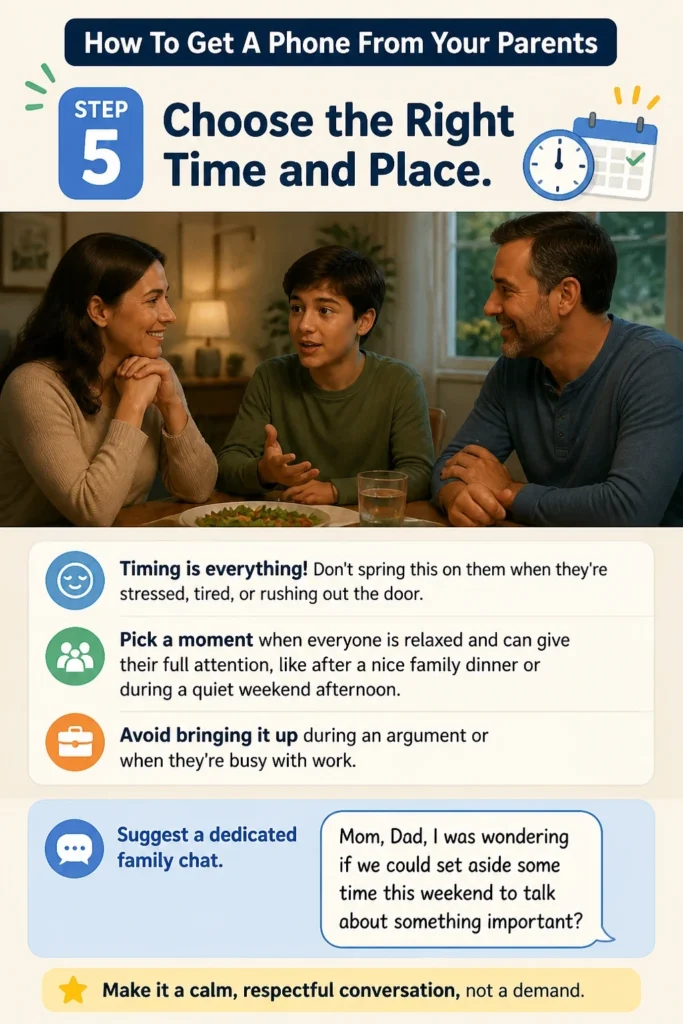
Pick a moment when everyone is relaxed and can give their full attention, like after a nice family dinner or during a quiet weekend afternoon.
- Avoid bringing it up during an argument or when they’re busy with work.
- Suggest a dedicated family chat. “Mom, Dad, I was wondering if we could set aside some time this weekend to talk about something important?”
- Make it a calm, respectful conversation, not a demand.
Step 6: Present Your Case Calmly and Respectfully
Now it’s showtime! Remember all that preparation you did? This is where it pays off.
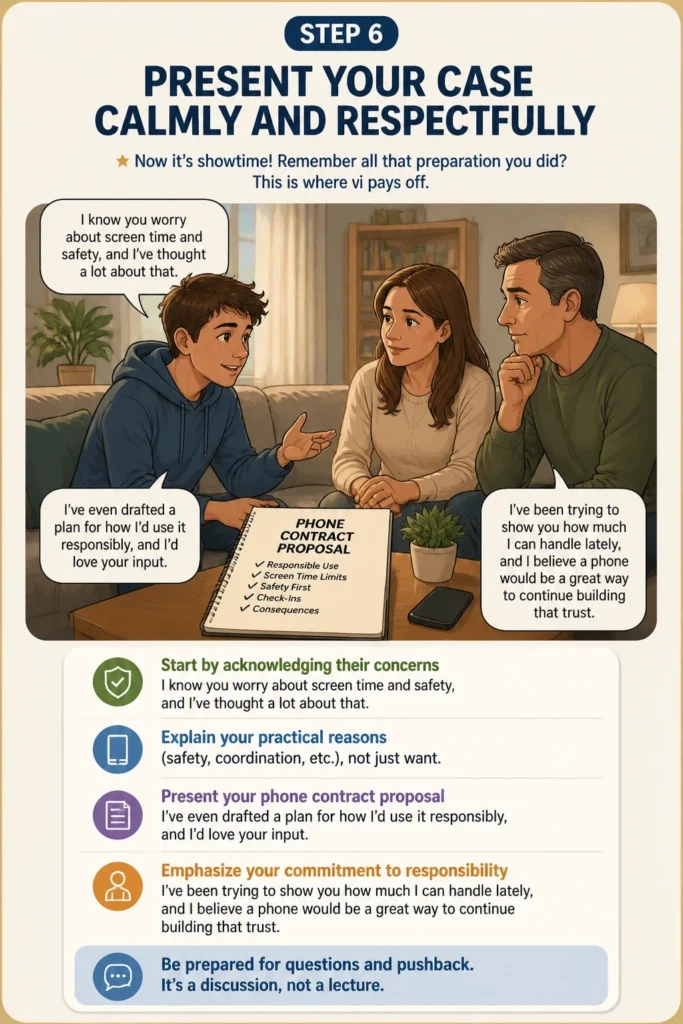
Approach the conversation with a positive, open attitude.
- Start by acknowledging their concerns: “I know you worry about screen time and safety, and I’ve thought a lot about that.”
- Explain your practical reasons (safety, coordination, etc.), not just “want.”
- Present your phone contract proposal. “I’ve even drafted a plan for how I’d use it responsibly, and I’d love your input.”
- Emphasize your commitment to responsibility. “I’ve been trying to show you how much I can handle lately, and I believe a phone would be a great way to continue building that trust.”
- Be prepared for questions and pushback. It’s a discussion, not a lecture.
Step 7: Be Open to Compromise and Feedback
They might not say “yes” right away, and that’s okay. They might have new ideas or want to adjust your proposed contract.
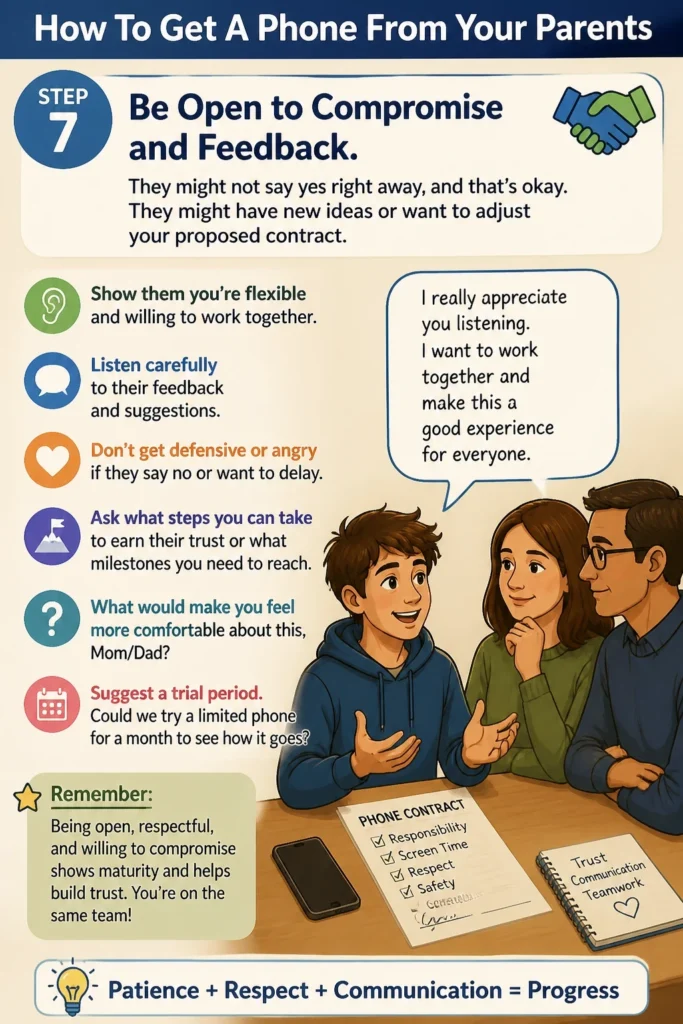
Show them you’re flexible and willing to work together.
- Listen carefully to their feedback and suggestions.
- Don’t get defensive or angry if they say no or want to delay.
- Ask what steps you can take to earn their trust or what milestones you need to reach. “What would make you feel more comfortable about this, Mom/Dad?”
- Suggest a trial period. “Could we try a limited phone for a month to see how it goes?”
Step 8: Follow Through, No Matter What
Whether they say yes, no, or maybe later, your actions afterwards are crucial.
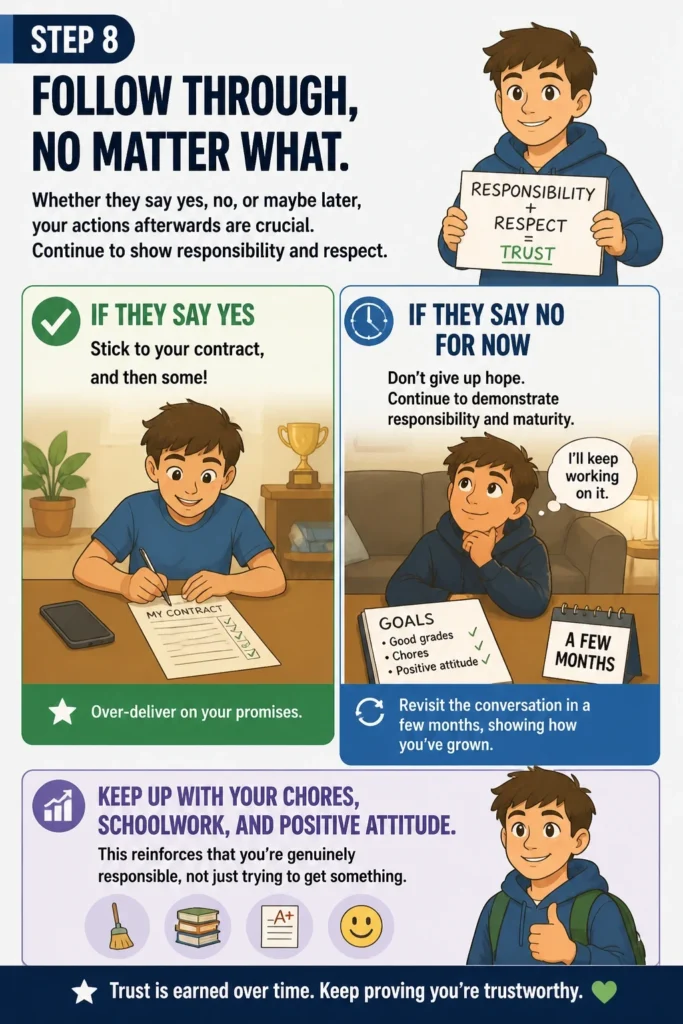
Continue to show responsibility and respect.
- If they say yes: Stick to your contract, and then some! Over-deliver on your promises.
- If they say no for now: Don’t give up hope. Continue to demonstrate responsibility and maturity. Revisit the conversation in a few months, showing how you’ve grown.
- Keep up with your chores, schoolwork, and positive attitude. This reinforces that you’re genuinely responsible, not just trying to get something.
Common Mistakes to Avoid
The “Everyone Else Has One” Argument
While it might feel true, this argument rarely sways parents. They care about you and your readiness, not what other families are doing. Focus on your personal reasons and responsibilities instead of comparing yourself to friends.
Asking at the Wrong Time
Bringing up a big request when your parents are tired, stressed, or dealing with another family issue is a recipe for a “no.” They’re more likely to consider your request if they’re relaxed and can give it their full attention. Choose a calm moment, perhaps over a weekend brunch or after a pleasant family activity.
Being Demanding or Entitled
A phone is a privilege, not a right. Approaching the conversation with demands or an attitude that you “deserve” a phone will likely shut down the discussion. Instead, show gratitude for their consideration and demonstrate your willingness to earn this responsibility.
Not Having a Plan
Just saying “I want a phone” without thinking about how you’ll use it responsibly, how it will be paid for, or what rules you’ll follow shows a lack of maturity. Your parents want to see that you’ve thought through the implications and are prepared for the responsibilities that come with a phone.
Troubleshooting
My Parents Said No Flat Out
It can feel really disappointing, I know. Instead of arguing, ask them, “What are your biggest concerns, and what steps could I take to address them?” Listen carefully to their answers. This shows maturity and a willingness to work towards a solution. Keep proving your responsibility, and revisit the conversation in a few months with specific actions you’ve taken based on their feedback.
They’re Worried About the Cost
This is a very practical concern. Have you researched affordable plans or older model phones? Could you offer to contribute to the cost through chores, saving allowance, or a part-time job? Even a small contribution shows you understand the value and are invested. You could even propose a “family phone budget” where you help save for other family activities, like that fun sleepover party you’ve been wanting to host!
They Don’t Trust Me With Online Safety
This is a huge one for parents, and rightly so. Reassure them by offering complete transparency: “I understand your worries about online safety, and I’m happy for you to check my phone whenever you want. We can even set up parental controls together.” Research and suggest family-friendly apps or online safety courses you could take. Show them you’re serious about staying safe, just like we talk about safety when you’re out riding your bike.
Key Takeaways
- Understand their perspective: Acknowledge and address your parents’ worries about phones.
- Demonstrate responsibility: Show you’re ready by consistently handling existing duties.
- Prepare your case: Research reasons, costs, and propose a detailed phone contract.
- Choose your moment: Talk to your parents when they are relaxed and receptive.
- Be open to compromise: Listen to their feedback and be flexible with your expectations.
- Follow through: Your actions before and after the conversation reinforce your commitment.
Frequently Asked Questions
How old should I be to get a phone?
There’s no single “right” age, as every family and child is different. It often depends on your maturity level, your family’s needs for communication, and what your parents feel comfortable with. Some kids get basic phones around 10-12, while others wait until high school. Focus on showing you’re ready, regardless of age.
What if my parents say I’m not responsible enough?
Instead of arguing, ask them specifically what areas they feel you need to improve upon. Take their feedback seriously and work on those areas. Maybe it’s keeping your room clean, consistently doing chores, or managing your schoolwork. Show them, over time, that you can be responsible. Actions speak louder than words, just like when you learned to tie your shoes or ride a bike – it took practice!
Should I offer to pay for the phone or plan?
Offering to contribute, even a small amount, can make a big difference. It shows your parents that you understand the financial commitment and are willing to invest in this privilege. You could save up allowance, earn money through extra chores, or even propose a payment plan for a portion of the cost. This shows initiative and financial awareness.
Our Top Recommended Finds
- Family Chore Chart: A visual reminder to consistently show responsibility around the house.
- “Screen Time” Timer: Helps you practice managing your own screen usage before getting a phone.
- Budgeting App for Kids: A fun way to track your savings if you plan to contribute to the phone’s cost.
Ready to Make Your Case?
Getting a phone from your parents isn’t about wishing upon a star; it’s about thoughtful preparation, open communication, and demonstrating your readiness.
You’ve got this, sweetie! Take these steps, be patient, and show your parents just how mature and responsible you truly are.
Start today by thinking about those family activities you love – maybe planning a themed dinner night or a fun craft project – and showing your responsible side. Every little bit counts!