
🐾 How To Convince Your Parents For A Dog
🍼 The Newborn Survival Kit
The first six months of parenthood are a blur of exhaustion. Stop trying to tough it out—these are the 5 absolute life-saving baby essentials that experienced moms literally refuse to live without. They will instantly solve your biggest sleeping, feeding, and soothing struggles.
🌙 Hatch Rest Baby Sound Machine
The ultimate sleep hack. You can entirely control this white noise machine and dimmable nightlight from your smartphone, meaning you never have to accidentally wake the baby while sneaking back out of the nursery after a 3 AM feeding.
🤧 FridaBaby NoseFrida Snotsucker
It sounds incredibly gross until your baby has their first cold and literally cannot breathe to sleep. Throw away those useless hospital bulb syringes—this doctor-invented tool safely clears congestion in seconds, and yes, the filter absolutely prevents any germs from reaching you.
💧 Haakaa Silicone Manual Breast Pump
Every breastfeeding mom's best kept secret. Simply suction this cheap, cord-free silicone cup to the opposite breast while you nurse to effortlessly catch every drop of liquid gold letdown that would otherwise leak onto your shirt and be totally wasted.
🧴 Aquaphor Baby Healing Ointment
Forget buying ten different expensive, highly-fragranced creams. This is the only ointment you need. It miraculously cures severe diaper rash overnight, heals cracked nursing nipples, soothes baby eczema, and aggressively protects delicate skin from harsh winter wind.
☁️ Burt's Bees 100% Organic Burp Cloths
You will go through dozens of these a day, so do not cheap out on thin fabric. These thick, ultra-absorbent organic cotton cloths actually catch massive spit-ups before they ruin your only clean outfit, while remaining incredibly soft against your newborn's face.
Oh, the dream of a wagging tail and slobbery kisses! It’s a classic childhood wish, isn’t it?
I remember my own kids campaigning for a furry friend, and let me tell you, it takes more than just begging.
This guide will walk you through a practical, fun, and family-friendly approach to making that dog dream a reality, straight from one parent to another.

Quick Overview
This guide is designed to help your child (and you!) prepare a compelling case for bringing a dog into your home. It’s about teamwork, responsibility, and a little bit of creative flair.
- Time needed: 2-4 weeks (for preparation and demonstration of responsibility)
- Difficulty: Intermediate
- What you’ll need: Notebook, craft supplies, camera, research materials, a positive attitude
Step-by-Step Instructions
Step 1: Become a “Dog Detective”
The first step isn’t just asking; it’s showing you’ve done your homework. Your child can research different dog breeds to find one that truly fits your family’s lifestyle.
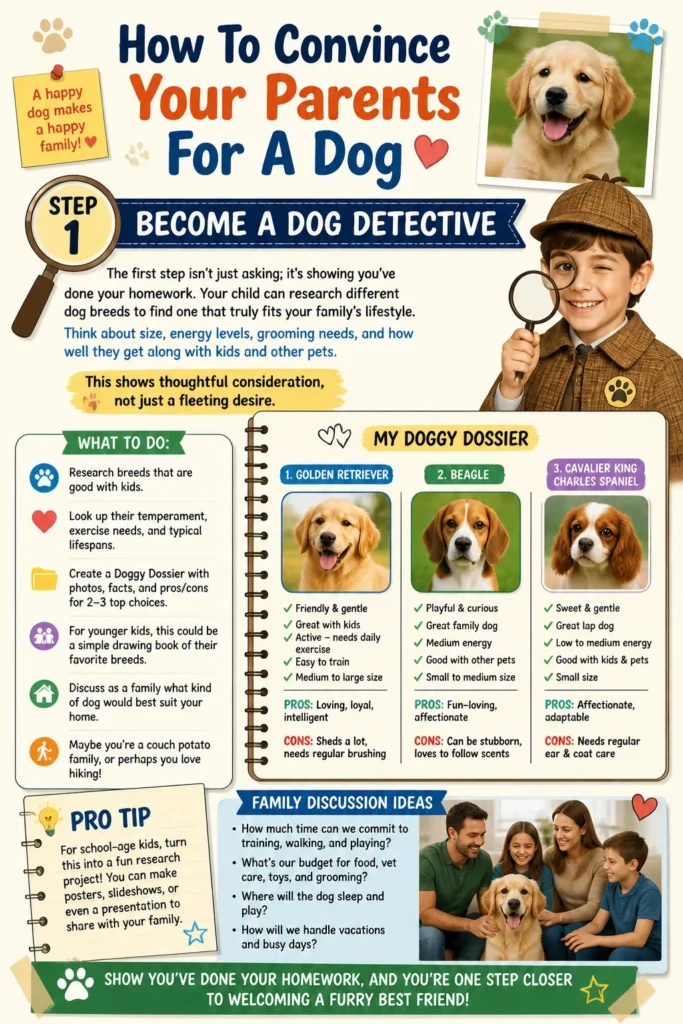
Think about size, energy levels, grooming needs, and how well they get along with kids and other pets. This shows thoughtful consideration, not just a fleeting desire.
- Research breeds that are good with kids. Look up their temperament, exercise needs, and typical lifespans.
- Create a “Doggy Dossier” with photos, facts, and pros/cons for 2-3 top choices. For younger kids, this could be a simple drawing book of their favorite breeds.
- Discuss as a family what kind of dog would best suit your home. Maybe you’re a couch potato family, or perhaps you love hiking!
Pro Tip: For school-age kids, turn this into a fun “research project” with a presentation board. Toddlers can help sort pictures of big dogs vs. small dogs, making it a playful learning experience.
Step 2: Demonstrate Responsibility, Big Time
Parents often worry about who will actually care for the dog. This is your child’s chance to shine and prove they’re up to the task.
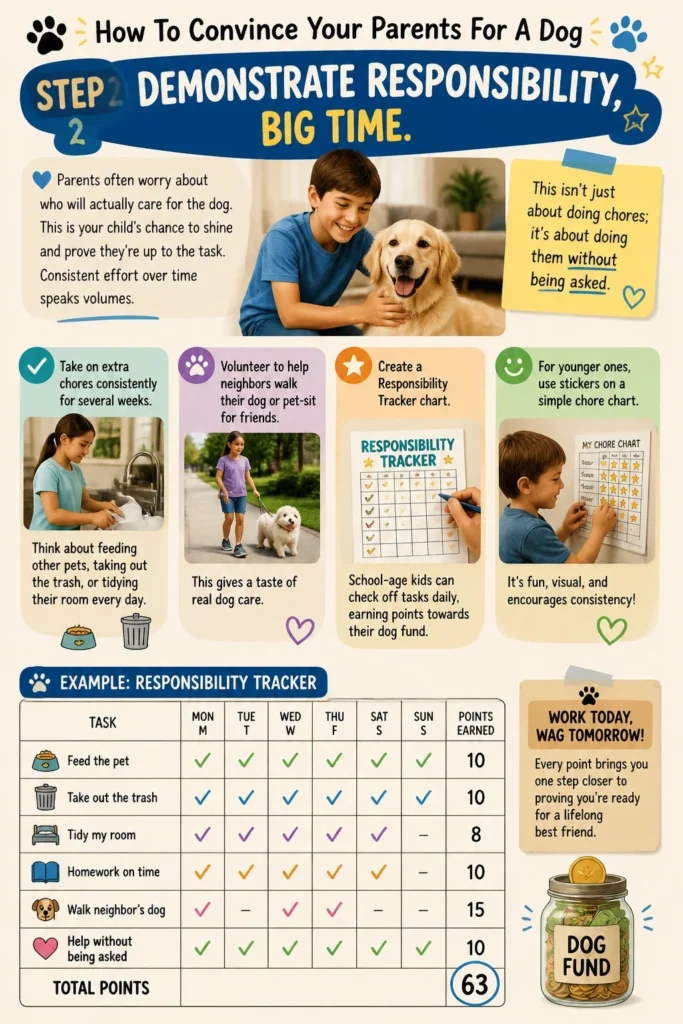
Consistent effort over time speaks volumes. This isn’t just about doing chores; it’s about doing them without being asked.
- Take on extra chores consistently for several weeks. Think about feeding other pets, taking out the trash, or tidying their room every day.
- Volunteer to help neighbors walk their dog or pet-sit for friends. This gives a taste of real dog care.
- Create a “Responsibility Tracker” chart. School-age kids can check off tasks daily, earning points towards their “dog fund.” For younger ones, use stickers on a simple chore chart.
Step 3: Craft a “Doggy Budget”
Dogs cost money, and parents know it! Help your child understand the financial commitment by creating a kid-friendly “doggy budget.”
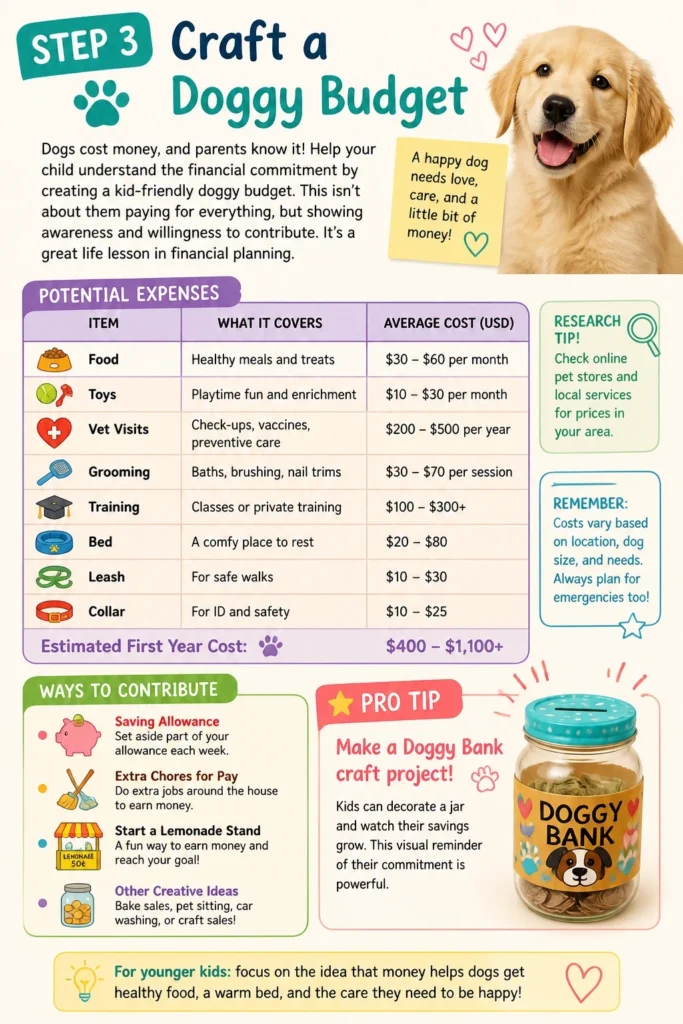
This isn’t about them paying for everything, but showing awareness and willingness to contribute. It’s a great life lesson in financial planning.
- List potential expenses: food, toys, vet visits, grooming, training, a bed, leash, and collar.
- Research the average cost for these items. Online pet stores are a good starting point.
- Brainstorm ways to contribute: saving allowance, doing extra chores for pay, or even a lemonade stand to start a “dog fund.”
Pro Tip: Make a “Doggy Bank” craft project! Kids can decorate a jar and watch their savings grow. This visual reminder of their commitment is powerful. For younger kids, focus on the idea that “money helps dogs get yummy food.”
Step 4: Prepare a “Why Our Family Needs a Dog” Presentation
This is where all the hard work comes together! Encourage your child to put together a persuasive presentation for the family.
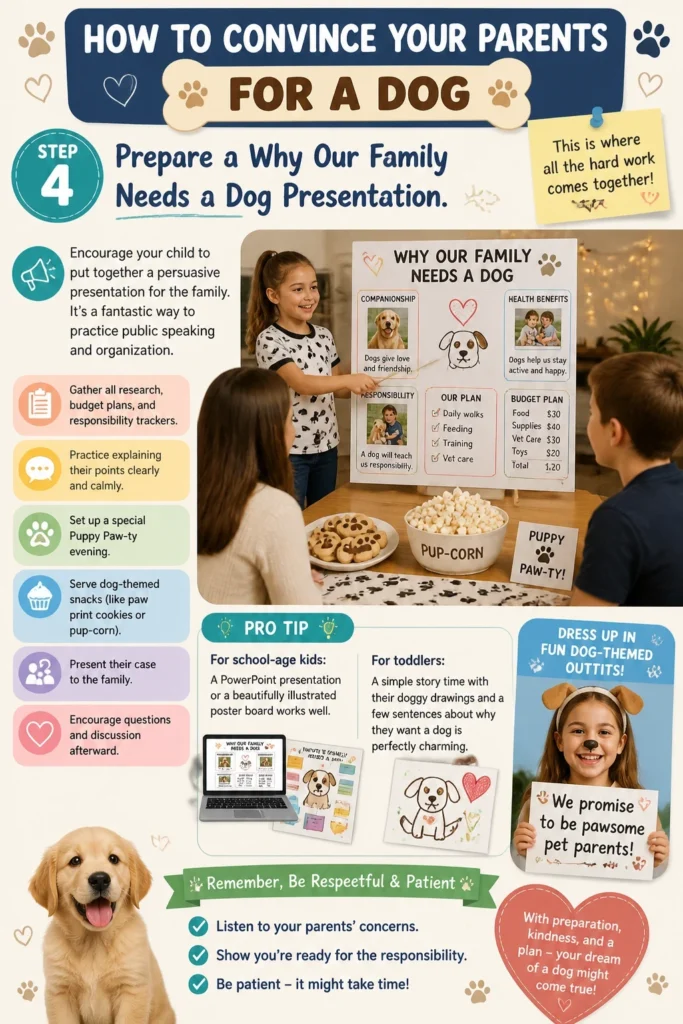
It’s a fantastic way to practice public speaking and organization. Make it a fun, low-pressure family event.
- Gather all research, budget plans, and responsibility trackers.
- Practice explaining their points clearly and calmly.
- Set up a special “Puppy Paw-ty” evening. Serve dog-themed snacks (like paw print cookies or “pup-corn”).
- Present their case to the family. Encourage questions and discussion afterward.
Pro Tip: For school-age kids, a PowerPoint presentation or a beautifully illustrated poster board works well. For toddlers, a simple “story time” with their doggy drawings and a few sentences about why they want a dog is perfectly charming. Dress up in fun dog-themed school outfits for extra flair!
Step 5: Address Parental Concerns Proactively
Your parents will have worries. Instead of waiting for them to bring them up, show you’ve already thought about them.
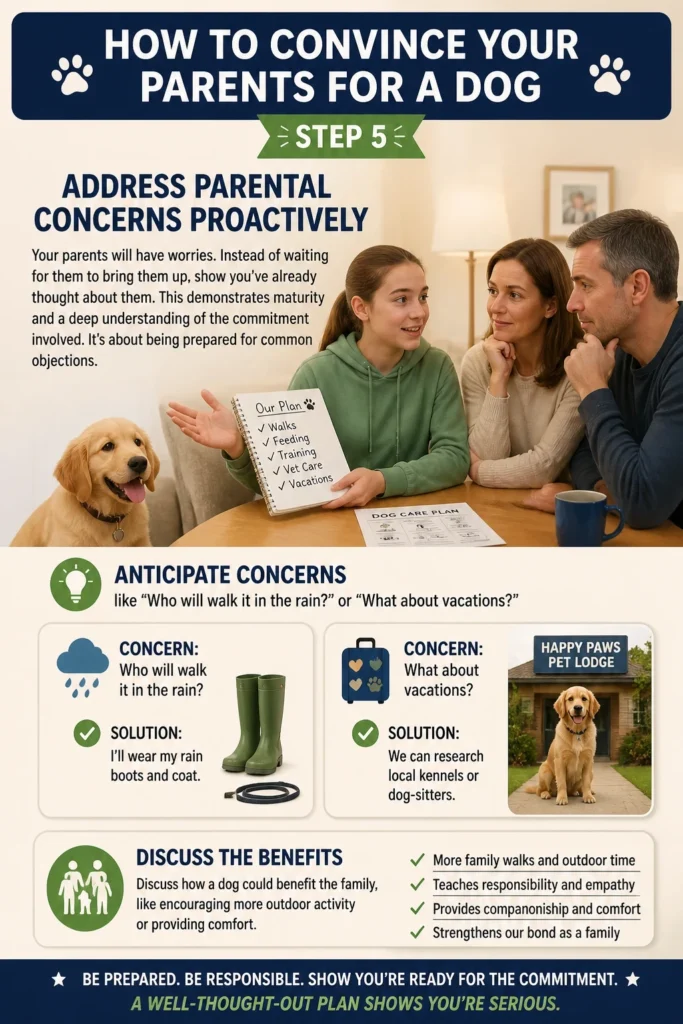
This demonstrates maturity and a deep understanding of the commitment involved. It’s about being prepared for common objections.
- Anticipate concerns like “Who will walk it in the rain?” or “What about vacations?”
- Offer solutions: “I’ll wear my rain boots and coat,” or “We can research local kennels or dog-sitters.”
- Discuss how a dog could benefit the family, like encouraging more outdoor activity or providing comfort.
Step 6: Plan a “Meet the Pups” Day
Sometimes, seeing is believing. A carefully planned visit can melt hearts and make the dream feel more tangible.

This isn’t about impulsively getting a dog, but about experiencing what it’s like to interact with one responsibly.
- Visit a local animal shelter or humane society. Volunteer to walk dogs or help with playtime. This isn’t a shopping trip, but a way to interact respectfully.
- Spend time with friends’ or relatives’ dogs. Observe how your child interacts and handles responsibility.
- Attend a local dog show or pet adoption event. This can be a fun family outing, even if you’re just observing.
Pro Tip: For a fun family bonding moment, watch dog-themed movies together (like “Homeward Bound” or “101 Dalmatians”) and discuss the responsibilities shown in the film. This can be a great sleepover activity with friends, too, brainstorming dog names and dreaming up adventures.
Step 7: Create a Family Dog Care Contract
Once everyone is on board (or nearly there!), a written agreement can solidify the commitment and prevent future arguments. This is a practical step for parents to feel secure.
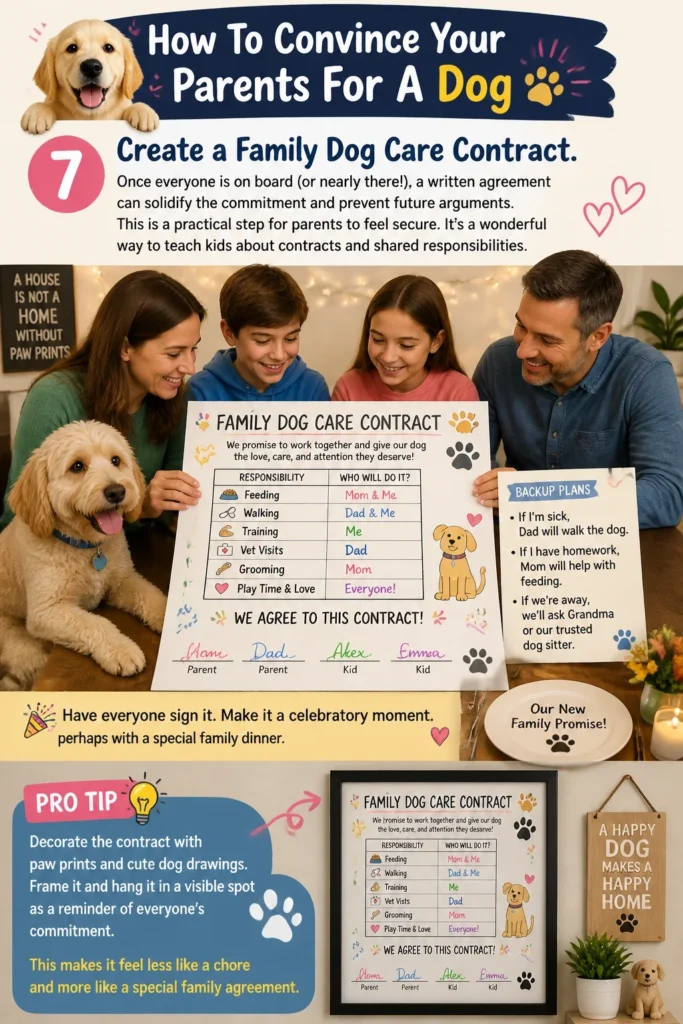
It’s a wonderful way to teach kids about contracts and shared responsibilities.
- Draft a simple contract outlining who is responsible for what (feeding, walking, training, vet visits).
- Include clauses for backup plans (e.g., “If I’m sick, Dad will walk the dog”).
- Have everyone sign it. Make it a celebratory moment, perhaps with a special family dinner.
Pro Tip: Decorate the contract with paw prints and cute dog drawings. Frame it and hang it in a visible spot as a reminder of everyone’s commitment. This makes it feel less like a chore and more like a special family agreement.
Common Mistakes to Avoid
Begging and Pleading
While understandable, constant begging, whining, or emotional outbursts can be counterproductive. Parents often interpret this as immaturity, reinforcing the idea that your child isn’t ready for the responsibility of a dog. Instead, focus on demonstrating maturity and responsibility through actions, which is far more convincing.
Making Empty Promises
Saying “I promise I’ll do everything!” without a plan or consistent follow-through is a common pitfall. Parents have heard this before, and it rarely translates into long-term commitment. Instead, show your commitment through consistent actions before getting a dog, and present a detailed plan of how you’ll manage responsibilities.
Focusing Only on the Fun Parts
It’s easy to dream about playtime and cuddles, but neglecting the less glamorous aspects like cleaning up messes, early morning walks, or vet visits is a red flag for parents. Acknowledge the challenges and show you’ve thought about how to handle them. This realistic perspective is much more reassuring.
Pressuring or Guilt-Tripping
Trying to make parents feel guilty or constantly bringing up how “everyone else has a dog” can create resentment. This approach often backfires, making parents more resistant. Focus on positive persuasion, demonstrating your readiness, and respectfully addressing their concerns rather than emotionally manipulating them.
Troubleshooting
“We Don’t Have Enough Time”
This is a common parental concern. The solution is to present a detailed schedule demonstrating how a dog’s needs can be integrated into the family’s existing routine. Show how responsibilities can be shared among family members, and how your child’s commitment will lighten the load. Perhaps suggest starting with fostering to truly test the waters.
“Dogs Are Too Expensive”
Cost is a significant barrier for many families. Revisit your “doggy budget” and highlight specific ways your child plans to contribute financially, even if it’s just for toys or treats. Research reputable, lower-cost veterinary clinics, discuss pet insurance options, and emphasize the potential long-term savings of adopting from a shelter rather than buying from a breeder.
“Our House Isn’t Big Enough”
Space can be a concern, but it’s often about the right dog for the space, not just the size of the house. Research breeds known to do well in smaller living environments (e.g., many smaller terriers, pugs, French bulldogs). Emphasize a commitment to daily walks and outdoor exercise to ensure the dog gets enough activity, regardless of house size.
Key Takeaways
- Research is crucial: Understand breeds, costs, and responsibilities before asking.
- Actions speak louder than words: Consistently demonstrate responsibility through chores and helpfulness.
- Address concerns proactively: Show you’ve thought about the challenges and have solutions.
- Teamwork makes the dream work: Involve the whole family in the process, from research to a family contract.
- Patience and persistence pay off: Convincing parents takes time, effort, and a positive attitude.
Frequently Asked Questions
How long should my child demonstrate responsibility before asking?
A consistent track record of 2-4 weeks is a good starting point. This shows that their newfound responsibility isn’t just a temporary phase. The longer they maintain it, the more convincing it will be.
What if my parents say no, even after all my efforts?
It can be disheartening, but don’t give up! Ask your parents specifically why they’re saying no. Listen carefully to their reasons without interrupting. This gives you concrete concerns to address in the future. Perhaps there’s a compromise, like fostering a dog or volunteering at a shelter more regularly to gain experience.
Should I focus on a specific dog or just the idea of “a dog”?
It’s best to focus on the idea of a dog and the responsibilities first. Once your parents are open to the concept, then you can introduce specific breed research. Falling in love with one specific dog before your parents are convinced can lead to more disappointment if it doesn’t work out.
How can I keep the conversation positive and not nagging?
Schedule dedicated times to discuss the dog, rather than bringing it up constantly. Use your “presentation” as a formal way to share your progress. When not discussing it, focus on demonstrating your responsibility in other areas of life. Show, don’t just tell.
Our Top Recommended Finds
- Kid-Friendly Dog Breed Books: Great for research and sparking imagination about different types of furry friends.
- Pet Responsibility Chart Kit: Visual aids with stickers or magnetic pieces make tracking chores fun and engaging for all ages.
- DIY Dog Toy Craft Kits: A creative way for kids to show their enthusiasm and prepare for a dog’s arrival.
Wagging Tails and Happy Families Await!
Bringing a dog into your home is a big decision, but it’s also one that can bring immense joy and teach invaluable lessons about responsibility and unconditional love. By following these steps, you’re not just asking for a pet; you’re building a solid case based on research, demonstrated commitment, and thoughtful planning.
Encourage your child to embrace this journey with enthusiasm and patience. Remember, the process itself is a powerful learning experience, regardless of the immediate outcome. Who knows, maybe your family’s next adventure involves a leash, a wagging tail, and countless happy memories!