
💡 How To Get Your Parents To Say Yes
🍼 The Newborn Survival Kit
The first six months of parenthood are a blur of exhaustion. Stop trying to tough it out—these are the 5 absolute life-saving baby essentials that experienced moms literally refuse to live without. They will instantly solve your biggest sleeping, feeding, and soothing struggles.
🌙 Hatch Rest Baby Sound Machine
The ultimate sleep hack. You can entirely control this white noise machine and dimmable nightlight from your smartphone, meaning you never have to accidentally wake the baby while sneaking back out of the nursery after a 3 AM feeding.
🤧 FridaBaby NoseFrida Snotsucker
It sounds incredibly gross until your baby has their first cold and literally cannot breathe to sleep. Throw away those useless hospital bulb syringes—this doctor-invented tool safely clears congestion in seconds, and yes, the filter absolutely prevents any germs from reaching you.
💧 Haakaa Silicone Manual Breast Pump
Every breastfeeding mom's best kept secret. Simply suction this cheap, cord-free silicone cup to the opposite breast while you nurse to effortlessly catch every drop of liquid gold letdown that would otherwise leak onto your shirt and be totally wasted.
🧴 Aquaphor Baby Healing Ointment
Forget buying ten different expensive, highly-fragranced creams. This is the only ointment you need. It miraculously cures severe diaper rash overnight, heals cracked nursing nipples, soothes baby eczema, and aggressively protects delicate skin from harsh winter wind.
☁️ Burt's Bees 100% Organic Burp Cloths
You will go through dozens of these a day, so do not cheap out on thin fabric. These thick, ultra-absorbent organic cotton cloths actually catch massive spit-ups before they ruin your only clean outfit, while remaining incredibly soft against your newborn's face.
You know that feeling, right? That burning desire for something special, whether it’s a new toy, a sleepover, or even just extra screen time. It feels like a mountain sometimes, getting your parents to agree.
As a mom myself, I’ve been on both sides of that “yes” or “no” conversation more times than I can count. This guide will share some simple, loving strategies that really work, helping you and your family find more “yeses” together.

Quick Overview
This guide will walk you through building trust and clear communication, making those “yes” moments happen more often. You’ll learn how to approach your parents with confidence and understanding.
- Time needed: Varies, from a quick chat to a few days of preparation
- Difficulty: Beginner to Intermediate
- What you’ll need: A clear idea of your request, a calm attitude, and a willingness to understand others
Step-by-Step Instructions
Step 1: Understand Their World First
Before you even think about asking, take a moment to observe your parents. What’s their mood like? Are they stressed about work, tired from a busy day, or relaxed and happy?
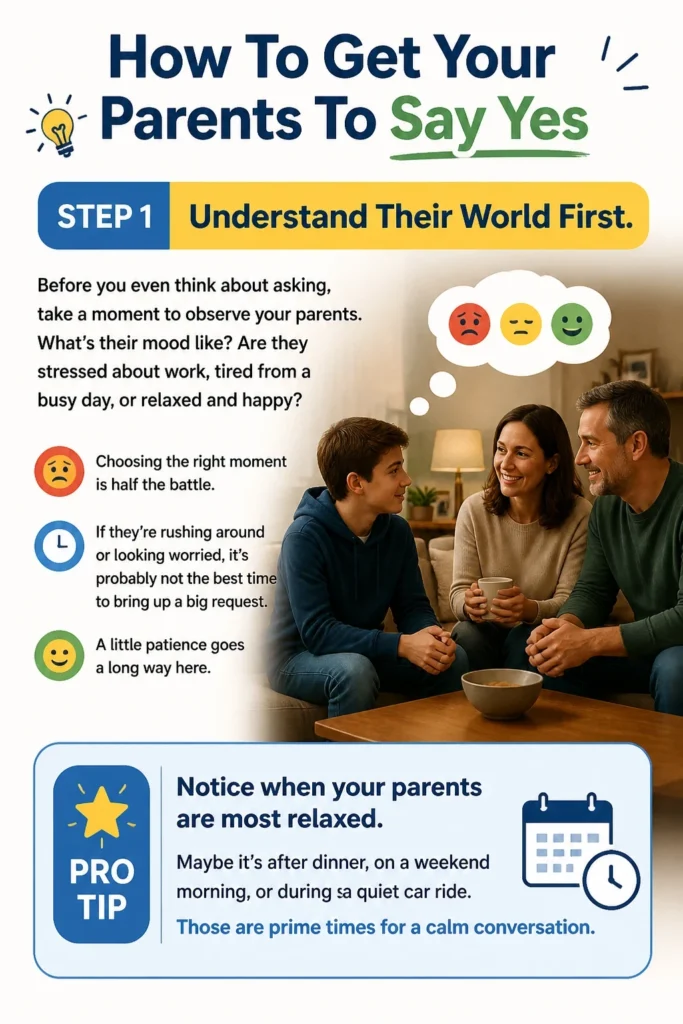
Choosing the right moment is half the battle. If they’re rushing around or looking worried, it’s probably not the best time to bring up a big request. A little patience goes a long way here.
Pro Tip: Notice when your parents are most relaxed. Maybe it’s after dinner, on a weekend morning, or during a quiet car ride. Those are prime times for a calm conversation.
Step 2: Prepare Your Request Thoughtfully
Just like you prepare for a test, prepare for your “yes” conversation. Think about exactly what you want and why it’s important to you. The clearer you are, the easier it is for them to understand.

Consider what questions they might ask and have answers ready. For example, if you want a sleepover, think about who will be there, what you’ll eat, and what time you’ll go to bed. This shows maturity.
For a new outfit (school-age): “Mom, I really like this outfit because it’s comfortable for school and fits the dress code. I’ve saved some of my allowance, and it’s on sale.”
For a playdate (toddler/preschool): “Daddy, can Sarah come over to play tomorrow? We could build a tall tower with blocks and then have a snack.”
For a special party (school-age): “I’d love to have a glow-in-the-dark dance party for my birthday! We could use black lights and glow sticks, and I’ll help plan the music and snacks.”
Step 3: Show Responsibility and Help Out
Parents love to see you being helpful without being asked. This builds a foundation of trust and shows you’re capable. It’s not about “earning” a yes, but about demonstrating your reliability.

Do your chores, finish your homework, and be kind to your siblings. These actions speak volumes about your character and maturity. When you consistently show responsibility, parents are more likely to trust your judgment.
Chores done (all ages): Tidy your room, help set the table, or put away your toys without being reminded. Even a toddler helping to put blocks in a basket is a huge step!
Good behavior (baby/toddler): A baby who is generally calm and goes down for naps easily makes parents feel more capable of handling new situations. A toddler who shares toys shows a willingness to cooperate.
Schoolwork (school-age): Keep up with your studies and show initiative. “I already finished my math homework, Mom, and I even helped my little sister with her drawing.”
Step 4: Choose the Perfect Time and Place
Timing is everything. Never spring a big request on your parents when they’re stressed, tired, or busy. A calm, quiet moment is always best.
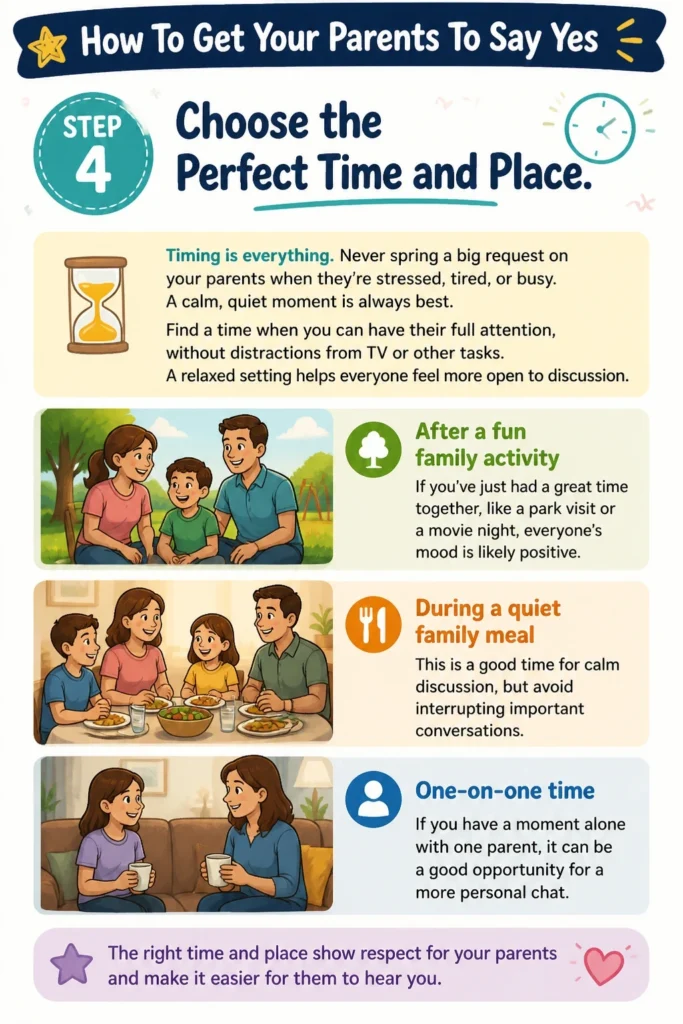
Find a time when you can have their full attention, without distractions from TV or other tasks. A relaxed setting helps everyone feel more open to discussion.
After a fun family activity: If you’ve just had a great time together, like a park visit or a movie night, everyone’s mood is likely positive.
During a quiet family meal: This is a good time for calm discussion, but avoid interrupting important conversations.
One-on-one time: If you have a moment alone with one parent, it can be a good opportunity for a more personal chat.
Step 5: Present Your Case Calmly and Clearly
When you’re ready to ask, approach them with a respectful tone. Start by acknowledging their perspective or current situation if appropriate. Then, state your request clearly and concisely.
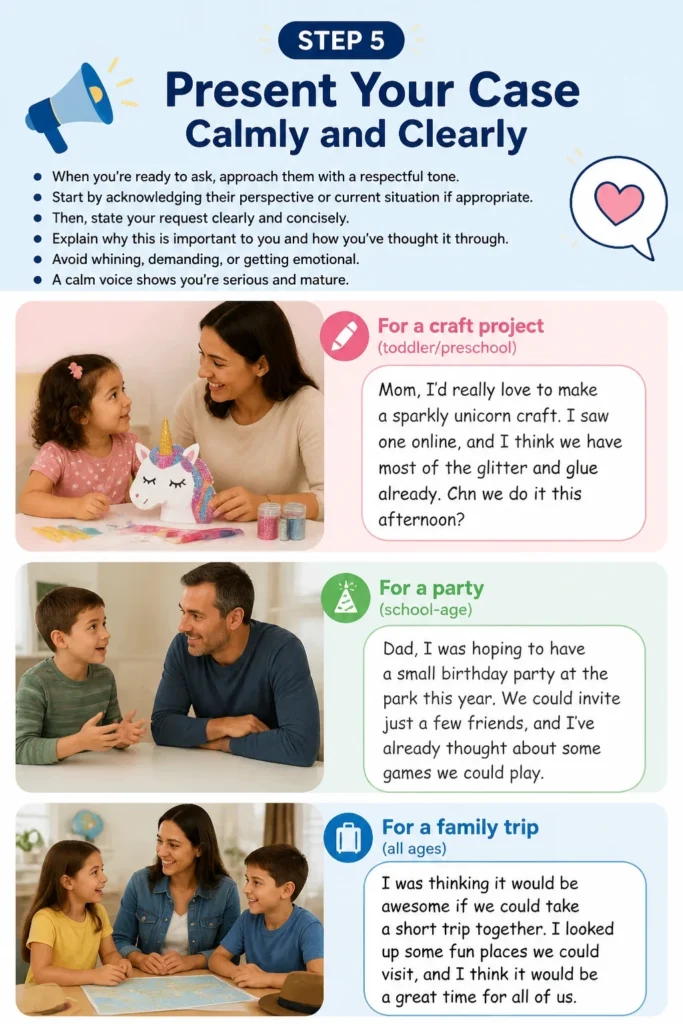
Explain why this is important to you and how you’ve thought it through. Avoid whining, demanding, or getting emotional. A calm voice shows you’re serious and mature.
For a craft project (toddler/preschool): “Mom, I’d really love to make a sparkly unicorn craft. I saw one online, and I think we have most of the glitter and glue already. Can we do it this afternoon?”
For a party (school-age): “Dad, I was hoping to have a small birthday party at the park this year. We could invite just a few friends, and I’ve already thought about some games we could play.”
For a family trip (all ages): “I was thinking, it would be so fun if we could go camping next summer. I’ve looked up a few campgrounds that have playgrounds for [younger sibling] and hiking trails for us.”
Step 6: Offer Solutions and Compromises
Show your parents that you’ve considered their potential concerns. Anticipate what they might say no to and have alternative ideas ready. This demonstrates problem-solving skills.
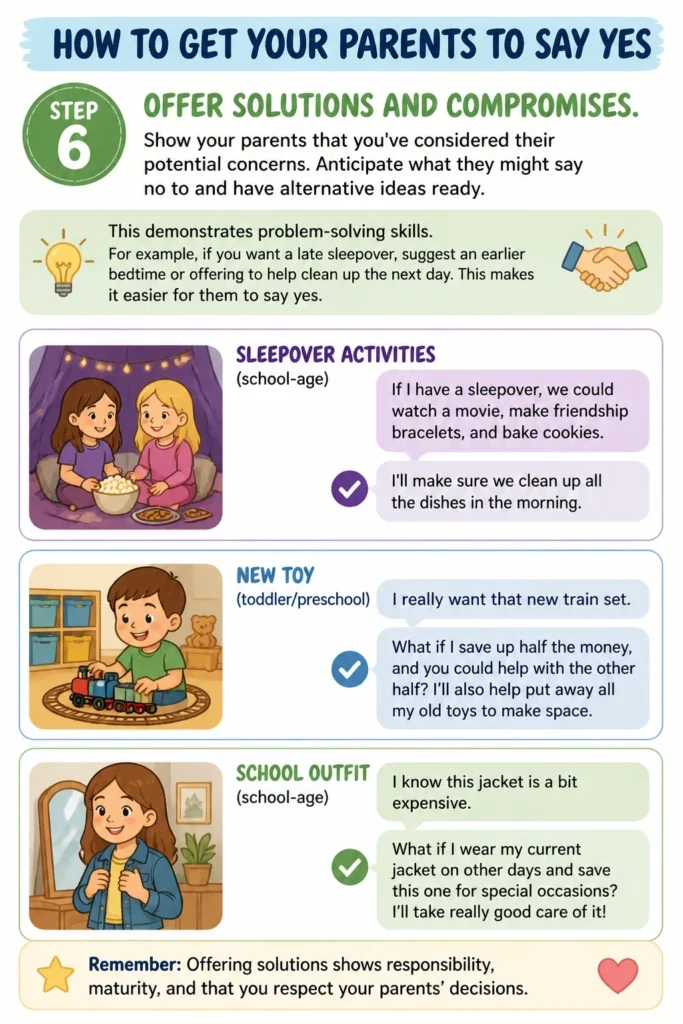
For example, if you want a late sleepover, suggest an earlier bedtime or offering to help clean up the next day. This makes it easier for them to say yes.
Sleepover activities (school-age): “If I have a sleepover, we could watch a movie, make friendship bracelets, and bake cookies. I’ll make sure we clean up all the dishes in the morning.”
New toy (toddler/preschool): “I really want that new train set. What if I save up half the money, and you could help with the other half? I’ll also help put away all my old toys to make space.”
School outfit (school-age): “I know this jacket is a bit expensive. What if I wear my older jacket for school, and we get this one for special occasions? Or I could help with extra chores to earn some money towards it.”
Step 7: Be Ready for “No” or “Maybe”
Sometimes, even with the best approach, the answer might be no, or a “maybe” that feels like a no. It’s important to react gracefully, without pouting or arguing.
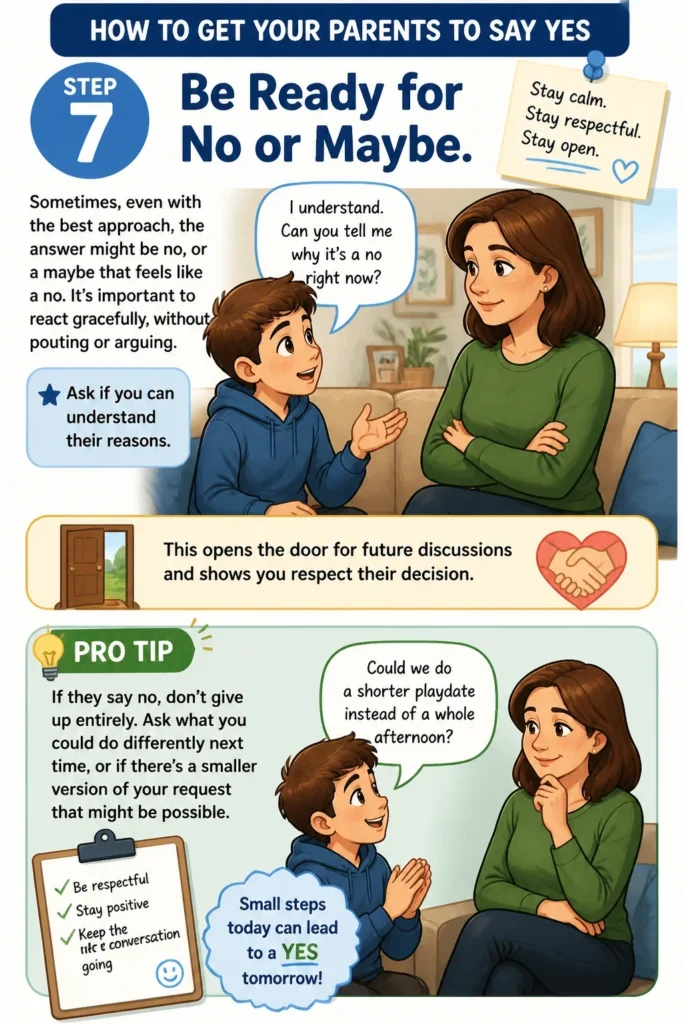
Ask if you can understand their reasons. “I understand. Can you tell me why it’s a no right now?” This opens the door for future discussions and shows you respect their decision.
Pro Tip: If they say no, don’t give up entirely. Ask what you could do differently next time, or if there’s a smaller version of your request that might be possible. “Could we do a shorter playdate instead of a whole afternoon?”
Step 8: Follow Through and Build Trust
If your parents say yes, congratulations! Now, the most important part: follow through on your promises. Do exactly what you said you would.

If you promised to clean up after a party, do it thoroughly. If you said you’d be home by a certain time, be home early. This consistency builds immense trust for future requests.
Party cleanup (school-age): After your birthday party, take the lead in tidying up. “I’ll put all the decorations away and help with the dishes, just like I said.”
Craft time (toddler/preschool): If you get to do a craft, help put away all the supplies. “Look, Mom, all the glitter is back in its jar!”
Outfit care (school-age): If you get a new outfit, take good care of it. “I’ll make sure to hang this new shirt up right after I wear it.”
Step 9: Practice Gratitude and Appreciation
Always say thank you, whether they say yes or no. Showing genuine appreciation makes a big difference. It reinforces positive feelings and makes them more inclined to listen next time.
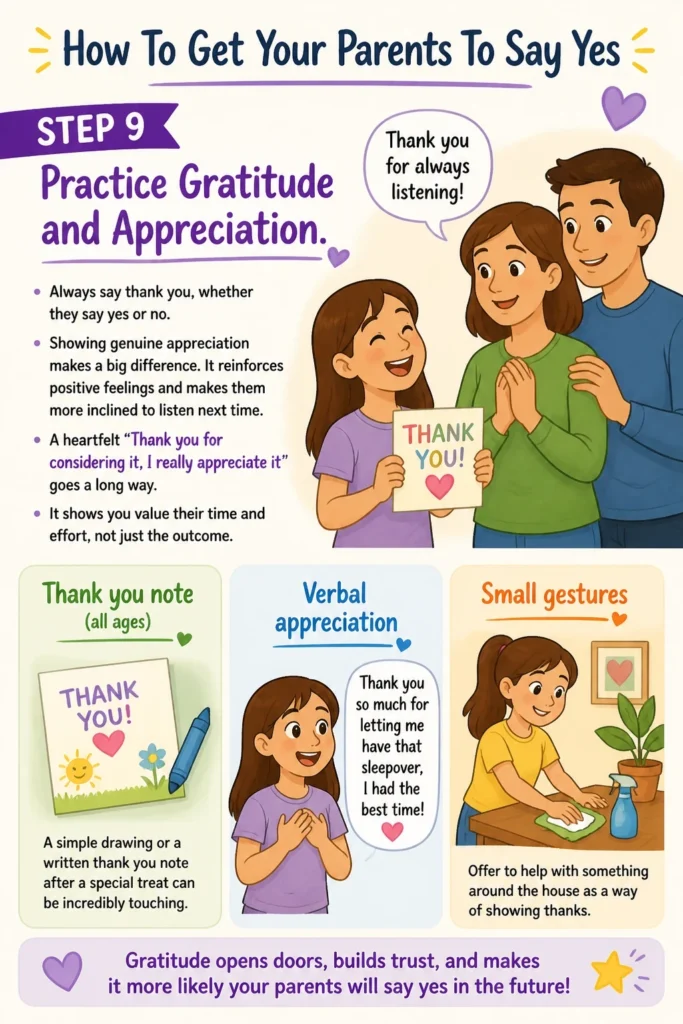
A heartfelt “Thank you for considering it, I really appreciate it” goes a long way. It shows you value their time and effort, not just the outcome.
Thank you note (all ages): A simple drawing or a written thank you note after a special treat can be incredibly touching.
Verbal appreciation: “Thank you so much for letting me have that sleepover, I had the best time!”
Small gestures: Offer to help with something around the house as a way of showing thanks.
Common Mistakes to Avoid
Asking When They’re Stressed or Busy
Trying to get a “yes” when your parents are in the middle of cooking dinner, on an important phone call, or clearly upset about something is almost always a recipe for a “no.” They can’t give you their full attention, and your request might just add to their stress. Always wait for a calm, open moment.
Being Entitled or Demanding
Approaching your parents with a tone that implies they owe you something, or demanding rather than asking, rarely works. It can make them feel disrespected and less likely to want to help. Instead, use a respectful tone and remember that “no” is always an option they have.
Not Having a Plan or Answers
“Can I have a party?” without any thought about who, when, what, or how it will be managed puts all the work on your parents. This makes it seem like you haven’t really considered the implications. Always come with a basic plan and be ready to answer their questions about logistics and safety.
Giving Up Too Easily After a “No”
A “no” doesn’t always mean “never.” Sometimes it means “not now” or “not like that.” If you immediately throw a tantrum or give up, you miss the chance to understand their reasons or suggest a compromise. Show persistence and a willingness to adapt, and you might turn a “no” into a “yes” later.
Troubleshooting
They Still Say No, Even After My Best Efforts
It’s tough when you’ve done everything right and still hear “no.” First, don’t take it personally. Sometimes, “no” isn’t about you or your request, but about other factors your parents are dealing with.
Gently ask if they can explain their reasons. Listen without interrupting. This helps you understand their perspective and might reveal a path forward for another time or a modified request.
They Seem Uninterested or Distracted
If your parents aren’t fully engaged when you’re making your request, it’s probably not the right time. Politely say, “Mom/Dad, I know you’re busy right now, but I have something important I’d like to talk about when you have a moment.”
Then, respect their answer. If they say “now isn’t good,” ask when would be a better time and follow up then. This shows respect for their schedule and priorities.
They Want More Information Than I Have
It’s okay not to have every single detail. If they ask a question you don’t know the answer to, don’t guess. Say, “That’s a good question, I haven’t thought about that yet. Can I look into it and get back to you?”
This shows honesty and a commitment to responsible planning. It’s better than making something up and potentially losing their trust later.
Key Takeaways
- Approach your parents with respect and understanding of their current mood and schedule.
- Prepare your request by thinking through the details and anticipating potential questions.
- Consistently show responsibility and helpfulness around the house to build trust.
- Present your ideas calmly, clearly, and be ready to offer compromises.
- React gracefully to “no” or “maybe,” and always follow through on promises when they say “yes.”
- Practice gratitude for their time and consideration, regardless of the outcome.
Frequently Asked Questions
What if my parents are always busy?
It can feel like parents are always busy, but there are usually small windows. Try to catch them during transition times, like right after dinner when they’re winding down, or during a weekend morning walk. A quick, polite “Can I talk to you for five minutes about something important when you have a chance?” can open the door.
Should I bribe my parents?
No, “bribing” isn’t the best approach. Instead of offering something in exchange for a “yes,” focus on showing consistent responsibility and helpfulness. This builds trust over time, which is much more valuable than a one-time “bribe.” True “yeses” come from a place of mutual respect and understanding.
How long should I wait before asking again if they said no?
If they said “no,” give it some time – at least a few days, or even a week or two, depending on the request. Use that time to think about their reasons, gather more information, or refine your proposal. Coming back too soon can seem pushy. When you do ask again, frame it as, “I’ve thought more about what you said, and I have a new idea…”
What if they say no, but my friends’ parents said yes?
It’s natural to feel frustrated when your friends get a “yes” and you don’t. However, every family is different, with different rules, values, and circumstances. Avoid comparing yourself or saying, “But so-and-so’s parents let them!” This can make your parents defensive. Focus on your own family’s unique situation and respect their choices for your* safety and well-being.
Our Top Recommended Finds
- Family Chore Chart: A visual chart helps everyone know their responsibilities, making it easier to show initiative and build trust.
- Kids’ Planner/Calendar: Teaches organization and helps children plan their requests, showing parents they’ve thought things through.
- Family Activity Idea Cards: A jar or deck of cards with fun, simple family activities to do together, encouraging bonding and positive moods.
Your Journey to More Yeses Starts Now
Learning to communicate effectively with your parents is a skill that will serve you well throughout your entire life. It’s about more than just getting what you want; it’s about building stronger relationships and understanding.
Every “yes” you earn through thoughtful preparation and respectful conversation helps build a bridge of trust. So take these steps, try them out, and watch how your family dynamic can flourish. You’ve got this!