🌳 12 Eyfs Outdoor Area On A Budget
🍼 The Newborn Survival Kit
The first six months of parenthood are a blur of exhaustion. Stop trying to tough it out—these are the 5 absolute life-saving baby essentials that experienced moms literally refuse to live without. They will instantly solve your biggest sleeping, feeding, and soothing struggles.
🌙 Hatch Rest Baby Sound Machine
The ultimate sleep hack. You can entirely control this white noise machine and dimmable nightlight from your smartphone, meaning you never have to accidentally wake the baby while sneaking back out of the nursery after a 3 AM feeding.
🤧 FridaBaby NoseFrida Snotsucker
It sounds incredibly gross until your baby has their first cold and literally cannot breathe to sleep. Throw away those useless hospital bulb syringes—this doctor-invented tool safely clears congestion in seconds, and yes, the filter absolutely prevents any germs from reaching you.
💧 Haakaa Silicone Manual Breast Pump
Every breastfeeding mom's best kept secret. Simply suction this cheap, cord-free silicone cup to the opposite breast while you nurse to effortlessly catch every drop of liquid gold letdown that would otherwise leak onto your shirt and be totally wasted.
🧴 Aquaphor Baby Healing Ointment
Forget buying ten different expensive, highly-fragranced creams. This is the only ointment you need. It miraculously cures severe diaper rash overnight, heals cracked nursing nipples, soothes baby eczema, and aggressively protects delicate skin from harsh winter wind.
☁️ Burt's Bees 100% Organic Burp Cloths
You will go through dozens of these a day, so do not cheap out on thin fabric. These thick, ultra-absorbent organic cotton cloths actually catch massive spit-ups before they ruin your only clean outfit, while remaining incredibly soft against your newborn's face.
Okay, so you’re staring at your outdoor space, dreaming of a magical EYFS wonderland, but your budget is giving you serious side-eye. Been there. We all want to give those little humans the best, most stimulating outdoor experiences without having to sell a kidney. Good news! You absolutely can create an epic outdoor learning zone without breaking the bank. Forget those glossy, expensive catalogues; we’re talking clever, thrifty, and seriously fun ideas that your kids (and your wallet) will adore. Let’s get crafting some budget-friendly brilliance.
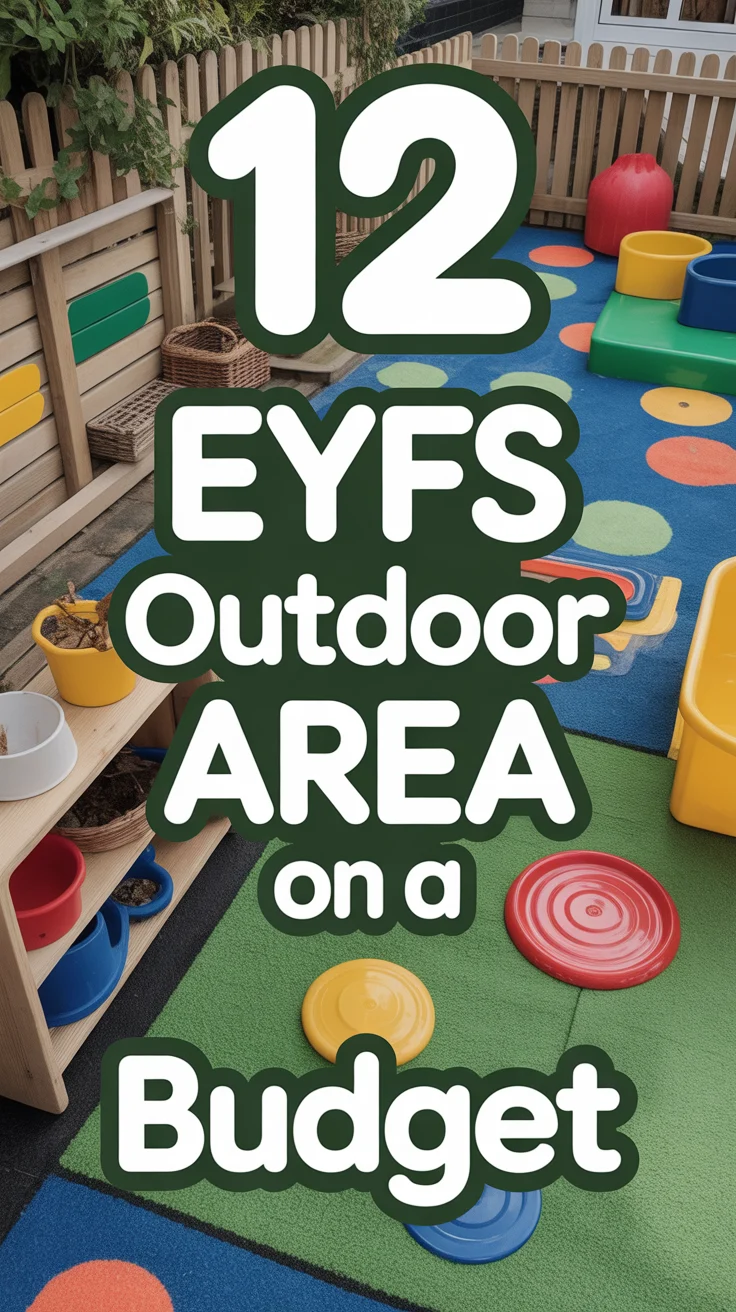
1. Nature Exploration Kits
Get those mini-explorers ready for some serious investigative work. You assemble these bad boys with items you probably already have or can snag for next to nothing.
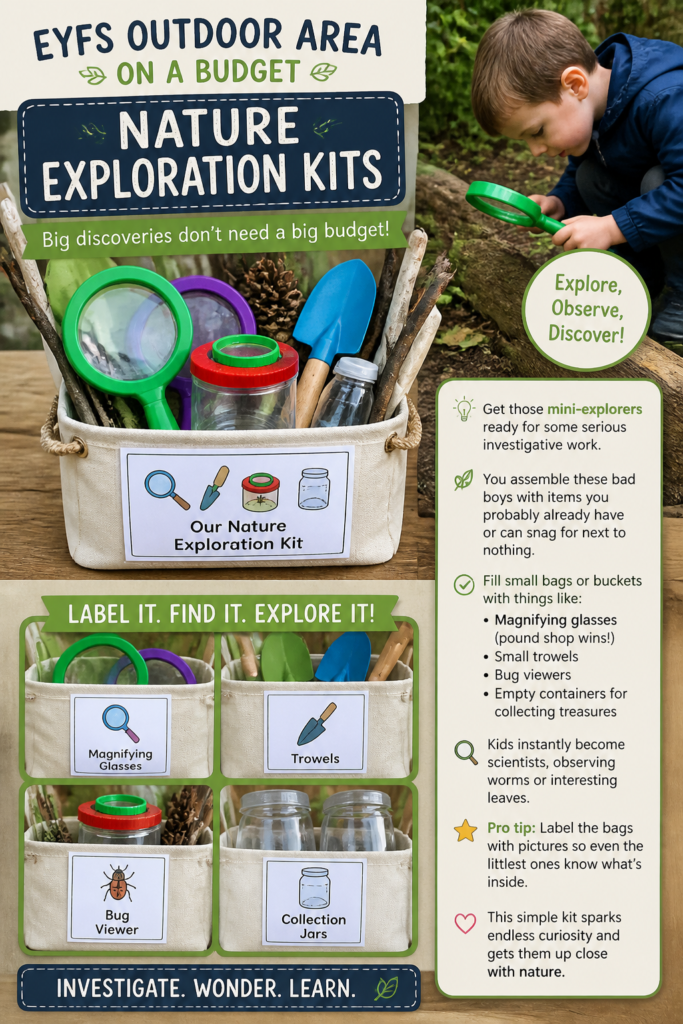
Fill small bags or buckets with things like magnifying glasses (pound shop wins!), small trowels, bug viewers, and empty containers for collecting treasures. Kids instantly become scientists, observing worms or interesting leaves. Pro tip: Label the bags with pictures so even the littlest ones know what’s inside. This simple kit sparks endless curiosity and gets them up close with nature.
2. DIY Mud Kitchen
Honestly, if you don’t have a mud kitchen, are you even living? This is the ultimate budget-friendly sensory play zone, and it’s surprisingly easy to knock together.
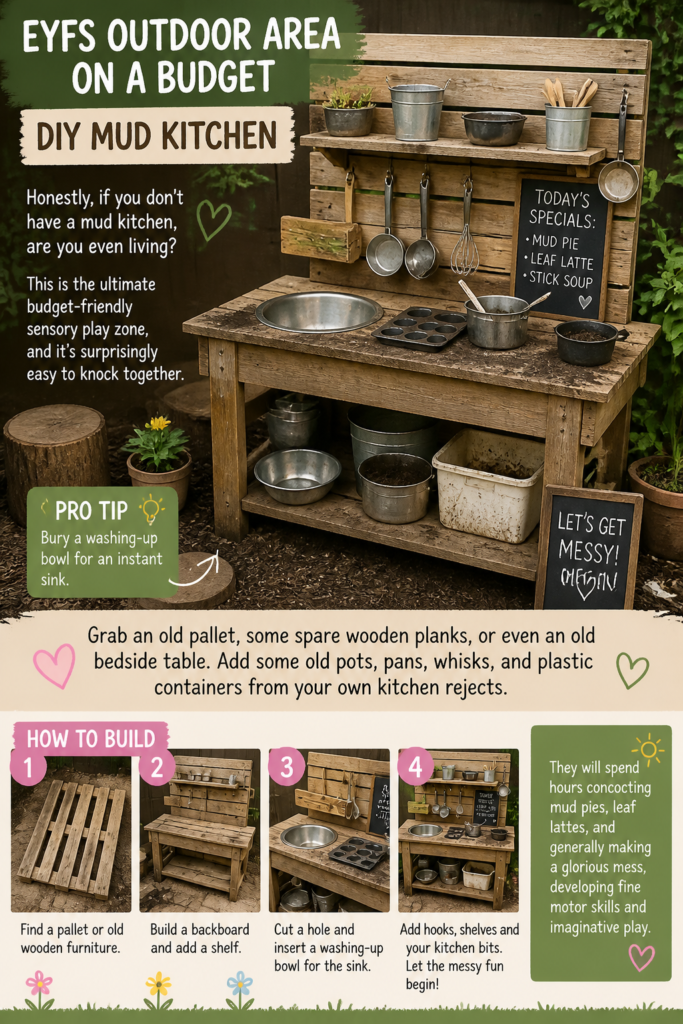
Grab an old pallet, some spare wooden planks, or even an old bedside table. Add some old pots, pans, whisks, and plastic containers from your own kitchen rejects. Pro tip: Bury a washing-up bowl for an instant sink. They will spend hours concocting mud pies, leaf lattes, and generally making a glorious mess, developing fine motor skills and imaginative play.
3. Upcycled Water Play
Water play is a non-negotiable, but fancy water tables? Nah, we can do better (and cheaper). Think outside the plastic tub.
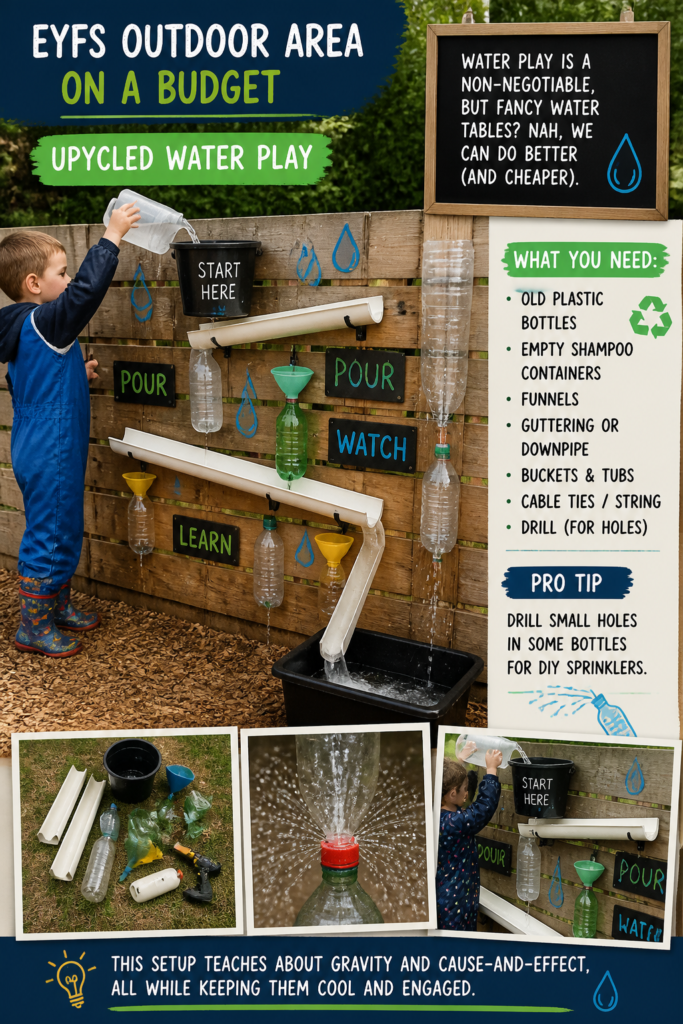
Collect old plastic bottles, empty shampoo containers, funnels, and lengths of guttering. Arrange the guttering to create a water run-off system from a bucket, letting kids pour and watch the flow. Pro tip: Drill small holes in some bottles for DIY sprinklers. This setup teaches about gravity and cause-and-effect, all while keeping them cool and engaged.
4. Loose Parts Play Area
This sounds fancy, but it’s literally just a collection of random stuff that kids can move, combine, and transform. It’s open-ended play at its finest.
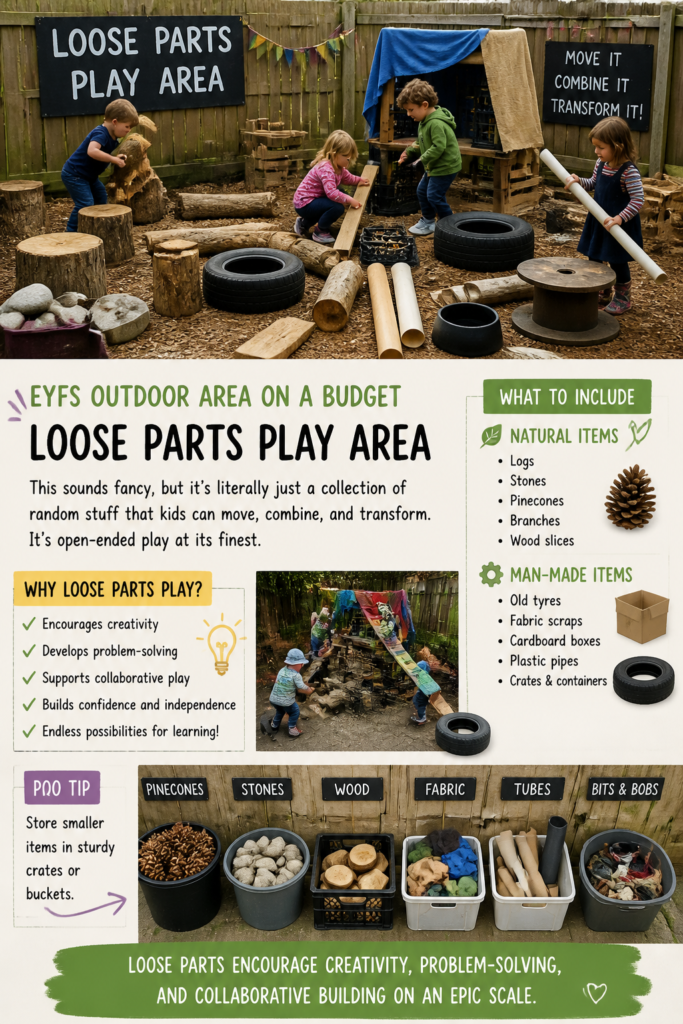
Gather large natural items like logs, stones, pinecones, and branches, alongside man-made items such as old tyres, fabric scraps, cardboard boxes, and plastic pipes. Create a designated area where these treasures are accessible. Pro tip: Store smaller items in sturdy crates or buckets. Loose parts encourage creativity, problem-solving, and collaborative building on an epic scale.
5. Homemade Sensory Garden
Awaken all their senses without spending a fortune on exotic plants. A sensory garden can be a calming and stimulating space.
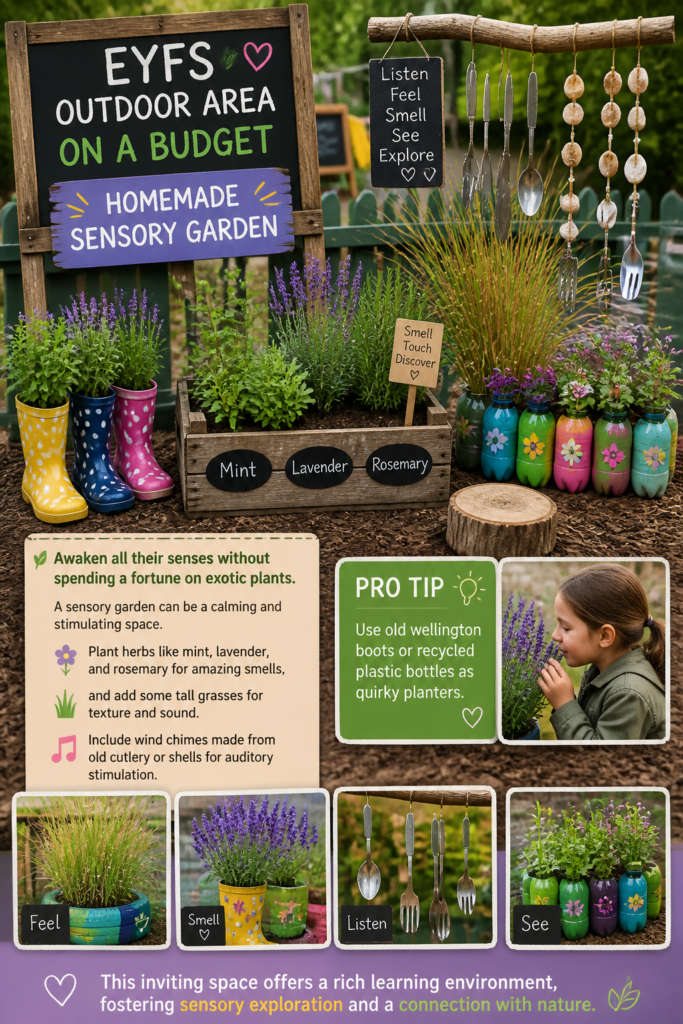
Plant herbs like mint, lavender, and rosemary for amazing smells, and add some tall grasses for texture and sound. Include wind chimes made from old cutlery or shells for auditory stimulation. Pro tip: Use old wellington boots or recycled plastic bottles as quirky planters. This inviting space offers a rich learning environment, fostering sensory exploration and a connection with nature.
6. Tyre Obstacle Course
Got some old tyres lying around? Or know a local garage looking to offload some? They are pure gold for gross motor development.
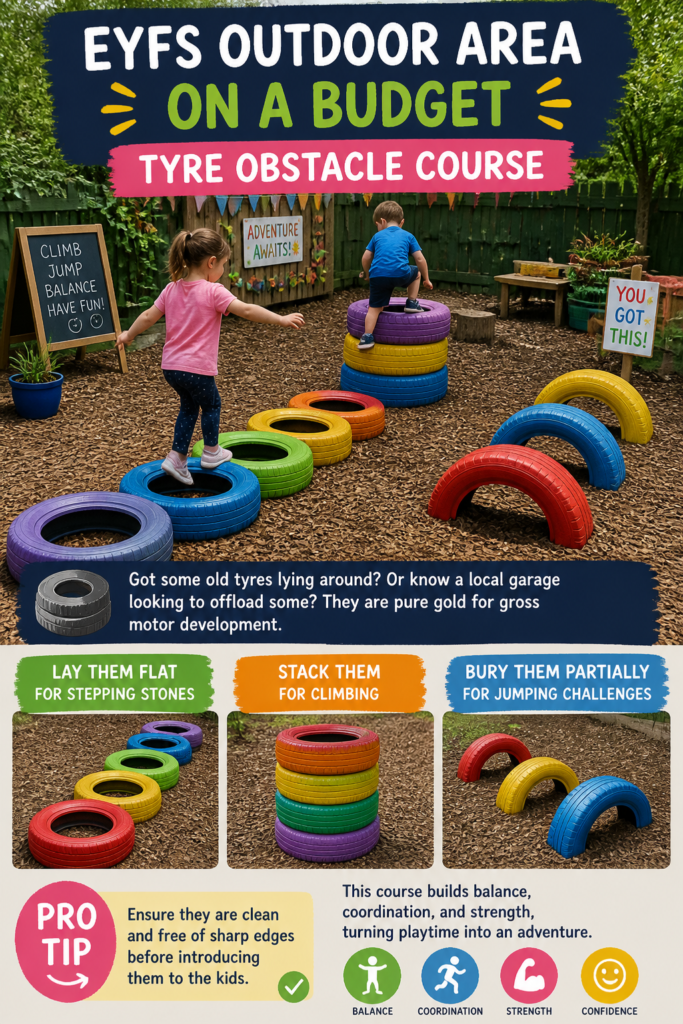
Arrange tyres in various ways: lay them flat for stepping stones, stack them for climbing, or bury them partially for jumping challenges. Paint them in bright colours (if you’ve got some spare paint kicking around) for extra appeal. Pro tip: Ensure they are clean and free of sharp edges before introducing them to the kids. This course builds balance, coordination, and strength, turning playtime into an adventure.
7. Pallet Planters
Old wooden pallets are the unsung heroes of budget outdoor design. They’re versatile, sturdy, and often free for the taking.
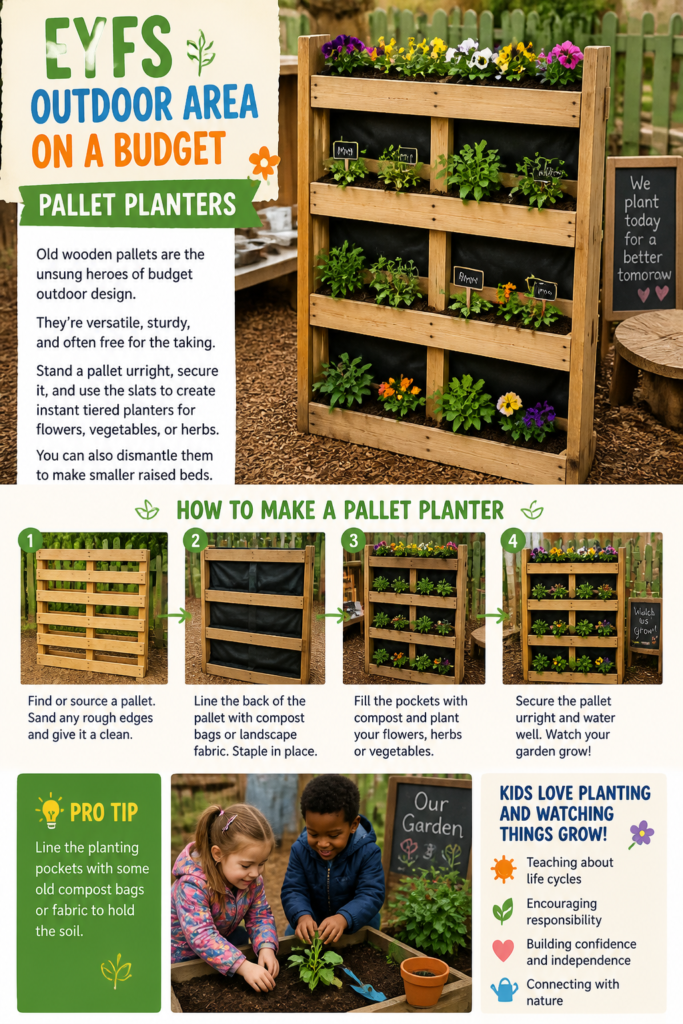
Stand a pallet upright, secure it, and use the slats to create instant tiered planters for flowers, vegetables, or herbs. You can also dismantle them to make smaller raised beds. Pro tip: Line the planting pockets with some old compost bags or fabric to hold the soil. Kids love planting and watching things grow, teaching them about life cycles and responsibility.
8. Storytelling Corner
Every great outdoor space needs a cozy nook for tales and quiet time. This doesn’t require a fancy gazebo.
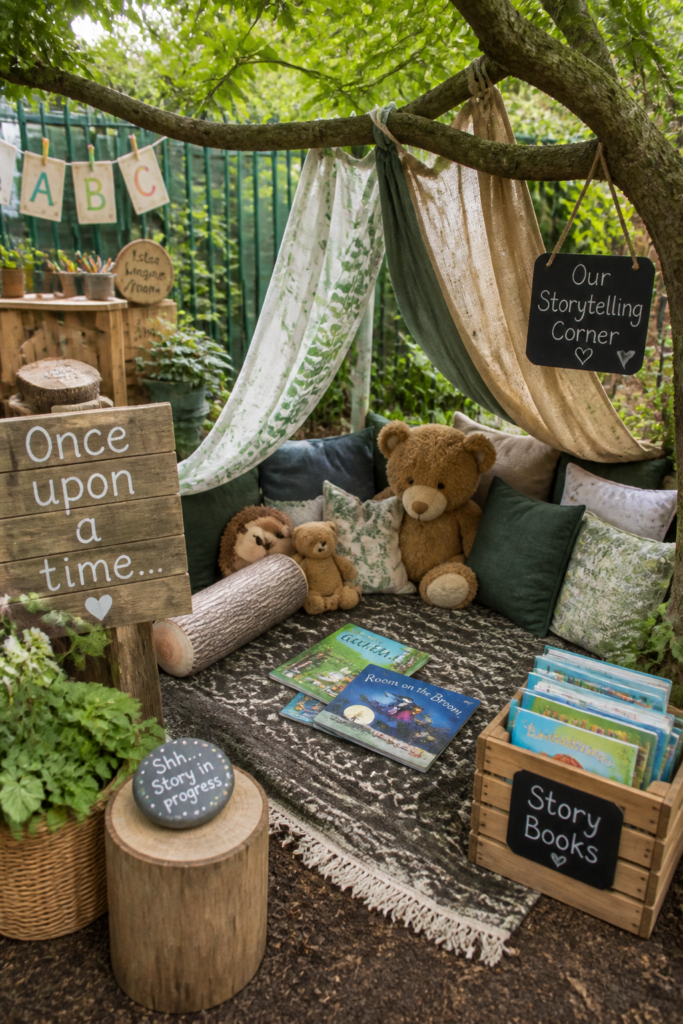
Find a sheltered spot, maybe under a tree, and lay down an old rug or some blankets. Add a few cushions (old sofa cushions with waterproof covers work wonders) and perhaps some large soft toys. Pro tip: Hang some old curtains or fabric scraps from a low branch to create a den-like feel. This inviting space encourages literacy, imagination, and social interaction through shared stories.
9. Art Easel from Scraps
Why buy when you can DIY a super cool art station? Creativity shouldn’t be confined indoors.
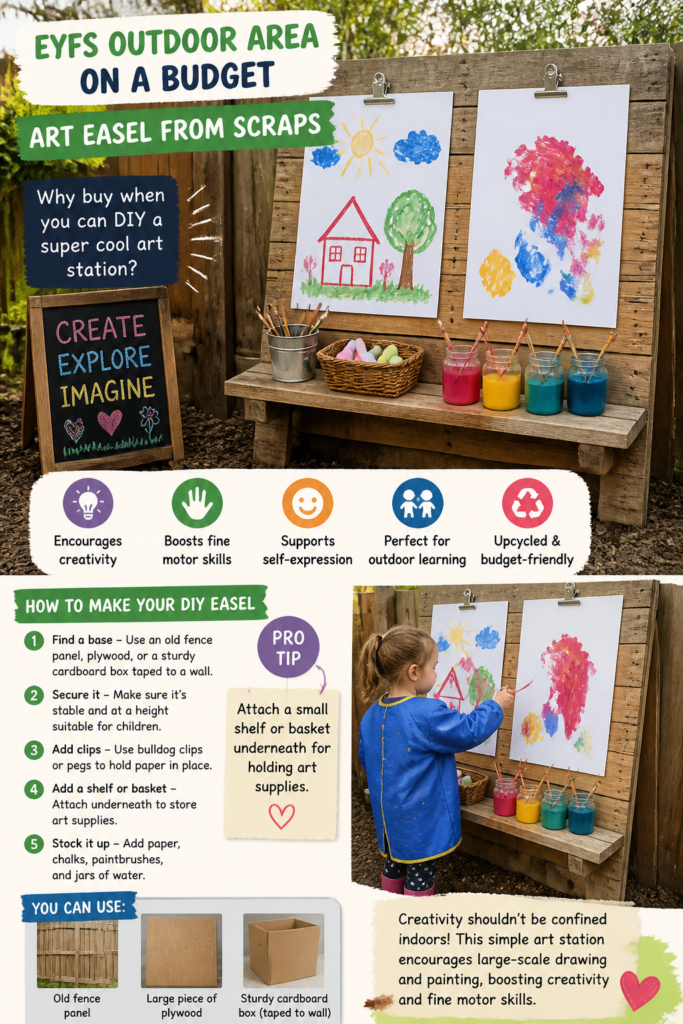
Use an old fence panel, a large piece of plywood, or even a sturdy cardboard box taped to a wall as a vertical easel. Provide large sheets of paper, chunky chalks, and paintbrushes with water. Pro tip: Attach a small shelf or basket underneath for holding art supplies. This encourages large-scale drawing and painting, boosting creativity and fine motor skills.
10. Den Building Station
Kids absolutely love building dens, and you can facilitate this with a few simple, inexpensive items.
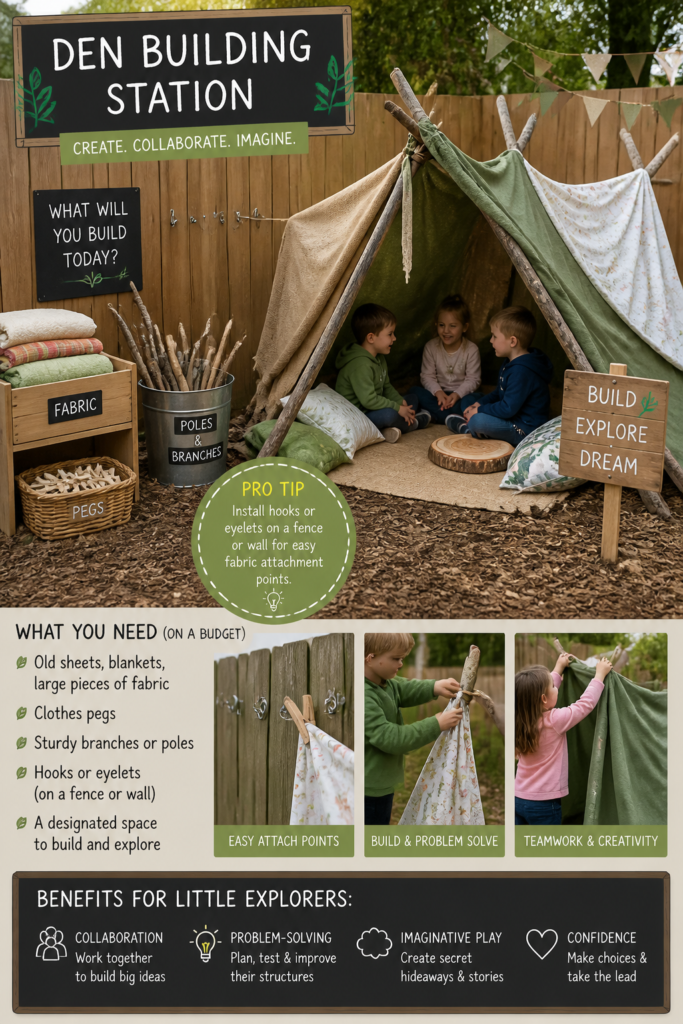
Gather some old sheets, blankets, large pieces of fabric, clothes pegs, and a few sturdy branches or poles. Designate an area where they can freely experiment with building structures. Pro tip: Install a few hooks or eyelets on a fence or wall for easy fabric attachment points. This fosters collaboration, problem-solving, and imaginative role-play as they create their own secret hideaways.
11. Music Wall
Turn a boring fence or wall into an auditory wonderland with items destined for the recycling bin. It’s surprisingly harmonious (sometimes).
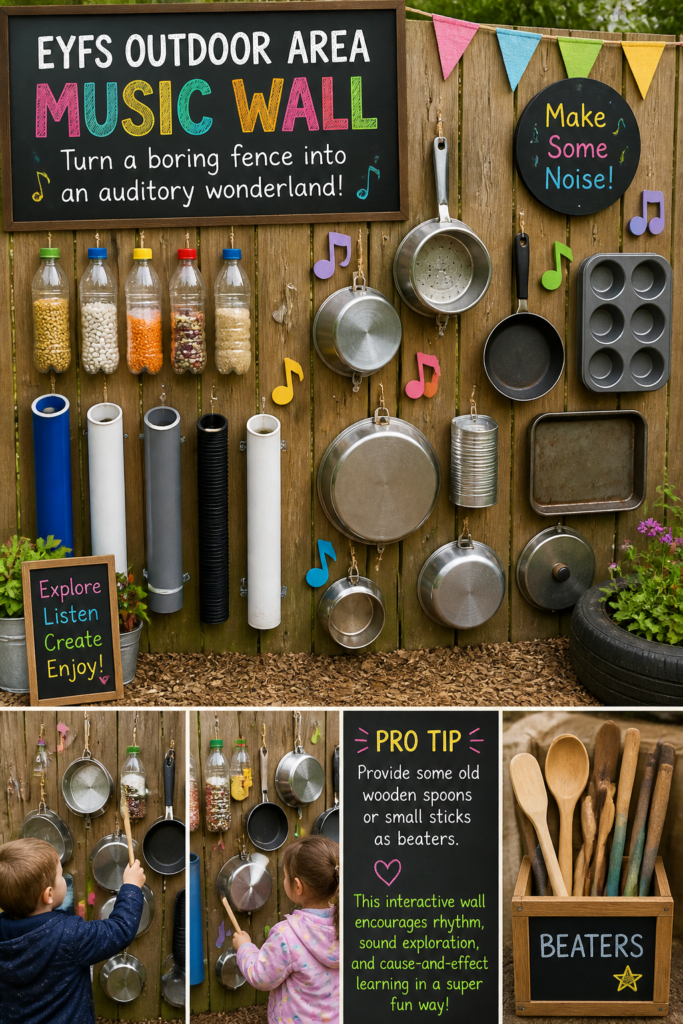
Collect old pots, pans, baking trays, plastic bottles filled with rice, or even lengths of pipe. Securely attach them to a fence or wall at varying heights using string, cable ties, or screws. Pro tip: Provide some old wooden spoons or small sticks as beaters. This interactive wall encourages rhythm, sound exploration, and cause-and-effect learning in a super fun way.
12. Recycled Building Blocks
Forget expensive wooden blocks; your recycling bin is a treasure trove of building materials that are lightweight and versatile.
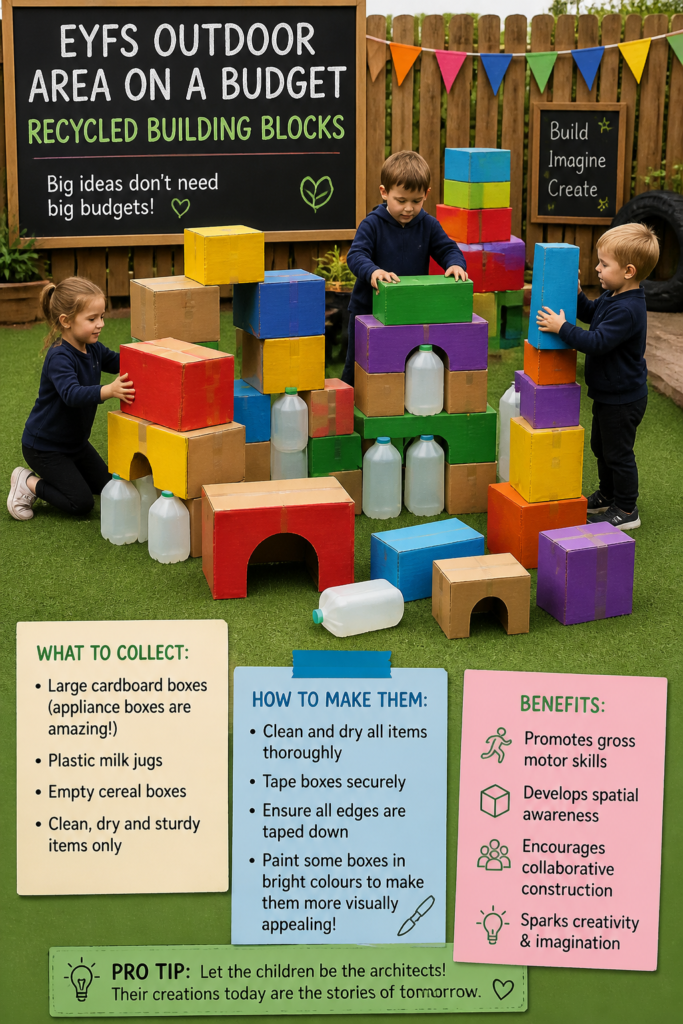
Collect large sturdy cardboard boxes (appliance boxes are amazing!), plastic milk jugs, and even empty cereal boxes. Tape them securely, ensuring they are clean and dry. Pro tip: Paint some of the boxes in bright colours to make them more visually appealing. These DIY blocks promote gross motor skills, spatial awareness, and collaborative construction on a grand scale.
🧩 The Toddler Sanity & Learning Kit
Toddlers are tiny tornados. Instead of turning on the iPad in a moment of desperation, these 5 open-ended toys and clever tools foster independent, screen-free play while simultaneously saving your house from milk spills and crayon disasters.
🧱 Magna-Tiles 100-Piece Building Set
The undeniable king of open-ended play. It is the one single toy that a 2-year-old and a 10-year-old will both happily play with for an hour straight. They develop spatial reasoning, math skills, and independent focus—worth absolutely every penny.
🥛 Munchkin Miracle 360 Trainer Cups
Stop wiping up milk puddles. These genius, dentist-recommended cups allow kids to drink from anywhere around the rim like a real glass, but they instantly seal themselves the second the child stops drinking—even if they drop it on the floor.
🎧 Yoto Mini Kids Audio Player
The ultimate distraction for car rides or quiet time without the guilt of handing over a glowing screen. Kids control it completely by inserting physical cards to play audiobooks, music, and educational podcasts completely independently.
🧹 Melissa & Doug Wooden Cleaning Set
Toddlers desperately want to do exactly what you do. This kid-sized, highly durable wooden sweeping and mopping set redirects their chaotic energy into productive, confidence-building life skills while you actually get the real cleaning done in peace.
🎒 Montessori Travel Busy Board
The secret to surviving restaurants and airplanes with a two-year-old. Packed with buckles, zippers, shoelaces, and snaps, this soft, lightweight 'briefcase' develops critical fine-motor skills and keeps busy little hands occupied for surprisingly long stretches.
Conclusion
See? Creating an awesome EYFS outdoor area on a budget isn’t just possible; it’s practically a superpower. You’re not just saving pennies; you’re teaching resourcefulness, sustainability, and showing kids that the best adventures often come from the simplest things. So go forth, raid those recycling bins, hit up your local freecycle groups, and let your imagination (and theirs!) run wild. Your bank account will thank you, and those little faces will be beaming.